
Home
Worker Writers: Community Archiving Action
Barnes and Noble
Loading Inventory...
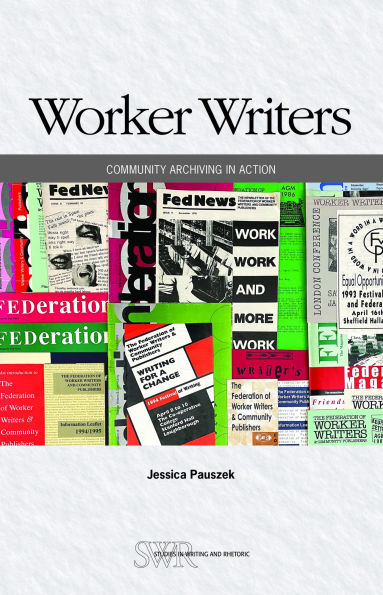
Worker Writers: Community Archiving Action in Chattanooga, TN
Current price: $39.99
Barnes and Noble
Worker Writers: Community Archiving Action in Chattanooga, TN
Current price: $39.99
Loading Inventory...
Size: Paperback
Worker Writers
brings together conversations in community literacy, archival methods, and working-class studies
to explore the process of collaboratively creating an archive focused on the Federation of Worker Writers and Community Publishers, a transnational writing network between 1976 and 2007. Detailing a decade-long collaboration, Pauszek explores the FWWCP Archival Project, which has enabled the creation of a publicly accessible print and digital archive of thousands of working-class community publications and administrative documents.
Additionally, this book:
Offers a framework for community partnership and archival work that explicitly accounts for working-class identities and class-based structures such as labor, finances, and precarious material resources.
Provides insights on the embodied archival processes, useful for teams doing documentation work.
Illustrates the possibilities of community-based archival work.
Argues for the importance of preserving working-class writing and literacy.
CCCC Studies in Writing & Rhetoric (SWR) Series
brings together conversations in community literacy, archival methods, and working-class studies
to explore the process of collaboratively creating an archive focused on the Federation of Worker Writers and Community Publishers, a transnational writing network between 1976 and 2007. Detailing a decade-long collaboration, Pauszek explores the FWWCP Archival Project, which has enabled the creation of a publicly accessible print and digital archive of thousands of working-class community publications and administrative documents.
Additionally, this book:
Offers a framework for community partnership and archival work that explicitly accounts for working-class identities and class-based structures such as labor, finances, and precarious material resources.
Provides insights on the embodied archival processes, useful for teams doing documentation work.
Illustrates the possibilities of community-based archival work.
Argues for the importance of preserving working-class writing and literacy.
CCCC Studies in Writing & Rhetoric (SWR) Series
Worker Writers
brings together conversations in community literacy, archival methods, and working-class studies
to explore the process of collaboratively creating an archive focused on the Federation of Worker Writers and Community Publishers, a transnational writing network between 1976 and 2007. Detailing a decade-long collaboration, Pauszek explores the FWWCP Archival Project, which has enabled the creation of a publicly accessible print and digital archive of thousands of working-class community publications and administrative documents.
Additionally, this book:
Offers a framework for community partnership and archival work that explicitly accounts for working-class identities and class-based structures such as labor, finances, and precarious material resources.
Provides insights on the embodied archival processes, useful for teams doing documentation work.
Illustrates the possibilities of community-based archival work.
Argues for the importance of preserving working-class writing and literacy.
CCCC Studies in Writing & Rhetoric (SWR) Series
brings together conversations in community literacy, archival methods, and working-class studies
to explore the process of collaboratively creating an archive focused on the Federation of Worker Writers and Community Publishers, a transnational writing network between 1976 and 2007. Detailing a decade-long collaboration, Pauszek explores the FWWCP Archival Project, which has enabled the creation of a publicly accessible print and digital archive of thousands of working-class community publications and administrative documents.
Additionally, this book:
Offers a framework for community partnership and archival work that explicitly accounts for working-class identities and class-based structures such as labor, finances, and precarious material resources.
Provides insights on the embodied archival processes, useful for teams doing documentation work.
Illustrates the possibilities of community-based archival work.
Argues for the importance of preserving working-class writing and literacy.
CCCC Studies in Writing & Rhetoric (SWR) Series
You May Also Like








More About Barnes and Noble at Hamilton Place
Barnes & Noble is the world’s largest retail bookseller and a leading retailer of content, digital media and educational products. Our Nook Digital business offers a lineup of NOOK® tablets and e-Readers and an expansive collection of digital reading content through the NOOK Store®. Barnes & Noble’s mission is to operate the best omni-channel specialty retail business in America, helping both our customers and booksellers reach their aspirations, while being a credit to the communities we serve.
2100 Hamilton Pl Blvd, Chattanooga, TN 37421, United States
Find Barnes and Noble at Hamilton Place in Chattanooga, TN
Visit Barnes and Noble at Hamilton Place in Chattanooga, TN
