
Home
When the City Stopped: Stories from New York's Essential Workers
Barnes and Noble
Loading Inventory...
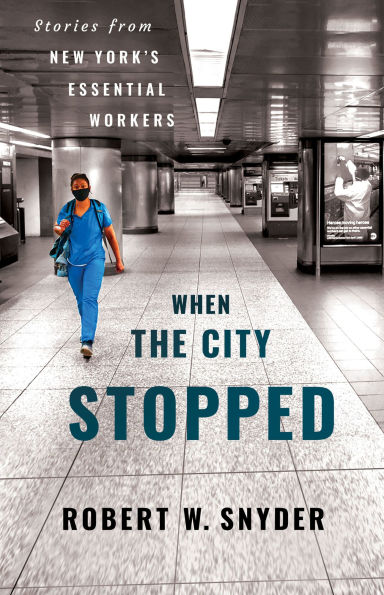
When the City Stopped: Stories from New York's Essential Workers in Chattanooga, TN
Current price: $19.99
Barnes and Noble
When the City Stopped: Stories from New York's Essential Workers in Chattanooga, TN
Current price: $19.99
Loading Inventory...
Size: Audiobook
In
When the City Stopped
, Robert Snyder tells the story of COVID19 in the words of ordinary New Yorkers, illuminating the fear and uncertainty of life in the early weeks and months, as well as the solidarity that sustained the city.
New Yorkers were "alone together," separated by the protective measures of social distancing and the fundamental inequalities of life and work in New York City. Through their personal accounts, we see that while many worked from home, others knowingly exposed themselves to the dangers of the pandemic as they drove buses, ran subways, answered 911 calls, tended to the sick, and made and delivered meals.
Snyder builds bridges of knowledge and empathy between those who bore dangerous burdens and those who lived in relative safety. The story is told through the words of health care workers, grocery clerks, transit workers, and community activists who recount their experiences in poems, firstperson narratives, and interviews.
preserves for future generations what it was like to be in New York when it was at the center of the pandemic.
When the City Stopped
, Robert Snyder tells the story of COVID19 in the words of ordinary New Yorkers, illuminating the fear and uncertainty of life in the early weeks and months, as well as the solidarity that sustained the city.
New Yorkers were "alone together," separated by the protective measures of social distancing and the fundamental inequalities of life and work in New York City. Through their personal accounts, we see that while many worked from home, others knowingly exposed themselves to the dangers of the pandemic as they drove buses, ran subways, answered 911 calls, tended to the sick, and made and delivered meals.
Snyder builds bridges of knowledge and empathy between those who bore dangerous burdens and those who lived in relative safety. The story is told through the words of health care workers, grocery clerks, transit workers, and community activists who recount their experiences in poems, firstperson narratives, and interviews.
preserves for future generations what it was like to be in New York when it was at the center of the pandemic.
In
When the City Stopped
, Robert Snyder tells the story of COVID19 in the words of ordinary New Yorkers, illuminating the fear and uncertainty of life in the early weeks and months, as well as the solidarity that sustained the city.
New Yorkers were "alone together," separated by the protective measures of social distancing and the fundamental inequalities of life and work in New York City. Through their personal accounts, we see that while many worked from home, others knowingly exposed themselves to the dangers of the pandemic as they drove buses, ran subways, answered 911 calls, tended to the sick, and made and delivered meals.
Snyder builds bridges of knowledge and empathy between those who bore dangerous burdens and those who lived in relative safety. The story is told through the words of health care workers, grocery clerks, transit workers, and community activists who recount their experiences in poems, firstperson narratives, and interviews.
preserves for future generations what it was like to be in New York when it was at the center of the pandemic.
When the City Stopped
, Robert Snyder tells the story of COVID19 in the words of ordinary New Yorkers, illuminating the fear and uncertainty of life in the early weeks and months, as well as the solidarity that sustained the city.
New Yorkers were "alone together," separated by the protective measures of social distancing and the fundamental inequalities of life and work in New York City. Through their personal accounts, we see that while many worked from home, others knowingly exposed themselves to the dangers of the pandemic as they drove buses, ran subways, answered 911 calls, tended to the sick, and made and delivered meals.
Snyder builds bridges of knowledge and empathy between those who bore dangerous burdens and those who lived in relative safety. The story is told through the words of health care workers, grocery clerks, transit workers, and community activists who recount their experiences in poems, firstperson narratives, and interviews.
preserves for future generations what it was like to be in New York when it was at the center of the pandemic.
You May Also Like












More About Barnes and Noble at Hamilton Place
Barnes & Noble is the world’s largest retail bookseller and a leading retailer of content, digital media and educational products. Our Nook Digital business offers a lineup of NOOK® tablets and e-Readers and an expansive collection of digital reading content through the NOOK Store®. Barnes & Noble’s mission is to operate the best omni-channel specialty retail business in America, helping both our customers and booksellers reach their aspirations, while being a credit to the communities we serve.
2100 Hamilton Pl Blvd, Chattanooga, TN 37421, United States
Find Barnes and Noble at Hamilton Place in Chattanooga, TN
Visit Barnes and Noble at Hamilton Place in Chattanooga, TN
