
Home
What Makes Poor Countries Poor?: Institutional Determinants of Development
Barnes and Noble
Loading Inventory...
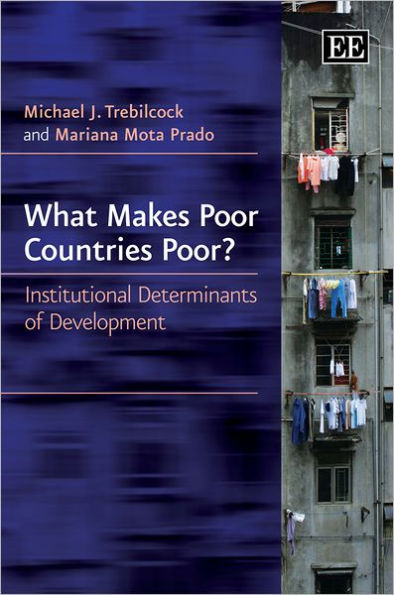
What Makes Poor Countries Poor?: Institutional Determinants of Development in Chattanooga, TN
Current price: $162.00
Barnes and Noble
What Makes Poor Countries Poor?: Institutional Determinants of Development in Chattanooga, TN
Current price: $162.00
Loading Inventory...
Size: OS
This important book focuses on the idea that institutions matter for development, asking what lessons we have learned from past reform efforts, and what role lawyers can play in this field.
What Makes Poor Countries Poor?
provides a critical overview of different conceptions and theories of development, situating institutional theories within the larger academic debate on development. The book also discusses why, whether and how institutions matter in different fields of development. In the domestic sphere, the authors answer these questions by analyzing institutional reforms in the public (rule of law, political regimes, bureaucracy) and the private sectors (contracts, property rights, and privatization). In the international sphere, they discuss the importance of institutions for trade, foreign direct investment, and foreign aid.
This book will be essential reading for those interested in a concise introduction to the academic debates in this field, as well as for students, practitioners and policy makers in law and development.
What Makes Poor Countries Poor?
provides a critical overview of different conceptions and theories of development, situating institutional theories within the larger academic debate on development. The book also discusses why, whether and how institutions matter in different fields of development. In the domestic sphere, the authors answer these questions by analyzing institutional reforms in the public (rule of law, political regimes, bureaucracy) and the private sectors (contracts, property rights, and privatization). In the international sphere, they discuss the importance of institutions for trade, foreign direct investment, and foreign aid.
This book will be essential reading for those interested in a concise introduction to the academic debates in this field, as well as for students, practitioners and policy makers in law and development.
This important book focuses on the idea that institutions matter for development, asking what lessons we have learned from past reform efforts, and what role lawyers can play in this field.
What Makes Poor Countries Poor?
provides a critical overview of different conceptions and theories of development, situating institutional theories within the larger academic debate on development. The book also discusses why, whether and how institutions matter in different fields of development. In the domestic sphere, the authors answer these questions by analyzing institutional reforms in the public (rule of law, political regimes, bureaucracy) and the private sectors (contracts, property rights, and privatization). In the international sphere, they discuss the importance of institutions for trade, foreign direct investment, and foreign aid.
This book will be essential reading for those interested in a concise introduction to the academic debates in this field, as well as for students, practitioners and policy makers in law and development.
What Makes Poor Countries Poor?
provides a critical overview of different conceptions and theories of development, situating institutional theories within the larger academic debate on development. The book also discusses why, whether and how institutions matter in different fields of development. In the domestic sphere, the authors answer these questions by analyzing institutional reforms in the public (rule of law, political regimes, bureaucracy) and the private sectors (contracts, property rights, and privatization). In the international sphere, they discuss the importance of institutions for trade, foreign direct investment, and foreign aid.
This book will be essential reading for those interested in a concise introduction to the academic debates in this field, as well as for students, practitioners and policy makers in law and development.
You May Also Like
















More About Barnes and Noble at Hamilton Place
Barnes & Noble is the world’s largest retail bookseller and a leading retailer of content, digital media and educational products. Our Nook Digital business offers a lineup of NOOK® tablets and e-Readers and an expansive collection of digital reading content through the NOOK Store®. Barnes & Noble’s mission is to operate the best omni-channel specialty retail business in America, helping both our customers and booksellers reach their aspirations, while being a credit to the communities we serve.
2100 Hamilton Pl Blvd, Chattanooga, TN 37421, United States
Find Barnes and Noble at Hamilton Place in Chattanooga, TN
Visit Barnes and Noble at Hamilton Place in Chattanooga, TN
