
Home
What Is A Population Decline, Causes And The Problems With Decline
Barnes and Noble
Loading Inventory...
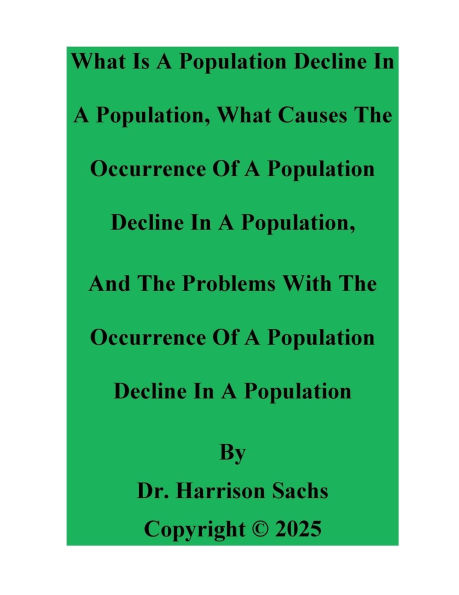
What Is A Population Decline, Causes And The Problems With Decline in Chattanooga, TN
Current price: $21.99
Barnes and Noble
What Is A Population Decline, Causes And The Problems With Decline in Chattanooga, TN
Current price: $21.99
Loading Inventory...
Size: Paperback
This essay sheds light on what is a population decline in a population, demystifies what causes the occurrence of a population decline in a population, and delineates the problems with the occurrence of a population decline in a population. Succinctly stated, a population decline in a population is a term that delineates a contraction in the size of a population. A reduction in the size of a population transpires when the members of a population pass away at a higher rate than the rate at which the new members of a population are born at. The natality-to-mortality ratio refers to a ratio that states the birth rate of a population to the death rate of a population amid a specific time period. A contracting population has low natality-to-mortality ratio. A high natality-to-mortality ratio denotes that a population has more of its members being born than passing away, whereas a low natality-to-mortality ratio denotes that a population has more of its members passing away than being born. Furthermore, a high natality-to-mortality ratio also denotes that a population is increasing, whereas a low natality-to-mortality ratio denotes that a population is decreasing. The rate at which a contracting population decreases at can be offset by the rate at which the new members of a population are being born at. A population has the latent potential to attain a high natality-to-mortality ratio. It is desirable for a population to have a natality rate that is high enough to surpass its mortality rate. A significant amplification in the quantity of the members of a population being born can have bearing on helping a population to attain a high natality-to-mortality ratio. Furthermore, a significant amplification in the average life expectancy of the members of a population can also have bearing on helping a population to attain a high natality-to-mortality ratio. A population decline in a population is not an irreversible reduction in the size of a population since a population has the latent potential to attain population growth in the pending future. A population decline in a population can be reversed if an exorbitant amount of married couples in a population opt to churn out a copious amount of offspring to the extend to which the natality rate of the population becomes steep enough to surpass the mortality rate of the population. As of March of 2025, a population has a low natality-to-mortality ratio if its natality-to-mortality ratio is less than 1:1. It is undesirable for a population to have a low natality-to-mortality ratio. Moreover, it is also undesirable for a population to have a medium natality-to-mortality ratio. As of March of 2025, it is estimated that a population needs to attain a natality-to-mortality ratio of at least 2.1:1 to maintain its population size. This is not only because it takes two people, a husband and a wife, to procreate offspring, but also because certain members of a population can pass away before reaching the age threshold for the average life expectancy of the population that they were born in. When certain members of a population pass away before reaching the age threshold for the average life expectancy of the population that they were born in, then it can have bearing on decreasing the average life expectancy of the population that they were born in. The causes of a population decline in a population are multitudinous. One cause of a population decline in a population can be attributed to the married couples in a population being disinterested in procreating. If an exorbitant amount of married couples in a population are disinterested in procreating, then it can culminate in the population having a low natality rate. A population decline in a population transpires in contexts in which a population's natality-to-mortality ratio does not at least meet the threshold for the population to maintain its population size. A copious amount of married couples of a population may be disinterested in procreating if they are disinterested in fulfilling the responsibilities of a parent. If a husband and a wife opt to churn out children, then it becomes incumbent on them to diligently fulfill the responsibilities of a parent. Diligently fulfilling the responsibilities of a father can be a highly time depleting and cumbersome undertaking. It can also be expensive for a father to pay for the expenses of his children for decades on end. Diligently fulfilling the responsibilities of a father can also render a man more prone to succumbing to chronic stress since it can be arduous for a man to incessantly diligently fulfill the responsibilities of a father, especially if he profusely works real private sector jobs based on voluntary demand after he becomes a father.
This essay sheds light on what is a population decline in a population, demystifies what causes the occurrence of a population decline in a population, and delineates the problems with the occurrence of a population decline in a population. Succinctly stated, a population decline in a population is a term that delineates a contraction in the size of a population. A reduction in the size of a population transpires when the members of a population pass away at a higher rate than the rate at which the new members of a population are born at. The natality-to-mortality ratio refers to a ratio that states the birth rate of a population to the death rate of a population amid a specific time period. A contracting population has low natality-to-mortality ratio. A high natality-to-mortality ratio denotes that a population has more of its members being born than passing away, whereas a low natality-to-mortality ratio denotes that a population has more of its members passing away than being born. Furthermore, a high natality-to-mortality ratio also denotes that a population is increasing, whereas a low natality-to-mortality ratio denotes that a population is decreasing. The rate at which a contracting population decreases at can be offset by the rate at which the new members of a population are being born at. A population has the latent potential to attain a high natality-to-mortality ratio. It is desirable for a population to have a natality rate that is high enough to surpass its mortality rate. A significant amplification in the quantity of the members of a population being born can have bearing on helping a population to attain a high natality-to-mortality ratio. Furthermore, a significant amplification in the average life expectancy of the members of a population can also have bearing on helping a population to attain a high natality-to-mortality ratio. A population decline in a population is not an irreversible reduction in the size of a population since a population has the latent potential to attain population growth in the pending future. A population decline in a population can be reversed if an exorbitant amount of married couples in a population opt to churn out a copious amount of offspring to the extend to which the natality rate of the population becomes steep enough to surpass the mortality rate of the population. As of March of 2025, a population has a low natality-to-mortality ratio if its natality-to-mortality ratio is less than 1:1. It is undesirable for a population to have a low natality-to-mortality ratio. Moreover, it is also undesirable for a population to have a medium natality-to-mortality ratio. As of March of 2025, it is estimated that a population needs to attain a natality-to-mortality ratio of at least 2.1:1 to maintain its population size. This is not only because it takes two people, a husband and a wife, to procreate offspring, but also because certain members of a population can pass away before reaching the age threshold for the average life expectancy of the population that they were born in. When certain members of a population pass away before reaching the age threshold for the average life expectancy of the population that they were born in, then it can have bearing on decreasing the average life expectancy of the population that they were born in. The causes of a population decline in a population are multitudinous. One cause of a population decline in a population can be attributed to the married couples in a population being disinterested in procreating. If an exorbitant amount of married couples in a population are disinterested in procreating, then it can culminate in the population having a low natality rate. A population decline in a population transpires in contexts in which a population's natality-to-mortality ratio does not at least meet the threshold for the population to maintain its population size. A copious amount of married couples of a population may be disinterested in procreating if they are disinterested in fulfilling the responsibilities of a parent. If a husband and a wife opt to churn out children, then it becomes incumbent on them to diligently fulfill the responsibilities of a parent. Diligently fulfilling the responsibilities of a father can be a highly time depleting and cumbersome undertaking. It can also be expensive for a father to pay for the expenses of his children for decades on end. Diligently fulfilling the responsibilities of a father can also render a man more prone to succumbing to chronic stress since it can be arduous for a man to incessantly diligently fulfill the responsibilities of a father, especially if he profusely works real private sector jobs based on voluntary demand after he becomes a father.
You May Also Like










More About Barnes and Noble at Hamilton Place
Barnes & Noble is the world’s largest retail bookseller and a leading retailer of content, digital media and educational products. Our Nook Digital business offers a lineup of NOOK® tablets and e-Readers and an expansive collection of digital reading content through the NOOK Store®. Barnes & Noble’s mission is to operate the best omni-channel specialty retail business in America, helping both our customers and booksellers reach their aspirations, while being a credit to the communities we serve.
2100 Hamilton Pl Blvd, Chattanooga, TN 37421, United States
Find Barnes and Noble at Hamilton Place in Chattanooga, TN
Visit Barnes and Noble at Hamilton Place in Chattanooga, TN
