
Home
Western Pueblo Identities: Regional Interaction, Migration, and Transformation
Barnes and Noble
Loading Inventory...
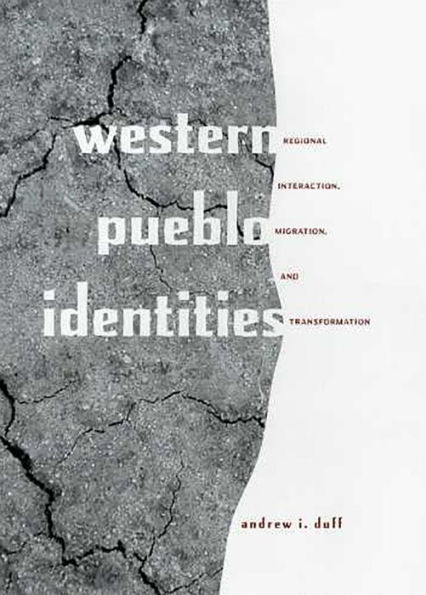
Western Pueblo Identities: Regional Interaction, Migration, and Transformation in Chattanooga, TN
Current price: $52.00
Barnes and Noble
Western Pueblo Identities: Regional Interaction, Migration, and Transformation in Chattanooga, TN
Current price: $52.00
Loading Inventory...
Size: Hardcover
Identifying distinct social groups of the past
has always challenged archaeologists because understanding how people perceived their identity is critical to the reconstruction of social organization. Material culture has been the standard measure of distinction between groups, and the distribution of ceramics and other artifacts has often been used to define group boundaries.
Western Pueblo Identities
argues that such an approach is not always appropriate: demographic and historical factors may affect the extent to which material evidence can define such boundaries. Andrew Duff now examines a number of other factorsrelationships among settlement size, regional population densities, the homogeneity of material culture, and local and long-distance exchangein order to trace the history of interaction and the formation of group identity in east-central Arizona and west-central New Mexico from A.D. 1275 to 1400.
Using comparative data from the Upper Little Colorado and Zuni regions, Duff demonstrates differences in patterns of interaction within and between regions with different population densities. He then links these differences to such factors as occupational history, immigrant populations, the negotiation of social identities, and the emergence of new ritual systems. Following abandonments in the Four Corners area in the late 1200s, immigrants with different historical backgrounds occupied many Western Pueblo regionsin contrast to the Hopi and Zuni regions, which had more stable populations and deeper historical roots.
Duff uses chemical analyses of ceramics to document exchange among several communities within these regions, showing that people in less densely settled regions were actively recruited by residents of the Hopi and Zuni regions to join their settlements. By the time of the arrival of the Spaniards, two distinct social and territorial groupsthe Hopi and Zuni peopleshad emerged from this scattering of communities. Duff's new interpretations, along with new data on ceramic exchange patterns, suggest that interaction is a better way to measure identity than more commonly used criteria. His work offers new perspectives on the role of ritual in social organization and on identity formation in Pueblo IV society and is rich in implications for the study of other sedentary, middle-range societies.
has always challenged archaeologists because understanding how people perceived their identity is critical to the reconstruction of social organization. Material culture has been the standard measure of distinction between groups, and the distribution of ceramics and other artifacts has often been used to define group boundaries.
Western Pueblo Identities
argues that such an approach is not always appropriate: demographic and historical factors may affect the extent to which material evidence can define such boundaries. Andrew Duff now examines a number of other factorsrelationships among settlement size, regional population densities, the homogeneity of material culture, and local and long-distance exchangein order to trace the history of interaction and the formation of group identity in east-central Arizona and west-central New Mexico from A.D. 1275 to 1400.
Using comparative data from the Upper Little Colorado and Zuni regions, Duff demonstrates differences in patterns of interaction within and between regions with different population densities. He then links these differences to such factors as occupational history, immigrant populations, the negotiation of social identities, and the emergence of new ritual systems. Following abandonments in the Four Corners area in the late 1200s, immigrants with different historical backgrounds occupied many Western Pueblo regionsin contrast to the Hopi and Zuni regions, which had more stable populations and deeper historical roots.
Duff uses chemical analyses of ceramics to document exchange among several communities within these regions, showing that people in less densely settled regions were actively recruited by residents of the Hopi and Zuni regions to join their settlements. By the time of the arrival of the Spaniards, two distinct social and territorial groupsthe Hopi and Zuni peopleshad emerged from this scattering of communities. Duff's new interpretations, along with new data on ceramic exchange patterns, suggest that interaction is a better way to measure identity than more commonly used criteria. His work offers new perspectives on the role of ritual in social organization and on identity formation in Pueblo IV society and is rich in implications for the study of other sedentary, middle-range societies.
Identifying distinct social groups of the past
has always challenged archaeologists because understanding how people perceived their identity is critical to the reconstruction of social organization. Material culture has been the standard measure of distinction between groups, and the distribution of ceramics and other artifacts has often been used to define group boundaries.
Western Pueblo Identities
argues that such an approach is not always appropriate: demographic and historical factors may affect the extent to which material evidence can define such boundaries. Andrew Duff now examines a number of other factorsrelationships among settlement size, regional population densities, the homogeneity of material culture, and local and long-distance exchangein order to trace the history of interaction and the formation of group identity in east-central Arizona and west-central New Mexico from A.D. 1275 to 1400.
Using comparative data from the Upper Little Colorado and Zuni regions, Duff demonstrates differences in patterns of interaction within and between regions with different population densities. He then links these differences to such factors as occupational history, immigrant populations, the negotiation of social identities, and the emergence of new ritual systems. Following abandonments in the Four Corners area in the late 1200s, immigrants with different historical backgrounds occupied many Western Pueblo regionsin contrast to the Hopi and Zuni regions, which had more stable populations and deeper historical roots.
Duff uses chemical analyses of ceramics to document exchange among several communities within these regions, showing that people in less densely settled regions were actively recruited by residents of the Hopi and Zuni regions to join their settlements. By the time of the arrival of the Spaniards, two distinct social and territorial groupsthe Hopi and Zuni peopleshad emerged from this scattering of communities. Duff's new interpretations, along with new data on ceramic exchange patterns, suggest that interaction is a better way to measure identity than more commonly used criteria. His work offers new perspectives on the role of ritual in social organization and on identity formation in Pueblo IV society and is rich in implications for the study of other sedentary, middle-range societies.
has always challenged archaeologists because understanding how people perceived their identity is critical to the reconstruction of social organization. Material culture has been the standard measure of distinction between groups, and the distribution of ceramics and other artifacts has often been used to define group boundaries.
Western Pueblo Identities
argues that such an approach is not always appropriate: demographic and historical factors may affect the extent to which material evidence can define such boundaries. Andrew Duff now examines a number of other factorsrelationships among settlement size, regional population densities, the homogeneity of material culture, and local and long-distance exchangein order to trace the history of interaction and the formation of group identity in east-central Arizona and west-central New Mexico from A.D. 1275 to 1400.
Using comparative data from the Upper Little Colorado and Zuni regions, Duff demonstrates differences in patterns of interaction within and between regions with different population densities. He then links these differences to such factors as occupational history, immigrant populations, the negotiation of social identities, and the emergence of new ritual systems. Following abandonments in the Four Corners area in the late 1200s, immigrants with different historical backgrounds occupied many Western Pueblo regionsin contrast to the Hopi and Zuni regions, which had more stable populations and deeper historical roots.
Duff uses chemical analyses of ceramics to document exchange among several communities within these regions, showing that people in less densely settled regions were actively recruited by residents of the Hopi and Zuni regions to join their settlements. By the time of the arrival of the Spaniards, two distinct social and territorial groupsthe Hopi and Zuni peopleshad emerged from this scattering of communities. Duff's new interpretations, along with new data on ceramic exchange patterns, suggest that interaction is a better way to measure identity than more commonly used criteria. His work offers new perspectives on the role of ritual in social organization and on identity formation in Pueblo IV society and is rich in implications for the study of other sedentary, middle-range societies.
You May Also Like











More About Barnes and Noble at Hamilton Place
Barnes & Noble is the world’s largest retail bookseller and a leading retailer of content, digital media and educational products. Our Nook Digital business offers a lineup of NOOK® tablets and e-Readers and an expansive collection of digital reading content through the NOOK Store®. Barnes & Noble’s mission is to operate the best omni-channel specialty retail business in America, helping both our customers and booksellers reach their aspirations, while being a credit to the communities we serve.
2100 Hamilton Pl Blvd, Chattanooga, TN 37421, United States
Find Barnes and Noble at Hamilton Place in Chattanooga, TN
Visit Barnes and Noble at Hamilton Place in Chattanooga, TN
