
Home
We Rang the Sanctus Bells
Barnes and Noble
Loading Inventory...
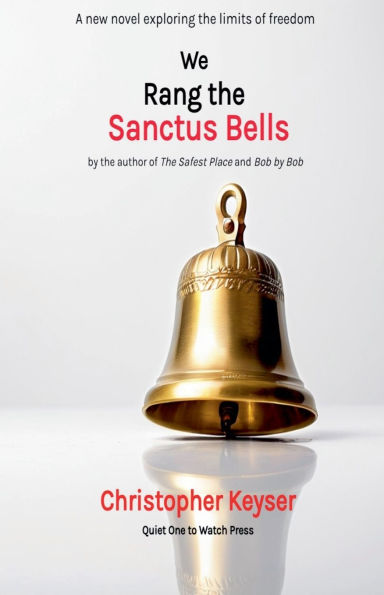
We Rang the Sanctus Bells in Chattanooga, TN
Current price: $19.95
Barnes and Noble
We Rang the Sanctus Bells in Chattanooga, TN
Current price: $19.95
Loading Inventory...
Size: Paperback
What does it mean to be free? To make a choice without consequence? To exist without obligation?
In
We Rang the Sanctus Bells
, a man believes he has untethered himself from the burdens of identity, responsibility, and fate. When he wins the lottery, he tells himself that wealth has liberated him, that he is no longer beholden to family, country, or morality. But the more he embraces this illusion, the more he becomes trapped-by his own nature, by the weight of his choices, by the inescapable truth that freedom is not the absence of chains but the slow realization that we were always shackled to something.
He convinces himself he is in control, yet every step he takes is guided by forces beyond his understanding. He tells himself he can define his own meaning, yet every attempt to do so leads only to self-destruction. In a world that punishes uncertainty, he becomes a man without belief, without certainty, and in doing so, he permits himself anything.
But what happens when a man who believes in nothing is forced to reckon with the consequences of his own actions? When he sees his own reflection in the eyes of those he has betrayed?
is an unflinching meditation on guilt, corruption, and the terrifying possibility that, in the end, we are nothing more than the sum of our worst instincts.
In
We Rang the Sanctus Bells
, a man believes he has untethered himself from the burdens of identity, responsibility, and fate. When he wins the lottery, he tells himself that wealth has liberated him, that he is no longer beholden to family, country, or morality. But the more he embraces this illusion, the more he becomes trapped-by his own nature, by the weight of his choices, by the inescapable truth that freedom is not the absence of chains but the slow realization that we were always shackled to something.
He convinces himself he is in control, yet every step he takes is guided by forces beyond his understanding. He tells himself he can define his own meaning, yet every attempt to do so leads only to self-destruction. In a world that punishes uncertainty, he becomes a man without belief, without certainty, and in doing so, he permits himself anything.
But what happens when a man who believes in nothing is forced to reckon with the consequences of his own actions? When he sees his own reflection in the eyes of those he has betrayed?
is an unflinching meditation on guilt, corruption, and the terrifying possibility that, in the end, we are nothing more than the sum of our worst instincts.
What does it mean to be free? To make a choice without consequence? To exist without obligation?
In
We Rang the Sanctus Bells
, a man believes he has untethered himself from the burdens of identity, responsibility, and fate. When he wins the lottery, he tells himself that wealth has liberated him, that he is no longer beholden to family, country, or morality. But the more he embraces this illusion, the more he becomes trapped-by his own nature, by the weight of his choices, by the inescapable truth that freedom is not the absence of chains but the slow realization that we were always shackled to something.
He convinces himself he is in control, yet every step he takes is guided by forces beyond his understanding. He tells himself he can define his own meaning, yet every attempt to do so leads only to self-destruction. In a world that punishes uncertainty, he becomes a man without belief, without certainty, and in doing so, he permits himself anything.
But what happens when a man who believes in nothing is forced to reckon with the consequences of his own actions? When he sees his own reflection in the eyes of those he has betrayed?
is an unflinching meditation on guilt, corruption, and the terrifying possibility that, in the end, we are nothing more than the sum of our worst instincts.
In
We Rang the Sanctus Bells
, a man believes he has untethered himself from the burdens of identity, responsibility, and fate. When he wins the lottery, he tells himself that wealth has liberated him, that he is no longer beholden to family, country, or morality. But the more he embraces this illusion, the more he becomes trapped-by his own nature, by the weight of his choices, by the inescapable truth that freedom is not the absence of chains but the slow realization that we were always shackled to something.
He convinces himself he is in control, yet every step he takes is guided by forces beyond his understanding. He tells himself he can define his own meaning, yet every attempt to do so leads only to self-destruction. In a world that punishes uncertainty, he becomes a man without belief, without certainty, and in doing so, he permits himself anything.
But what happens when a man who believes in nothing is forced to reckon with the consequences of his own actions? When he sees his own reflection in the eyes of those he has betrayed?
is an unflinching meditation on guilt, corruption, and the terrifying possibility that, in the end, we are nothing more than the sum of our worst instincts.
You May Also Like
![Let All That We Imagine Be the Light [Orange Vinyl with Signed Print] [Barnes & Noble Exclusive]](https://prodimage.images-bn.com/pimages/4099964159615_p0_v1_s600x595.jpg)
![Last Bell [Barnes & Noble Exclusive]](https://prodimage.images-bn.com/pimages/0198704145698_p0_v1_s600x595.jpg)
![We Get a Kick out of Jazz, Too [Barnes & Noble Exclusive]](https://prodimage.images-bn.com/pimages/0602498430446_p0_v2_s600x595.jpg)








More About Barnes and Noble at Hamilton Place
Barnes & Noble is the world’s largest retail bookseller and a leading retailer of content, digital media and educational products. Our Nook Digital business offers a lineup of NOOK® tablets and e-Readers and an expansive collection of digital reading content through the NOOK Store®. Barnes & Noble’s mission is to operate the best omni-channel specialty retail business in America, helping both our customers and booksellers reach their aspirations, while being a credit to the communities we serve.
2100 Hamilton Pl Blvd, Chattanooga, TN 37421, United States
Find Barnes and Noble at Hamilton Place in Chattanooga, TN
Visit Barnes and Noble at Hamilton Place in Chattanooga, TN