
Home
We Are Still Not Counted as Human: Reflections on the Struggle for Dignity in South Africa
Barnes and Noble
Loading Inventory...
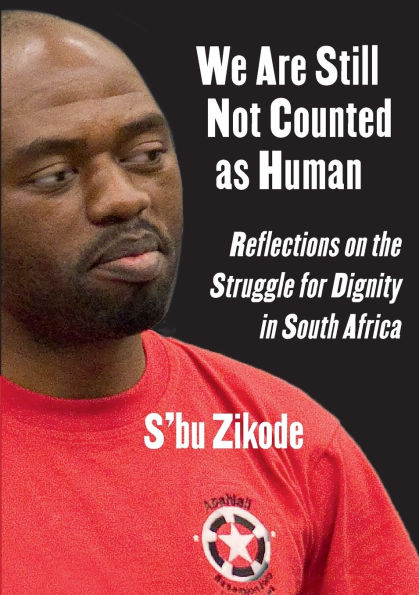
We Are Still Not Counted as Human: Reflections on the Struggle for Dignity in South Africa in Chattanooga, TN
Current price: $16.00
Barnes and Noble
We Are Still Not Counted as Human: Reflections on the Struggle for Dignity in South Africa in Chattanooga, TN
Current price: $16.00
Loading Inventory...
Size: OS
We Are Still Not Counted as Human contains reflections from S'bu Zikode, the President of Abahlali baseMjondolo (AbM), the largest popular movement to emerge in South Africa since apartheid. Founded in Durban in 2005, AbM now organizes over 180,000 members across four provinces. The movement was catalyzed by a deep disappointment in 2005 when the ANC betrayed a promise of land for housing, responding to protests instead with police violence and criminalization. This moment clarified that for shack dwellers, "freedom and the African National Congress (ANC) were two different things" and that their demand for inclusion in decisions about their lives was treated as criminal. The central demand became the recognition of their dignity and humanity, captured by the statement, "We Are Still Not Counted as Human". AbM developed a unique political philosophy based on 'a politics of the poor' and 'living politics'. This approach was necessary because existing political systems excluded the poor, leading AbM to develop their own language and ideas, guided by the principle: "nothing for us, without us". The movement insists that governance and development must be participatory. AbM's political praxis is grounded in the values of ubuntu and centers on building democratic socialism from below, often referred to as a 'living communism' achieved through building communities and communes. This stance has been met with intense, sustained repression, including constant police harassment, torture, criminalization, and informal violence. This violence, which has claimed more than twenty lives, is intended as a lesson to teach poor people to "know our place". Despite the horrific level of repression, the movement sustains its democratic structure and growth by centering its humanity, recognizing that courage and perseverance in the struggle are responsibilities that come with being human. AbM views itself as a space where people become "more human" by listening and acting together.
We Are Still Not Counted as Human contains reflections from S'bu Zikode, the President of Abahlali baseMjondolo (AbM), the largest popular movement to emerge in South Africa since apartheid. Founded in Durban in 2005, AbM now organizes over 180,000 members across four provinces. The movement was catalyzed by a deep disappointment in 2005 when the ANC betrayed a promise of land for housing, responding to protests instead with police violence and criminalization. This moment clarified that for shack dwellers, "freedom and the African National Congress (ANC) were two different things" and that their demand for inclusion in decisions about their lives was treated as criminal. The central demand became the recognition of their dignity and humanity, captured by the statement, "We Are Still Not Counted as Human". AbM developed a unique political philosophy based on 'a politics of the poor' and 'living politics'. This approach was necessary because existing political systems excluded the poor, leading AbM to develop their own language and ideas, guided by the principle: "nothing for us, without us". The movement insists that governance and development must be participatory. AbM's political praxis is grounded in the values of ubuntu and centers on building democratic socialism from below, often referred to as a 'living communism' achieved through building communities and communes. This stance has been met with intense, sustained repression, including constant police harassment, torture, criminalization, and informal violence. This violence, which has claimed more than twenty lives, is intended as a lesson to teach poor people to "know our place". Despite the horrific level of repression, the movement sustains its democratic structure and growth by centering its humanity, recognizing that courage and perseverance in the struggle are responsibilities that come with being human. AbM views itself as a space where people become "more human" by listening and acting together.
You May Also Like









More About Barnes and Noble at Hamilton Place
Barnes & Noble is the world’s largest retail bookseller and a leading retailer of content, digital media and educational products. Our Nook Digital business offers a lineup of NOOK® tablets and e-Readers and an expansive collection of digital reading content through the NOOK Store®. Barnes & Noble’s mission is to operate the best omni-channel specialty retail business in America, helping both our customers and booksellers reach their aspirations, while being a credit to the communities we serve.
2100 Hamilton Pl Blvd, Chattanooga, TN 37421, United States
Find Barnes and Noble at Hamilton Place in Chattanooga, TN
Visit Barnes and Noble at Hamilton Place in Chattanooga, TN
