
Home
Voices from a Black Miami Neighborhood: the Baa Haas, Liberty City, Grove, and Beyond
Barnes and Noble
Loading Inventory...
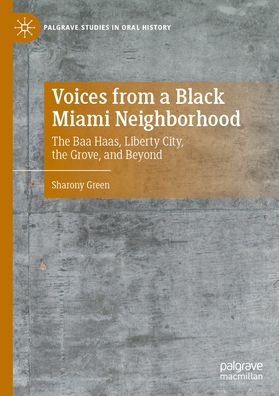
Voices from a Black Miami Neighborhood: the Baa Haas, Liberty City, Grove, and Beyond in Chattanooga, TN
Current price: $44.99
Barnes and Noble
Voices from a Black Miami Neighborhood: the Baa Haas, Liberty City, Grove, and Beyond in Chattanooga, TN
Current price: $44.99
Loading Inventory...
Size: Hardcover
This Palgrave Pivot is a personal and universal history of gain and loss. Via memoir and oral histories, Sharony Green, a native of Miami with ancestral roots in the American South and the Bahamas, sheds light on ups and down of African American residents before and after the Second World War. The author uses the 'Baa Haas,' an outlying community in Miami-Dade County, a region that is also a gateway to Caribbean and Latin America, as a starting place to think through such things. As early as the New Deal era, white powerbrokers desired to relocate people of African descent from the lucrative waterfronts to a desolate and sandy area about twenty miles northwest of Miami’s downtown. This community was later nicknamed the 'Baa Haas,' presumably because its nearby prehistoric beach resembled California’s Bajas beaches. Whether spelled Baa Haas, Bajas or Bahas, the tiny neighborhood, whose biggest landmark nowadays is Hard Rock Stadium, is noteworthy. It was not until whites themselves settled there first, beginning in the fifties with the help of the 1944 GI bill, that people of African descent, aided by the Fair Housing Act of 1968, at last moved there. Some arrived from older Miami communities like Liberty City, Overtown and Coconut Grove or even elsewhere in the States. Essentially, two federal initiatives collided with positive gains for the oppressed. As people increasingly find themselves displaced owing to gentrification, this book permits an opportunity for readers to see what had been possible for prospective black homeowners.
This Palgrave Pivot is a personal and universal history of gain and loss. Via memoir and oral histories, Sharony Green, a native of Miami with ancestral roots in the American South and the Bahamas, sheds light on ups and down of African American residents before and after the Second World War. The author uses the 'Baa Haas,' an outlying community in Miami-Dade County, a region that is also a gateway to Caribbean and Latin America, as a starting place to think through such things. As early as the New Deal era, white powerbrokers desired to relocate people of African descent from the lucrative waterfronts to a desolate and sandy area about twenty miles northwest of Miami’s downtown. This community was later nicknamed the 'Baa Haas,' presumably because its nearby prehistoric beach resembled California’s Bajas beaches. Whether spelled Baa Haas, Bajas or Bahas, the tiny neighborhood, whose biggest landmark nowadays is Hard Rock Stadium, is noteworthy. It was not until whites themselves settled there first, beginning in the fifties with the help of the 1944 GI bill, that people of African descent, aided by the Fair Housing Act of 1968, at last moved there. Some arrived from older Miami communities like Liberty City, Overtown and Coconut Grove or even elsewhere in the States. Essentially, two federal initiatives collided with positive gains for the oppressed. As people increasingly find themselves displaced owing to gentrification, this book permits an opportunity for readers to see what had been possible for prospective black homeowners.
You May Also Like













More About Barnes and Noble at Hamilton Place
Barnes & Noble is the world’s largest retail bookseller and a leading retailer of content, digital media and educational products. Our Nook Digital business offers a lineup of NOOK® tablets and e-Readers and an expansive collection of digital reading content through the NOOK Store®. Barnes & Noble’s mission is to operate the best omni-channel specialty retail business in America, helping both our customers and booksellers reach their aspirations, while being a credit to the communities we serve.
2100 Hamilton Pl Blvd, Chattanooga, TN 37421, United States
Find Barnes and Noble at Hamilton Place in Chattanooga, TN
Visit Barnes and Noble at Hamilton Place in Chattanooga, TN
