
Home
Vernet's Dance Hall / Daily Mirror
Barnes and Noble
Loading Inventory...
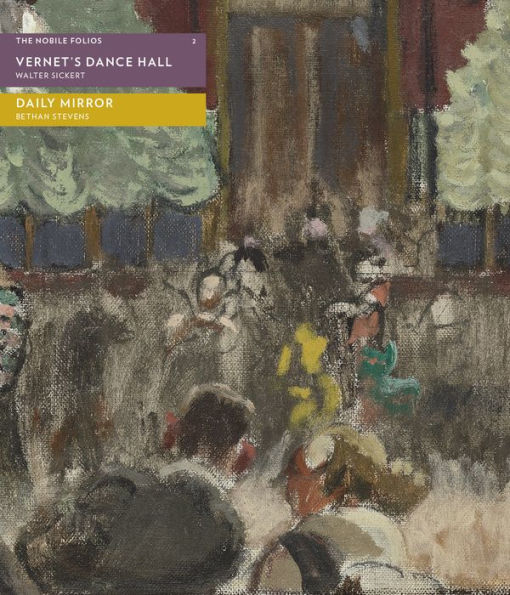
Vernet's Dance Hall / Daily Mirror in Chattanooga, TN
Current price: $25.00
Barnes and Noble
Vernet's Dance Hall / Daily Mirror in Chattanooga, TN
Current price: $25.00
Loading Inventory...
Size: OS
The second edition of The Nobile Folios is prefaced by Wendy Baron, the prime authority on Walter Sickert’s work and life. Vernet’s
Dance Hall
was painted by Sickert during the winter of 1920-21, most probably in Dieppe, and presents Sickert at his most ambiguous. Clues are virtually nonexistent, shapes are eccentric. Wendy Baron suggests that the painting does not depend on our understanding of the subject, and that it is much more interesting if it is seen as a gateway to the intriguing insights it affords into the uncompromising objectivity of Sickert’s eye and his mischievous intelligence.
It is these qualities that Bethan Stevens addresses so successfully in her short story ‘Daily Mirror’. Presented as a set of letters written to
The Daily Mirror
by ‘an Appreciator’ of the paper, a haunting story unravels that says as much about the early 20th-century music halls as Sickert’s painting.
Dance Hall
was painted by Sickert during the winter of 1920-21, most probably in Dieppe, and presents Sickert at his most ambiguous. Clues are virtually nonexistent, shapes are eccentric. Wendy Baron suggests that the painting does not depend on our understanding of the subject, and that it is much more interesting if it is seen as a gateway to the intriguing insights it affords into the uncompromising objectivity of Sickert’s eye and his mischievous intelligence.
It is these qualities that Bethan Stevens addresses so successfully in her short story ‘Daily Mirror’. Presented as a set of letters written to
The Daily Mirror
by ‘an Appreciator’ of the paper, a haunting story unravels that says as much about the early 20th-century music halls as Sickert’s painting.
The second edition of The Nobile Folios is prefaced by Wendy Baron, the prime authority on Walter Sickert’s work and life. Vernet’s
Dance Hall
was painted by Sickert during the winter of 1920-21, most probably in Dieppe, and presents Sickert at his most ambiguous. Clues are virtually nonexistent, shapes are eccentric. Wendy Baron suggests that the painting does not depend on our understanding of the subject, and that it is much more interesting if it is seen as a gateway to the intriguing insights it affords into the uncompromising objectivity of Sickert’s eye and his mischievous intelligence.
It is these qualities that Bethan Stevens addresses so successfully in her short story ‘Daily Mirror’. Presented as a set of letters written to
The Daily Mirror
by ‘an Appreciator’ of the paper, a haunting story unravels that says as much about the early 20th-century music halls as Sickert’s painting.
Dance Hall
was painted by Sickert during the winter of 1920-21, most probably in Dieppe, and presents Sickert at his most ambiguous. Clues are virtually nonexistent, shapes are eccentric. Wendy Baron suggests that the painting does not depend on our understanding of the subject, and that it is much more interesting if it is seen as a gateway to the intriguing insights it affords into the uncompromising objectivity of Sickert’s eye and his mischievous intelligence.
It is these qualities that Bethan Stevens addresses so successfully in her short story ‘Daily Mirror’. Presented as a set of letters written to
The Daily Mirror
by ‘an Appreciator’ of the paper, a haunting story unravels that says as much about the early 20th-century music halls as Sickert’s painting.
You May Also Like












More About Barnes and Noble at Hamilton Place
Barnes & Noble is the world’s largest retail bookseller and a leading retailer of content, digital media and educational products. Our Nook Digital business offers a lineup of NOOK® tablets and e-Readers and an expansive collection of digital reading content through the NOOK Store®. Barnes & Noble’s mission is to operate the best omni-channel specialty retail business in America, helping both our customers and booksellers reach their aspirations, while being a credit to the communities we serve.
2100 Hamilton Pl Blvd, Chattanooga, TN 37421, United States
Find Barnes and Noble at Hamilton Place in Chattanooga, TN
Visit Barnes and Noble at Hamilton Place in Chattanooga, TN
