
Home
Troubled Waters: Insecurity the Persian Gulf
Barnes and Noble
Loading Inventory...
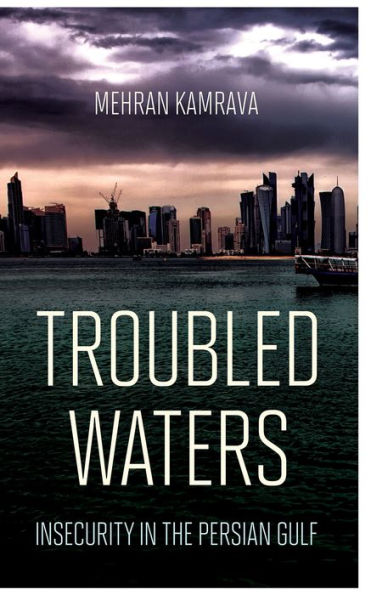
Troubled Waters: Insecurity the Persian Gulf in Chattanooga, TN
Current price: $29.95
Barnes and Noble
Troubled Waters: Insecurity the Persian Gulf in Chattanooga, TN
Current price: $29.95
Loading Inventory...
Size: Hardcover
Troubled Waters
looks at four dynamics in the Persian Gulf that have contributed to making the region one of the most volatile and tensionfilled spots in the world.
Mehran Kamrava identifies the four dynamics as: the neglect of human dimensions of security, the inherent instability involved in reliance on the United States and the exclusion of Iraq and Iran, the international and security policies pursued by inside and outside actors, and a suite of overlapping security dilemmas. These four factors combine and interact to generate longterm volatility and ongoing tensions within the Persian Gulf.
Through insights from Kamrava's interviews with Gulf elites into policy decisions, the consequences of security dilemmas, the priorities of local players, and the neglect of identity and religion,
examines the root causes of conflicts and crises that are currently unfolding in the region. As Kamrava demonstrates, each state in the region, including Saudi Arabia, Iran, and Qatar, has embarked on vigorous securityproducing efforts as part of foreign policy, flooding the area with more munitions—thereby increasing insecurity and causing more mistrust in a part of the world that needs no more tension.
looks at four dynamics in the Persian Gulf that have contributed to making the region one of the most volatile and tensionfilled spots in the world.
Mehran Kamrava identifies the four dynamics as: the neglect of human dimensions of security, the inherent instability involved in reliance on the United States and the exclusion of Iraq and Iran, the international and security policies pursued by inside and outside actors, and a suite of overlapping security dilemmas. These four factors combine and interact to generate longterm volatility and ongoing tensions within the Persian Gulf.
Through insights from Kamrava's interviews with Gulf elites into policy decisions, the consequences of security dilemmas, the priorities of local players, and the neglect of identity and religion,
examines the root causes of conflicts and crises that are currently unfolding in the region. As Kamrava demonstrates, each state in the region, including Saudi Arabia, Iran, and Qatar, has embarked on vigorous securityproducing efforts as part of foreign policy, flooding the area with more munitions—thereby increasing insecurity and causing more mistrust in a part of the world that needs no more tension.
Troubled Waters
looks at four dynamics in the Persian Gulf that have contributed to making the region one of the most volatile and tensionfilled spots in the world.
Mehran Kamrava identifies the four dynamics as: the neglect of human dimensions of security, the inherent instability involved in reliance on the United States and the exclusion of Iraq and Iran, the international and security policies pursued by inside and outside actors, and a suite of overlapping security dilemmas. These four factors combine and interact to generate longterm volatility and ongoing tensions within the Persian Gulf.
Through insights from Kamrava's interviews with Gulf elites into policy decisions, the consequences of security dilemmas, the priorities of local players, and the neglect of identity and religion,
examines the root causes of conflicts and crises that are currently unfolding in the region. As Kamrava demonstrates, each state in the region, including Saudi Arabia, Iran, and Qatar, has embarked on vigorous securityproducing efforts as part of foreign policy, flooding the area with more munitions—thereby increasing insecurity and causing more mistrust in a part of the world that needs no more tension.
looks at four dynamics in the Persian Gulf that have contributed to making the region one of the most volatile and tensionfilled spots in the world.
Mehran Kamrava identifies the four dynamics as: the neglect of human dimensions of security, the inherent instability involved in reliance on the United States and the exclusion of Iraq and Iran, the international and security policies pursued by inside and outside actors, and a suite of overlapping security dilemmas. These four factors combine and interact to generate longterm volatility and ongoing tensions within the Persian Gulf.
Through insights from Kamrava's interviews with Gulf elites into policy decisions, the consequences of security dilemmas, the priorities of local players, and the neglect of identity and religion,
examines the root causes of conflicts and crises that are currently unfolding in the region. As Kamrava demonstrates, each state in the region, including Saudi Arabia, Iran, and Qatar, has embarked on vigorous securityproducing efforts as part of foreign policy, flooding the area with more munitions—thereby increasing insecurity and causing more mistrust in a part of the world that needs no more tension.
You May Also Like













More About Barnes and Noble at Hamilton Place
Barnes & Noble is the world’s largest retail bookseller and a leading retailer of content, digital media and educational products. Our Nook Digital business offers a lineup of NOOK® tablets and e-Readers and an expansive collection of digital reading content through the NOOK Store®. Barnes & Noble’s mission is to operate the best omni-channel specialty retail business in America, helping both our customers and booksellers reach their aspirations, while being a credit to the communities we serve.
2100 Hamilton Pl Blvd, Chattanooga, TN 37421, United States
Find Barnes and Noble at Hamilton Place in Chattanooga, TN
Visit Barnes and Noble at Hamilton Place in Chattanooga, TN
