
Home
Transformationen von Volk-Gottes-Vorstellungen
Barnes and Noble
Loading Inventory...
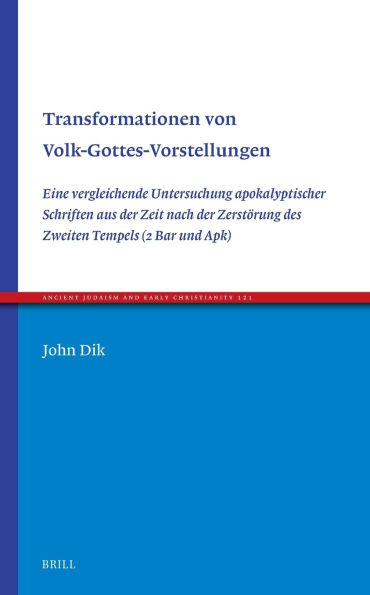
Transformationen von Volk-Gottes-Vorstellungen in Chattanooga, TN
Current price: $140.00
Barnes and Noble
Transformationen von Volk-Gottes-Vorstellungen in Chattanooga, TN
Current price: $140.00
Loading Inventory...
Size: OS
Die apokalyptischen Texte erzählen auf kunstvolle Weise eine spannende story des Volkes Gottes in literarisch gefassten Visionen – auch Johannes und er Autor von 2 Baruch, die beide ihre Adressatengemeinschaften in ihrem Israel-Sein ermutigen wollen. Dazu verbinden sie ihr Visionskorpus mit dem kommunikativen Mittel des Briefes, was einen Vergleich beider Werke nahelegt.
Mit seinem Werk zur Johannesapokalypse und 2 Baruch legt John Dik erstmals einen ausführlichen motivgeschichtlichen und gattungskritischen Vergleich vor, durch den sowohl die jüdischen traditionsgeschichtlichen Kontexte für das letzte Buch des Neuen Testaments herausgestellt werden als auch die Relevanz der Johannesapokalypse für die jüdische Apokalyptik.
The apocalyptic texts skilfully tell an exciting story of God's people in literary visions – including John and the author of 2 Baruch, who both want to encourage their communities to be part of this story and to grasp their Israel-identity more fully. To this end, both works combine their visionary corpus with the form of a letter as a means of communication.
In this book on the Apocalypse of John and 2 Baruch, John Dik presents for the first time a detailed comparison of the history of motifs and genre criticism, which emphasises both the Jewish traditional-historical contexts for the last book of the New Testament and the relevance of the Apocalypse of John for other Jewish apocalypses.
Mit seinem Werk zur Johannesapokalypse und 2 Baruch legt John Dik erstmals einen ausführlichen motivgeschichtlichen und gattungskritischen Vergleich vor, durch den sowohl die jüdischen traditionsgeschichtlichen Kontexte für das letzte Buch des Neuen Testaments herausgestellt werden als auch die Relevanz der Johannesapokalypse für die jüdische Apokalyptik.
The apocalyptic texts skilfully tell an exciting story of God's people in literary visions – including John and the author of 2 Baruch, who both want to encourage their communities to be part of this story and to grasp their Israel-identity more fully. To this end, both works combine their visionary corpus with the form of a letter as a means of communication.
In this book on the Apocalypse of John and 2 Baruch, John Dik presents for the first time a detailed comparison of the history of motifs and genre criticism, which emphasises both the Jewish traditional-historical contexts for the last book of the New Testament and the relevance of the Apocalypse of John for other Jewish apocalypses.
Die apokalyptischen Texte erzählen auf kunstvolle Weise eine spannende story des Volkes Gottes in literarisch gefassten Visionen – auch Johannes und er Autor von 2 Baruch, die beide ihre Adressatengemeinschaften in ihrem Israel-Sein ermutigen wollen. Dazu verbinden sie ihr Visionskorpus mit dem kommunikativen Mittel des Briefes, was einen Vergleich beider Werke nahelegt.
Mit seinem Werk zur Johannesapokalypse und 2 Baruch legt John Dik erstmals einen ausführlichen motivgeschichtlichen und gattungskritischen Vergleich vor, durch den sowohl die jüdischen traditionsgeschichtlichen Kontexte für das letzte Buch des Neuen Testaments herausgestellt werden als auch die Relevanz der Johannesapokalypse für die jüdische Apokalyptik.
The apocalyptic texts skilfully tell an exciting story of God's people in literary visions – including John and the author of 2 Baruch, who both want to encourage their communities to be part of this story and to grasp their Israel-identity more fully. To this end, both works combine their visionary corpus with the form of a letter as a means of communication.
In this book on the Apocalypse of John and 2 Baruch, John Dik presents for the first time a detailed comparison of the history of motifs and genre criticism, which emphasises both the Jewish traditional-historical contexts for the last book of the New Testament and the relevance of the Apocalypse of John for other Jewish apocalypses.
Mit seinem Werk zur Johannesapokalypse und 2 Baruch legt John Dik erstmals einen ausführlichen motivgeschichtlichen und gattungskritischen Vergleich vor, durch den sowohl die jüdischen traditionsgeschichtlichen Kontexte für das letzte Buch des Neuen Testaments herausgestellt werden als auch die Relevanz der Johannesapokalypse für die jüdische Apokalyptik.
The apocalyptic texts skilfully tell an exciting story of God's people in literary visions – including John and the author of 2 Baruch, who both want to encourage their communities to be part of this story and to grasp their Israel-identity more fully. To this end, both works combine their visionary corpus with the form of a letter as a means of communication.
In this book on the Apocalypse of John and 2 Baruch, John Dik presents for the first time a detailed comparison of the history of motifs and genre criticism, which emphasises both the Jewish traditional-historical contexts for the last book of the New Testament and the relevance of the Apocalypse of John for other Jewish apocalypses.
You May Also Like











More About Barnes and Noble at Hamilton Place
Barnes & Noble is the world’s largest retail bookseller and a leading retailer of content, digital media and educational products. Our Nook Digital business offers a lineup of NOOK® tablets and e-Readers and an expansive collection of digital reading content through the NOOK Store®. Barnes & Noble’s mission is to operate the best omni-channel specialty retail business in America, helping both our customers and booksellers reach their aspirations, while being a credit to the communities we serve.
2100 Hamilton Pl Blvd, Chattanooga, TN 37421, United States
Find Barnes and Noble at Hamilton Place in Chattanooga, TN
Visit Barnes and Noble at Hamilton Place in Chattanooga, TN
