
Home
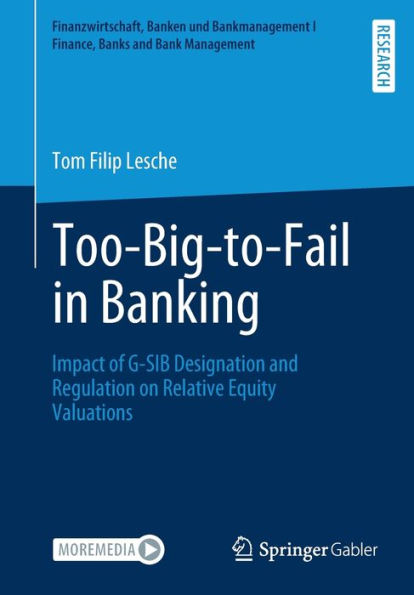
Too-Big-to-Fail Banking: Impact of G-SIB Designation and Regulation on Relative Equity Valuations
Barnes and Noble
Loading Inventory...
Too-Big-to-Fail Banking: Impact of G-SIB Designation and Regulation on Relative Equity Valuations in Chattanooga, TN
Current price: $119.99
Barnes and Noble
Too-Big-to-Fail Banking: Impact of G-SIB Designation and Regulation on Relative Equity Valuations in Chattanooga, TN
Current price: $119.99
Loading Inventory...
Size: Paperback
This book provides a comprehensive summary of the latest academic research on the important topic of too-big-to-fail (TBTF) in banking. It explains TBTF from various perspectives including the range of regulatory measures proposed to counter TBTF, most notably the globally accepted regulation of global-systemically important banks (G-SIBs) and its main tool of capital surcharges. The empirical analysis quantifies the shareholder value of the G-SIB attribution by using quarterly observations from more than 750 global banks between Q2 2008 and Q3 2015. The main finding is that G-SIBs are confronted with a substantial relative valuation discount compared to non-G-SIBs. From the end of 2011 until the end of 2015, a stable discount of 0.6x–0.8x price-to-tangible common equity (P/TCE) is statistically highly significant. The results suggest that the G-SIB designation effect, which positively impacts G-SIBs’ share prices because of funding benefits from IGGs, is dominated by the regulatory G-SIB burden effect, which negatively impacts G-SIBs’ share prices because of lower profitability due to capital surcharges and other regulatory requirements placed on G-SIBs. The findings re-open the debate about whether breaking up G-SIBs would unlock shareholder value and whether G-SIBs are regulated efficiently.
This book provides a comprehensive summary of the latest academic research on the important topic of too-big-to-fail (TBTF) in banking. It explains TBTF from various perspectives including the range of regulatory measures proposed to counter TBTF, most notably the globally accepted regulation of global-systemically important banks (G-SIBs) and its main tool of capital surcharges. The empirical analysis quantifies the shareholder value of the G-SIB attribution by using quarterly observations from more than 750 global banks between Q2 2008 and Q3 2015. The main finding is that G-SIBs are confronted with a substantial relative valuation discount compared to non-G-SIBs. From the end of 2011 until the end of 2015, a stable discount of 0.6x–0.8x price-to-tangible common equity (P/TCE) is statistically highly significant. The results suggest that the G-SIB designation effect, which positively impacts G-SIBs’ share prices because of funding benefits from IGGs, is dominated by the regulatory G-SIB burden effect, which negatively impacts G-SIBs’ share prices because of lower profitability due to capital surcharges and other regulatory requirements placed on G-SIBs. The findings re-open the debate about whether breaking up G-SIBs would unlock shareholder value and whether G-SIBs are regulated efficiently.
You May Also Like

















More About Barnes and Noble at Hamilton Place
Barnes & Noble is the world’s largest retail bookseller and a leading retailer of content, digital media and educational products. Our Nook Digital business offers a lineup of NOOK® tablets and e-Readers and an expansive collection of digital reading content through the NOOK Store®. Barnes & Noble’s mission is to operate the best omni-channel specialty retail business in America, helping both our customers and booksellers reach their aspirations, while being a credit to the communities we serve.
2100 Hamilton Pl Blvd, Chattanooga, TN 37421, United States
Find Barnes and Noble at Hamilton Place in Chattanooga, TN
Visit Barnes and Noble at Hamilton Place in Chattanooga, TN
