
Home
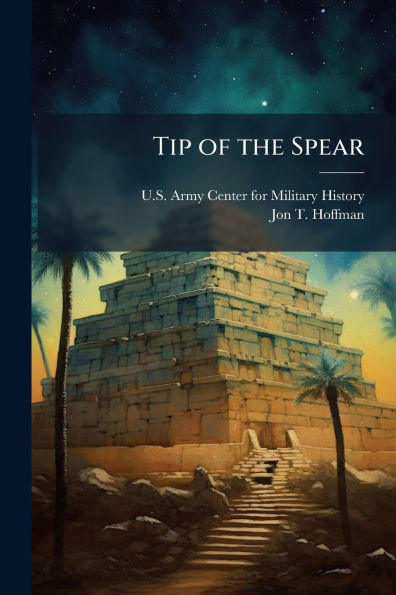
Tip of the Spear
Barnes and Noble
Loading Inventory...
Tip of the Spear in Chattanooga, TN
Current price: $32.95
Barnes and Noble
Tip of the Spear in Chattanooga, TN
Current price: $32.95
Loading Inventory...
Size: Hardcover
The lightning campaign that toppled the Saddam Hussein regime in Iraq in the spring of 2003 at first seemed to herald the arrival of a new way of war, as Germany's blitzkrieg had done at the beginning of World War II. But the initial victory in Iraq soon devolved into a persistent counterinsurgency conflict reminiscent of the long U.S. effort to pacify the Philippines after the quick defeat of Spain in 1898. In Iraq, American soldiers and their Coalition partners had merely traded one fairly weak and generally conventional opponent for a much more durable, diverse, and determined foe relying on the tactics of the guerilla and the terrorist. This volume focuses on that second and longer campaign of the war in Iraq, but it is not a narrative of the overall course of the conflict. Instead, it provides a soldier's-eye view of the war in the form of detailed accounts of a handful of battles. Each one illustrates the everyday challenges that America's soldiers face in a difficult struggle against an inventive and often elusive enemy. Weapons, doctrine, and procedures developed to fight a conventional campaign against a similar opposing force had to be adapted to fit a different type of conflict. The U.S. Army's combat and support forces have shown both resourcefulness and resilience, while leaders and soldiers in the field have demonstrated the same courage as previous generations called upon to sacrifice in the name of freedom.
This work has been selected by scholars as being culturally important, and is part of the knowledge base of civilization as we know it. This work was reproduced from the original artifact, and remains as true to the original work as possible. Therefore, you will see the original copyright references, library stamps (as most of these works have been housed in our most important libraries around the world), and other notations in the work.
This work is in the public domain in the United States of America, and possibly other nations. Within the United States, you may freely copy and distribute this work, as no entity (individual or corporate) has a copyright on the body of the work.
As a reproduction of a historical artifact, this work may contain missing or blurred pages, poor pictures, errant marks, etc. Scholars believe, and we concur, that this work is important enough to be preserved, reproduced, and made generally available to the public. We appreciate your support of the preservation process, and thank you for being an important part of keeping this knowledge alive and relevant.
This work has been selected by scholars as being culturally important, and is part of the knowledge base of civilization as we know it. This work was reproduced from the original artifact, and remains as true to the original work as possible. Therefore, you will see the original copyright references, library stamps (as most of these works have been housed in our most important libraries around the world), and other notations in the work.
This work is in the public domain in the United States of America, and possibly other nations. Within the United States, you may freely copy and distribute this work, as no entity (individual or corporate) has a copyright on the body of the work.
As a reproduction of a historical artifact, this work may contain missing or blurred pages, poor pictures, errant marks, etc. Scholars believe, and we concur, that this work is important enough to be preserved, reproduced, and made generally available to the public. We appreciate your support of the preservation process, and thank you for being an important part of keeping this knowledge alive and relevant.
The lightning campaign that toppled the Saddam Hussein regime in Iraq in the spring of 2003 at first seemed to herald the arrival of a new way of war, as Germany's blitzkrieg had done at the beginning of World War II. But the initial victory in Iraq soon devolved into a persistent counterinsurgency conflict reminiscent of the long U.S. effort to pacify the Philippines after the quick defeat of Spain in 1898. In Iraq, American soldiers and their Coalition partners had merely traded one fairly weak and generally conventional opponent for a much more durable, diverse, and determined foe relying on the tactics of the guerilla and the terrorist. This volume focuses on that second and longer campaign of the war in Iraq, but it is not a narrative of the overall course of the conflict. Instead, it provides a soldier's-eye view of the war in the form of detailed accounts of a handful of battles. Each one illustrates the everyday challenges that America's soldiers face in a difficult struggle against an inventive and often elusive enemy. Weapons, doctrine, and procedures developed to fight a conventional campaign against a similar opposing force had to be adapted to fit a different type of conflict. The U.S. Army's combat and support forces have shown both resourcefulness and resilience, while leaders and soldiers in the field have demonstrated the same courage as previous generations called upon to sacrifice in the name of freedom.
This work has been selected by scholars as being culturally important, and is part of the knowledge base of civilization as we know it. This work was reproduced from the original artifact, and remains as true to the original work as possible. Therefore, you will see the original copyright references, library stamps (as most of these works have been housed in our most important libraries around the world), and other notations in the work.
This work is in the public domain in the United States of America, and possibly other nations. Within the United States, you may freely copy and distribute this work, as no entity (individual or corporate) has a copyright on the body of the work.
As a reproduction of a historical artifact, this work may contain missing or blurred pages, poor pictures, errant marks, etc. Scholars believe, and we concur, that this work is important enough to be preserved, reproduced, and made generally available to the public. We appreciate your support of the preservation process, and thank you for being an important part of keeping this knowledge alive and relevant.
This work has been selected by scholars as being culturally important, and is part of the knowledge base of civilization as we know it. This work was reproduced from the original artifact, and remains as true to the original work as possible. Therefore, you will see the original copyright references, library stamps (as most of these works have been housed in our most important libraries around the world), and other notations in the work.
This work is in the public domain in the United States of America, and possibly other nations. Within the United States, you may freely copy and distribute this work, as no entity (individual or corporate) has a copyright on the body of the work.
As a reproduction of a historical artifact, this work may contain missing or blurred pages, poor pictures, errant marks, etc. Scholars believe, and we concur, that this work is important enough to be preserved, reproduced, and made generally available to the public. We appreciate your support of the preservation process, and thank you for being an important part of keeping this knowledge alive and relevant.
You May Also Like












More About Barnes and Noble at Hamilton Place
Barnes & Noble is the world’s largest retail bookseller and a leading retailer of content, digital media and educational products. Our Nook Digital business offers a lineup of NOOK® tablets and e-Readers and an expansive collection of digital reading content through the NOOK Store®. Barnes & Noble’s mission is to operate the best omni-channel specialty retail business in America, helping both our customers and booksellers reach their aspirations, while being a credit to the communities we serve.
2100 Hamilton Pl Blvd, Chattanooga, TN 37421, United States
Find Barnes and Noble at Hamilton Place in Chattanooga, TN
Visit Barnes and Noble at Hamilton Place in Chattanooga, TN
