
Home
Time and History in Denis P�tau: Philosophy, Science, and Religion in Early Modern France
Barnes and Noble
Loading Inventory...
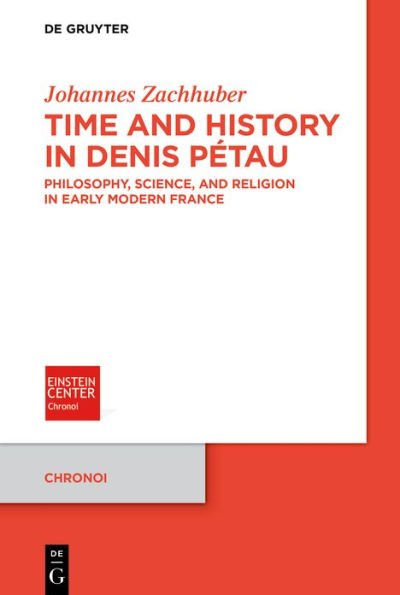
Time and History in Denis P�tau: Philosophy, Science, and Religion in Early Modern France in Chattanooga, TN
Current price: $32.99
Barnes and Noble
Time and History in Denis P�tau: Philosophy, Science, and Religion in Early Modern France in Chattanooga, TN
Current price: $32.99
Loading Inventory...
Size: OS
This book offers the first comprehensive presentation and analysis of the innovative theory of time advanced by early modern French scholar, Denis Pétau.
Denis Pétau (1583–1652) was the model of an early modern erudite. Proudly Catholic, the Jesuit scholar was a keen participant in the scientific and religious debates of his time. In the 1620s and 30s, he made major contributions to the burgeoning literature on scientific chronology responding especially to the work of Joseph Scaliger. As part of this effort, Pétau developed a fascinating theory of time and history. Societies inevitably exist in a temporal frame and therefore develop communal practices of timekeeping. For this, they adapt cosmic time to the needs and purposes of human societies. They create calendars and arrange their historical records in chronological form. This is a scientific task but, since time is ultimately sacred reality, its study has always been assigned to priests. Pétau therefore sees science and religion as intimately connected, progressing jointly through history and culminating in his own time.
The book will be of interest to philosophers of time, and historians of early modern science, religion, and theology.
Denis Pétau (1583–1652) was the model of an early modern erudite. Proudly Catholic, the Jesuit scholar was a keen participant in the scientific and religious debates of his time. In the 1620s and 30s, he made major contributions to the burgeoning literature on scientific chronology responding especially to the work of Joseph Scaliger. As part of this effort, Pétau developed a fascinating theory of time and history. Societies inevitably exist in a temporal frame and therefore develop communal practices of timekeeping. For this, they adapt cosmic time to the needs and purposes of human societies. They create calendars and arrange their historical records in chronological form. This is a scientific task but, since time is ultimately sacred reality, its study has always been assigned to priests. Pétau therefore sees science and religion as intimately connected, progressing jointly through history and culminating in his own time.
The book will be of interest to philosophers of time, and historians of early modern science, religion, and theology.
This book offers the first comprehensive presentation and analysis of the innovative theory of time advanced by early modern French scholar, Denis Pétau.
Denis Pétau (1583–1652) was the model of an early modern erudite. Proudly Catholic, the Jesuit scholar was a keen participant in the scientific and religious debates of his time. In the 1620s and 30s, he made major contributions to the burgeoning literature on scientific chronology responding especially to the work of Joseph Scaliger. As part of this effort, Pétau developed a fascinating theory of time and history. Societies inevitably exist in a temporal frame and therefore develop communal practices of timekeeping. For this, they adapt cosmic time to the needs and purposes of human societies. They create calendars and arrange their historical records in chronological form. This is a scientific task but, since time is ultimately sacred reality, its study has always been assigned to priests. Pétau therefore sees science and religion as intimately connected, progressing jointly through history and culminating in his own time.
The book will be of interest to philosophers of time, and historians of early modern science, religion, and theology.
Denis Pétau (1583–1652) was the model of an early modern erudite. Proudly Catholic, the Jesuit scholar was a keen participant in the scientific and religious debates of his time. In the 1620s and 30s, he made major contributions to the burgeoning literature on scientific chronology responding especially to the work of Joseph Scaliger. As part of this effort, Pétau developed a fascinating theory of time and history. Societies inevitably exist in a temporal frame and therefore develop communal practices of timekeeping. For this, they adapt cosmic time to the needs and purposes of human societies. They create calendars and arrange their historical records in chronological form. This is a scientific task but, since time is ultimately sacred reality, its study has always been assigned to priests. Pétau therefore sees science and religion as intimately connected, progressing jointly through history and culminating in his own time.
The book will be of interest to philosophers of time, and historians of early modern science, religion, and theology.
You May Also Like











More About Barnes and Noble at Hamilton Place
Barnes & Noble is the world’s largest retail bookseller and a leading retailer of content, digital media and educational products. Our Nook Digital business offers a lineup of NOOK® tablets and e-Readers and an expansive collection of digital reading content through the NOOK Store®. Barnes & Noble’s mission is to operate the best omni-channel specialty retail business in America, helping both our customers and booksellers reach their aspirations, while being a credit to the communities we serve.
2100 Hamilton Pl Blvd, Chattanooga, TN 37421, United States
Find Barnes and Noble at Hamilton Place in Chattanooga, TN
Visit Barnes and Noble at Hamilton Place in Chattanooga, TN
