
Home
Theologia Germanica: Modern English Edition
Barnes and Noble
Loading Inventory...
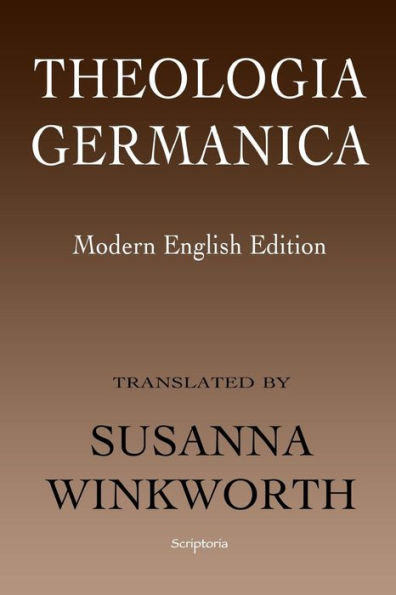
Theologia Germanica: Modern English Edition in Chattanooga, TN
Current price: $13.99
Barnes and Noble
Theologia Germanica: Modern English Edition in Chattanooga, TN
Current price: $13.99
Loading Inventory...
Size: Paperback
The
Theologia Germanica
is believed to have been written around 1350, by a priest in the house of the Teutonic order in Frankfort, Germany. The author may have been associated with the "Friends of God," led by Dominicans, John Tauler and Blessed Henry Suso. This book came to the attention of Martin Luther, and he is credited with giving the treatise its modern name. Written over a century before Luther's time, its theology draws upon the Latin Christianity of the Rhineland. The
has appeared in many editions and languages over its 600-year history, and has taken its place beside the
Imitation of Christ
, in literature of devotion.
Susanna Winkworth (1820-1884), translated the most complete version of the
known, based on the Wurtzburg Manuscript, discovered in the 19th century. Her translation, first published in 1854, includes additional passages not found in the editions made popular by Martin Luther.
In this Modern English Edition of the
from Scriptoria Books, only obsolete, archaic, and poetic words have been edited. The grammar and syntax of Susanna Winkworth's original translation from the German manuscript, have been preserved. This creates an edition that is true to the composition of the original translation, while providing a more-modern easier-reading text.
Theologia Germanica
is believed to have been written around 1350, by a priest in the house of the Teutonic order in Frankfort, Germany. The author may have been associated with the "Friends of God," led by Dominicans, John Tauler and Blessed Henry Suso. This book came to the attention of Martin Luther, and he is credited with giving the treatise its modern name. Written over a century before Luther's time, its theology draws upon the Latin Christianity of the Rhineland. The
has appeared in many editions and languages over its 600-year history, and has taken its place beside the
Imitation of Christ
, in literature of devotion.
Susanna Winkworth (1820-1884), translated the most complete version of the
known, based on the Wurtzburg Manuscript, discovered in the 19th century. Her translation, first published in 1854, includes additional passages not found in the editions made popular by Martin Luther.
In this Modern English Edition of the
from Scriptoria Books, only obsolete, archaic, and poetic words have been edited. The grammar and syntax of Susanna Winkworth's original translation from the German manuscript, have been preserved. This creates an edition that is true to the composition of the original translation, while providing a more-modern easier-reading text.
The
Theologia Germanica
is believed to have been written around 1350, by a priest in the house of the Teutonic order in Frankfort, Germany. The author may have been associated with the "Friends of God," led by Dominicans, John Tauler and Blessed Henry Suso. This book came to the attention of Martin Luther, and he is credited with giving the treatise its modern name. Written over a century before Luther's time, its theology draws upon the Latin Christianity of the Rhineland. The
has appeared in many editions and languages over its 600-year history, and has taken its place beside the
Imitation of Christ
, in literature of devotion.
Susanna Winkworth (1820-1884), translated the most complete version of the
known, based on the Wurtzburg Manuscript, discovered in the 19th century. Her translation, first published in 1854, includes additional passages not found in the editions made popular by Martin Luther.
In this Modern English Edition of the
from Scriptoria Books, only obsolete, archaic, and poetic words have been edited. The grammar and syntax of Susanna Winkworth's original translation from the German manuscript, have been preserved. This creates an edition that is true to the composition of the original translation, while providing a more-modern easier-reading text.
Theologia Germanica
is believed to have been written around 1350, by a priest in the house of the Teutonic order in Frankfort, Germany. The author may have been associated with the "Friends of God," led by Dominicans, John Tauler and Blessed Henry Suso. This book came to the attention of Martin Luther, and he is credited with giving the treatise its modern name. Written over a century before Luther's time, its theology draws upon the Latin Christianity of the Rhineland. The
has appeared in many editions and languages over its 600-year history, and has taken its place beside the
Imitation of Christ
, in literature of devotion.
Susanna Winkworth (1820-1884), translated the most complete version of the
known, based on the Wurtzburg Manuscript, discovered in the 19th century. Her translation, first published in 1854, includes additional passages not found in the editions made popular by Martin Luther.
In this Modern English Edition of the
from Scriptoria Books, only obsolete, archaic, and poetic words have been edited. The grammar and syntax of Susanna Winkworth's original translation from the German manuscript, have been preserved. This creates an edition that is true to the composition of the original translation, while providing a more-modern easier-reading text.
You May Also Like















More About Barnes and Noble at Hamilton Place
Barnes & Noble is the world’s largest retail bookseller and a leading retailer of content, digital media and educational products. Our Nook Digital business offers a lineup of NOOK® tablets and e-Readers and an expansive collection of digital reading content through the NOOK Store®. Barnes & Noble’s mission is to operate the best omni-channel specialty retail business in America, helping both our customers and booksellers reach their aspirations, while being a credit to the communities we serve.
2100 Hamilton Pl Blvd, Chattanooga, TN 37421, United States
Find Barnes and Noble at Hamilton Place in Chattanooga, TN
Visit Barnes and Noble at Hamilton Place in Chattanooga, TN
