
Home
The Western Interior Seaway: A Late Mesozoic Petroleum Province:
Barnes and Noble
Loading Inventory...
The Western Interior Seaway: A Late Mesozoic Petroleum Province: in Chattanooga, TN
Current price: $49.99
Barnes and Noble
The Western Interior Seaway: A Late Mesozoic Petroleum Province: in Chattanooga, TN
Current price: $49.99
Loading Inventory...
Size: Paperback
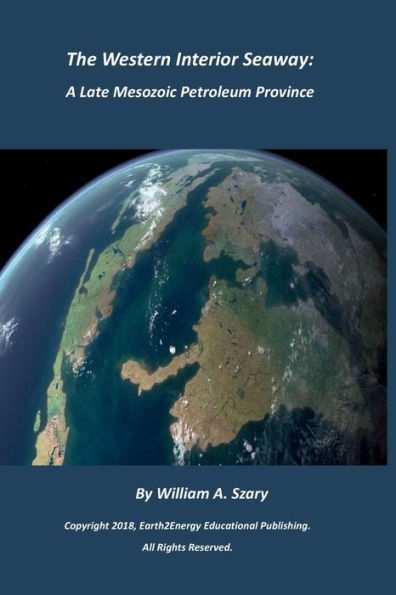
The Western Interior Seaway accumulated thick sediments which support hydrocarbon sources and reservoirs beginning in the Jurassic Period where the seaway was limited to the Canadian British Columbia and Saskatchewan Provinces. Seas retreated and advanced throughout the Northern Canadian Provinces up until the Early Cretaceous Period when the seaway began to invade the western U.S. states. By Late Cretaceous time, the seaway was at its maximum coverage throughout the Great Plains and along the Rocky Mountain front. The western parts were subjected to deformation while the eastern part remained undisturbed. Deformation along the Rocky Mountain front promoted fluvial floodplain and swamp deposition along the western shoreline building out deltaic deposits as the drainage reached the western shoreline. Coal deposits accumulated. The eastern shoreline consisted mostly of terrestrial deposits reworked as they invaded the seaway. Marine limestone accumulated in the quieter waters while sandstone, shale, and mudstone buried the limestone under similar conditions. These sediments promoted hydrocarbon development. The Western Interior Seaway region may be considered to be a largely interconnected hydrocarbon source and reservoir province subdivided into smaller hydrocarbon basins covering large portions of states, occasionally crossing state boundaries to extend the hydrocarbon source potential within the interior seaway regional province. Chapter 1 provides an overview of the Western U.S. Mesozoic and Cenozoic geologic histories. Chapter 2 describes the stratigraphy and sedimentation associated with the seaway during transgressive-regressive cyclic deposition. Chapter 3 presents coal and petroleum resources of Canada tied to the
Western Canadian Sedimentary Basin. Chapter 4 presents petroleum provinces in the western U.S., developed by the Western Interior Seaway. Chapter 5 summarizes the paleogeography, and hydrocarbon development.
Western Canadian Sedimentary Basin. Chapter 4 presents petroleum provinces in the western U.S., developed by the Western Interior Seaway. Chapter 5 summarizes the paleogeography, and hydrocarbon development.
The Western Interior Seaway accumulated thick sediments which support hydrocarbon sources and reservoirs beginning in the Jurassic Period where the seaway was limited to the Canadian British Columbia and Saskatchewan Provinces. Seas retreated and advanced throughout the Northern Canadian Provinces up until the Early Cretaceous Period when the seaway began to invade the western U.S. states. By Late Cretaceous time, the seaway was at its maximum coverage throughout the Great Plains and along the Rocky Mountain front. The western parts were subjected to deformation while the eastern part remained undisturbed. Deformation along the Rocky Mountain front promoted fluvial floodplain and swamp deposition along the western shoreline building out deltaic deposits as the drainage reached the western shoreline. Coal deposits accumulated. The eastern shoreline consisted mostly of terrestrial deposits reworked as they invaded the seaway. Marine limestone accumulated in the quieter waters while sandstone, shale, and mudstone buried the limestone under similar conditions. These sediments promoted hydrocarbon development. The Western Interior Seaway region may be considered to be a largely interconnected hydrocarbon source and reservoir province subdivided into smaller hydrocarbon basins covering large portions of states, occasionally crossing state boundaries to extend the hydrocarbon source potential within the interior seaway regional province. Chapter 1 provides an overview of the Western U.S. Mesozoic and Cenozoic geologic histories. Chapter 2 describes the stratigraphy and sedimentation associated with the seaway during transgressive-regressive cyclic deposition. Chapter 3 presents coal and petroleum resources of Canada tied to the
Western Canadian Sedimentary Basin. Chapter 4 presents petroleum provinces in the western U.S., developed by the Western Interior Seaway. Chapter 5 summarizes the paleogeography, and hydrocarbon development.
Western Canadian Sedimentary Basin. Chapter 4 presents petroleum provinces in the western U.S., developed by the Western Interior Seaway. Chapter 5 summarizes the paleogeography, and hydrocarbon development.
You May Also Like













More About Barnes and Noble at Hamilton Place
Barnes & Noble is the world’s largest retail bookseller and a leading retailer of content, digital media and educational products. Our Nook Digital business offers a lineup of NOOK® tablets and e-Readers and an expansive collection of digital reading content through the NOOK Store®. Barnes & Noble’s mission is to operate the best omni-channel specialty retail business in America, helping both our customers and booksellers reach their aspirations, while being a credit to the communities we serve.
2100 Hamilton Pl Blvd, Chattanooga, TN 37421, United States
Find Barnes and Noble at Hamilton Place in Chattanooga, TN
Visit Barnes and Noble at Hamilton Place in Chattanooga, TN
