
Home
the Visible and Invisible: On Seventeenth-Century Dutch Painting
Barnes and Noble
Loading Inventory...
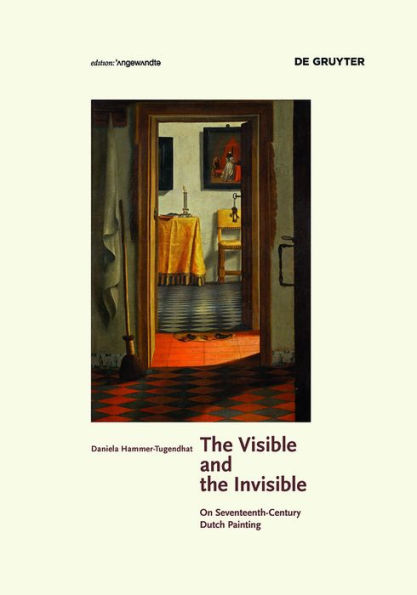
the Visible and Invisible: On Seventeenth-Century Dutch Painting in Chattanooga, TN
Current price: $70.00
Barnes and Noble
the Visible and Invisible: On Seventeenth-Century Dutch Painting in Chattanooga, TN
Current price: $70.00
Loading Inventory...
Size: Hardcover
The book addresses the scientific debates on Rembrandt, Metsu, Vermeer, and Hoogstraten that are currently taking place in art history and cultural studies. These focus mainly on the representation of gender difference, the relationship between text and image, and the emotional discourse. They are also an appeal for art history as a form of cultural studies that analyses the semantic potential of art within discursive and social contemporary practices.
Dutch painting of the seventeenth century reflects its relationship to visible reality. It deals with ambiguities and contradictions. As an avant-garde artistic media, it also contributes to the emergence of a subjectivity towards the modern “bourgeois”. It discards subject matter from its traditional fixation with iconology and evokes different imaginations and semantizations - aspects that have not been sufficiently taken into account in previous research.
The book is to be understood as an appeal for art history as a form of cultural science that analyses the semantic potential of art within discursive and social contemporary practices, and, at the same time, demonstrates its relevance today. Works by Rembrandt, Metsu, Vermeer, Hoogstraten, and others serve as exemplary case studies for addressing current debates in art history and cultural studies, such as representation of gender difference, relationship between text and image, and emotional discourse.
Dutch painting of the seventeenth century reflects its relationship to visible reality. It deals with ambiguities and contradictions. As an avant-garde artistic media, it also contributes to the emergence of a subjectivity towards the modern “bourgeois”. It discards subject matter from its traditional fixation with iconology and evokes different imaginations and semantizations - aspects that have not been sufficiently taken into account in previous research.
The book is to be understood as an appeal for art history as a form of cultural science that analyses the semantic potential of art within discursive and social contemporary practices, and, at the same time, demonstrates its relevance today. Works by Rembrandt, Metsu, Vermeer, Hoogstraten, and others serve as exemplary case studies for addressing current debates in art history and cultural studies, such as representation of gender difference, relationship between text and image, and emotional discourse.
The book addresses the scientific debates on Rembrandt, Metsu, Vermeer, and Hoogstraten that are currently taking place in art history and cultural studies. These focus mainly on the representation of gender difference, the relationship between text and image, and the emotional discourse. They are also an appeal for art history as a form of cultural studies that analyses the semantic potential of art within discursive and social contemporary practices.
Dutch painting of the seventeenth century reflects its relationship to visible reality. It deals with ambiguities and contradictions. As an avant-garde artistic media, it also contributes to the emergence of a subjectivity towards the modern “bourgeois”. It discards subject matter from its traditional fixation with iconology and evokes different imaginations and semantizations - aspects that have not been sufficiently taken into account in previous research.
The book is to be understood as an appeal for art history as a form of cultural science that analyses the semantic potential of art within discursive and social contemporary practices, and, at the same time, demonstrates its relevance today. Works by Rembrandt, Metsu, Vermeer, Hoogstraten, and others serve as exemplary case studies for addressing current debates in art history and cultural studies, such as representation of gender difference, relationship between text and image, and emotional discourse.
Dutch painting of the seventeenth century reflects its relationship to visible reality. It deals with ambiguities and contradictions. As an avant-garde artistic media, it also contributes to the emergence of a subjectivity towards the modern “bourgeois”. It discards subject matter from its traditional fixation with iconology and evokes different imaginations and semantizations - aspects that have not been sufficiently taken into account in previous research.
The book is to be understood as an appeal for art history as a form of cultural science that analyses the semantic potential of art within discursive and social contemporary practices, and, at the same time, demonstrates its relevance today. Works by Rembrandt, Metsu, Vermeer, Hoogstraten, and others serve as exemplary case studies for addressing current debates in art history and cultural studies, such as representation of gender difference, relationship between text and image, and emotional discourse.
You May Also Like










More About Barnes and Noble at Hamilton Place
Barnes & Noble is the world’s largest retail bookseller and a leading retailer of content, digital media and educational products. Our Nook Digital business offers a lineup of NOOK® tablets and e-Readers and an expansive collection of digital reading content through the NOOK Store®. Barnes & Noble’s mission is to operate the best omni-channel specialty retail business in America, helping both our customers and booksellers reach their aspirations, while being a credit to the communities we serve.
2100 Hamilton Pl Blvd, Chattanooga, TN 37421, United States
Find Barnes and Noble at Hamilton Place in Chattanooga, TN
Visit Barnes and Noble at Hamilton Place in Chattanooga, TN
