
Home
The Virgin's Children: Life in an Aztec Village Today
Barnes and Noble
Loading Inventory...
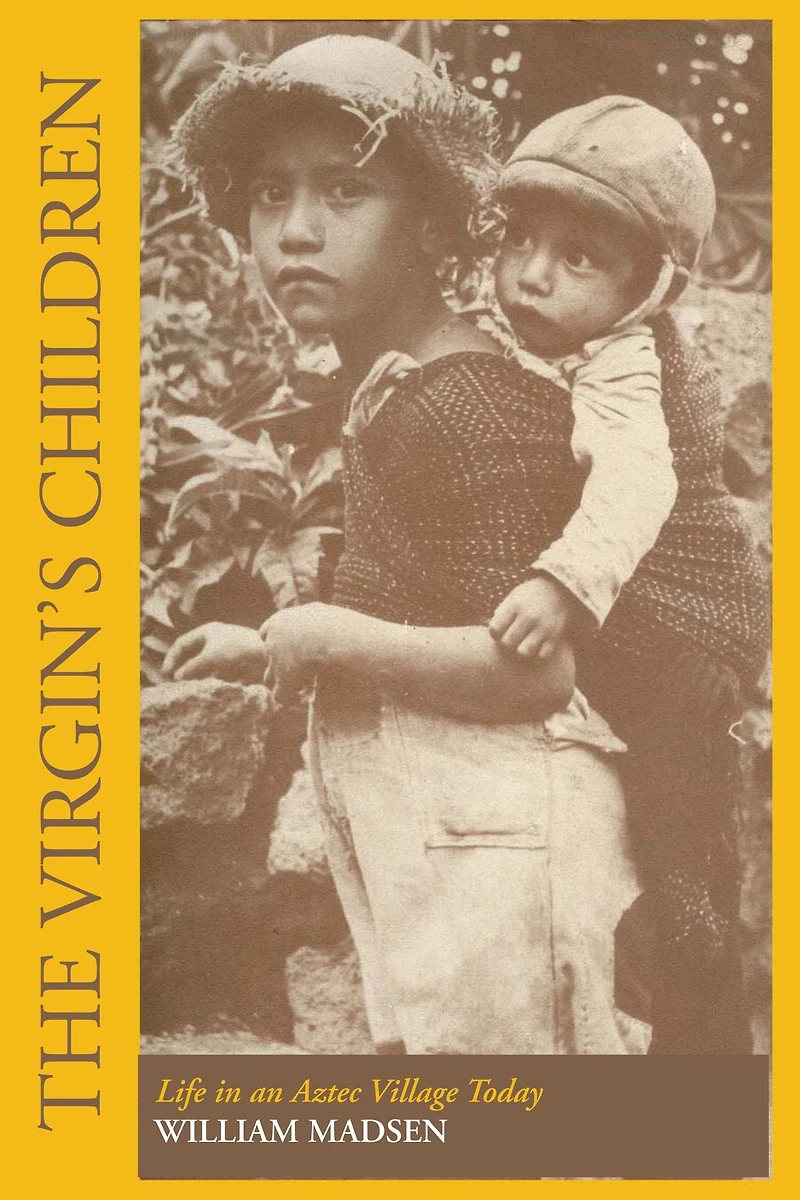
The Virgin's Children: Life in an Aztec Village Today in Chattanooga, TN
By Barnes & Noble
Current price: $25.00
Barnes and Noble
The Virgin's Children: Life in an Aztec Village Today in Chattanooga, TN
By Barnes & Noble
Current price: $25.00
Loading Inventory...
Size: EBook
An absorbing account of the descendants of the ancient Aztecs and of the survival of their culture into the twentieth century in the Valley of Mexico is presented in this fascinating volume. Focusing on San Francisco Tecospa—a village of some eight hundred Indians who still spoke Nahuatl, whose lives were dominated by supernaturalism, and who observed with only slight modification much of their Aztec heritage—this story bears out the anthropological principle that innovations are most likely to be accepted when they are useful, communicable, and compatible with established tradition. Nowhere is the Indian genius for combining the old and the new better exemplified than in the story of how the Virgin of Guadalupe came to fulfill the role formerly played by the pagan goddess Tonantzin and of how Christian saints replaced the Aztec gods. At the time of this study, the Tecospans still called the Catholic Virgin Tonantzin, but their concept of the mother goddess had changed profoundly since Aztec times. Tonantzin the Pagan, a hideous goddess with claws on her hands and feet and with snakes entwining her face, wore a necklace of hearts, hands, and skulls to represent her insatiable appetite for corpses. Tonantzin the Catholic—also called Guadalupe—is a beautiful and benevolent mother deity who repeatedly stays God’s anger against her Mexican children and answers the prayers of the poorest Indian, with no thought of return. In Tecospa the road to social recognition lay in the performance of religious works, and the neglect of ritual obligation subjected both the individual and the community to the anger of supernaturals who punished with illness or other misfortune. Religion was inextricably a part of every phase of life, and it is the whole life of the Aztecan that is recorded here: fiesta, clothing, food, agricultural practices, courtship, marriage, pregnancy and childbirth, death, witchcraft and its cures, medical practices and attitudes, houses and home life, ethics, and the hot-cold complex that classifies everything in the Tecospan universe from God to Bromo-Seltzer. With a marked simplicity of style and language William Madsen has produced a profoundly significant anthropological study that is delightful reading from the first sentence to the last. The drawings, the work of a ten-year-old Tecospan lad, are remarkable for their penetrating insight into the culture.
An absorbing account of the descendants of the ancient Aztecs and of the survival of their culture into the twentieth century in the Valley of Mexico is presented in this fascinating volume. Focusing on San Francisco Tecospa—a village of some eight hundred Indians who still spoke Nahuatl, whose lives were dominated by supernaturalism, and who observed with only slight modification much of their Aztec heritage—this story bears out the anthropological principle that innovations are most likely to be accepted when they are useful, communicable, and compatible with established tradition. Nowhere is the Indian genius for combining the old and the new better exemplified than in the story of how the Virgin of Guadalupe came to fulfill the role formerly played by the pagan goddess Tonantzin and of how Christian saints replaced the Aztec gods. At the time of this study, the Tecospans still called the Catholic Virgin Tonantzin, but their concept of the mother goddess had changed profoundly since Aztec times. Tonantzin the Pagan, a hideous goddess with claws on her hands and feet and with snakes entwining her face, wore a necklace of hearts, hands, and skulls to represent her insatiable appetite for corpses. Tonantzin the Catholic—also called Guadalupe—is a beautiful and benevolent mother deity who repeatedly stays God’s anger against her Mexican children and answers the prayers of the poorest Indian, with no thought of return. In Tecospa the road to social recognition lay in the performance of religious works, and the neglect of ritual obligation subjected both the individual and the community to the anger of supernaturals who punished with illness or other misfortune. Religion was inextricably a part of every phase of life, and it is the whole life of the Aztecan that is recorded here: fiesta, clothing, food, agricultural practices, courtship, marriage, pregnancy and childbirth, death, witchcraft and its cures, medical practices and attitudes, houses and home life, ethics, and the hot-cold complex that classifies everything in the Tecospan universe from God to Bromo-Seltzer. With a marked simplicity of style and language William Madsen has produced a profoundly significant anthropological study that is delightful reading from the first sentence to the last. The drawings, the work of a ten-year-old Tecospan lad, are remarkable for their penetrating insight into the culture.
You May Also Like










More About Barnes and Noble at Hamilton Place
Barnes & Noble is the world’s largest retail bookseller and a leading retailer of content, digital media and educational products. Our Nook Digital business offers a lineup of NOOK® tablets and e-Readers and an expansive collection of digital reading content through the NOOK Store®. Barnes & Noble’s mission is to operate the best omni-channel specialty retail business in America, helping both our customers and booksellers reach their aspirations, while being a credit to the communities we serve.
2100 Hamilton Pl Blvd, Chattanooga, TN 37421, United States
Find Barnes and Noble at Hamilton Place in Chattanooga, TN
Visit Barnes and Noble at Hamilton Place in Chattanooga, TN
