
Home
The Troubled Adolescent: Challenges and Resilience within Family Multicultural Contexts
Barnes and Noble
Loading Inventory...
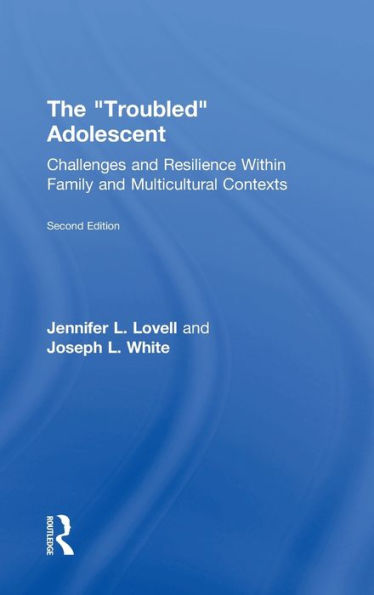
The Troubled Adolescent: Challenges and Resilience within Family Multicultural Contexts in Chattanooga, TN
Current price: $190.00
Barnes and Noble
The Troubled Adolescent: Challenges and Resilience within Family Multicultural Contexts in Chattanooga, TN
Current price: $190.00
Loading Inventory...
Size: Hardcover
The "Troubled" Adolescent: Challenges and Resilience Within Family and Multicultural Contexts
is written for students and clinicians who want to learn about adolescent behavioral health and psychosocial development. It focuses on the experiences of culturally diverse adolescents and families including, but not limited to, diversity based on race, ethnicity, gender identity, sexual orientation, spirituality, ability/disability status, age, nationality, language, and socioeconomic status. Written from a bioecological and strength-based perspective, it views adolescents as having the power to initiate growth and recover from setbacks.
The book is clinically focused and intended to build readers’ multicultural competence when working with youth and families. Six chapters focus on challenges and treatment for specific concerns, such as trauma- and stressor-related disorders, depression and anxiety, suicidal and nonsuicidal self-injury, eating disturbances, substance use disorders, and disruptive behaviors. The book balances theory and application, and provides information about screening, diagnosis (based on the
Diagnostic and Statistical Manual of Mental Disorders
, Fifth Edition, DSM-5), prevention, and treatment. Chapters contain case vignettes, self-reflective questions, discussion questions, suggestions for working with adolescents, and key terms. Special attention is given to family and cultural expressions and explanations for symptoms. Interactive learning opportunities are included as QR codes to meet diverse learning needs and to help readers apply information.
is written for students and clinicians who want to learn about adolescent behavioral health and psychosocial development. It focuses on the experiences of culturally diverse adolescents and families including, but not limited to, diversity based on race, ethnicity, gender identity, sexual orientation, spirituality, ability/disability status, age, nationality, language, and socioeconomic status. Written from a bioecological and strength-based perspective, it views adolescents as having the power to initiate growth and recover from setbacks.
The book is clinically focused and intended to build readers’ multicultural competence when working with youth and families. Six chapters focus on challenges and treatment for specific concerns, such as trauma- and stressor-related disorders, depression and anxiety, suicidal and nonsuicidal self-injury, eating disturbances, substance use disorders, and disruptive behaviors. The book balances theory and application, and provides information about screening, diagnosis (based on the
Diagnostic and Statistical Manual of Mental Disorders
, Fifth Edition, DSM-5), prevention, and treatment. Chapters contain case vignettes, self-reflective questions, discussion questions, suggestions for working with adolescents, and key terms. Special attention is given to family and cultural expressions and explanations for symptoms. Interactive learning opportunities are included as QR codes to meet diverse learning needs and to help readers apply information.
The "Troubled" Adolescent: Challenges and Resilience Within Family and Multicultural Contexts
is written for students and clinicians who want to learn about adolescent behavioral health and psychosocial development. It focuses on the experiences of culturally diverse adolescents and families including, but not limited to, diversity based on race, ethnicity, gender identity, sexual orientation, spirituality, ability/disability status, age, nationality, language, and socioeconomic status. Written from a bioecological and strength-based perspective, it views adolescents as having the power to initiate growth and recover from setbacks.
The book is clinically focused and intended to build readers’ multicultural competence when working with youth and families. Six chapters focus on challenges and treatment for specific concerns, such as trauma- and stressor-related disorders, depression and anxiety, suicidal and nonsuicidal self-injury, eating disturbances, substance use disorders, and disruptive behaviors. The book balances theory and application, and provides information about screening, diagnosis (based on the
Diagnostic and Statistical Manual of Mental Disorders
, Fifth Edition, DSM-5), prevention, and treatment. Chapters contain case vignettes, self-reflective questions, discussion questions, suggestions for working with adolescents, and key terms. Special attention is given to family and cultural expressions and explanations for symptoms. Interactive learning opportunities are included as QR codes to meet diverse learning needs and to help readers apply information.
is written for students and clinicians who want to learn about adolescent behavioral health and psychosocial development. It focuses on the experiences of culturally diverse adolescents and families including, but not limited to, diversity based on race, ethnicity, gender identity, sexual orientation, spirituality, ability/disability status, age, nationality, language, and socioeconomic status. Written from a bioecological and strength-based perspective, it views adolescents as having the power to initiate growth and recover from setbacks.
The book is clinically focused and intended to build readers’ multicultural competence when working with youth and families. Six chapters focus on challenges and treatment for specific concerns, such as trauma- and stressor-related disorders, depression and anxiety, suicidal and nonsuicidal self-injury, eating disturbances, substance use disorders, and disruptive behaviors. The book balances theory and application, and provides information about screening, diagnosis (based on the
Diagnostic and Statistical Manual of Mental Disorders
, Fifth Edition, DSM-5), prevention, and treatment. Chapters contain case vignettes, self-reflective questions, discussion questions, suggestions for working with adolescents, and key terms. Special attention is given to family and cultural expressions and explanations for symptoms. Interactive learning opportunities are included as QR codes to meet diverse learning needs and to help readers apply information.
You May Also Like








More About Barnes and Noble at Hamilton Place
Barnes & Noble is the world’s largest retail bookseller and a leading retailer of content, digital media and educational products. Our Nook Digital business offers a lineup of NOOK® tablets and e-Readers and an expansive collection of digital reading content through the NOOK Store®. Barnes & Noble’s mission is to operate the best omni-channel specialty retail business in America, helping both our customers and booksellers reach their aspirations, while being a credit to the communities we serve.
2100 Hamilton Pl Blvd, Chattanooga, TN 37421, United States
Find Barnes and Noble at Hamilton Place in Chattanooga, TN
Visit Barnes and Noble at Hamilton Place in Chattanooga, TN