
Home
the Transportation Right of Way: Support System Users at Crossroads Public Safety and Performance
Barnes and Noble
Loading Inventory...
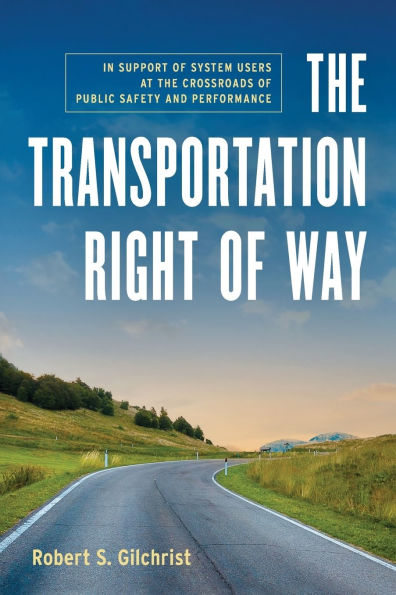
the Transportation Right of Way: Support System Users at Crossroads Public Safety and Performance in Chattanooga, TN
Current price: $26.95
Barnes and Noble
the Transportation Right of Way: Support System Users at Crossroads Public Safety and Performance in Chattanooga, TN
Current price: $26.95
Loading Inventory...
Size: Paperback
Rethinking Transportation Design, Operation, and Regulation
Too often, transportation systems fail the very people they are meant to serve. Although engineers and policymakers design systems based on industry standards, real-world users-drivers, cyclists, and pedestrians-face hazards that are often overlooked. From poorly maintained winter roads to a misalignment in expected versus actual usage due to human factors, these oversights put lives at risk.
Forensic transportation engineer Robert Gilchrist evaluates conventional thinking in transportation engineering through a human lens. By discussing the disconnect between industry standards and real-world conditions, he encourages a user-centric approach-one that considers human factors, environmental challenges, and the true cost of system failures. Through case studies, regulation analysis, and expert insights, he challenges current practice and supports an adjustment of baseline thinking to improve safety and decision-making.
With decades of experience investigating transportation failures, Gilchrist provides a compelling, accessible guide for engineers, policymakers, lawyers, and system users alike to inspire safer, smarter transportation systems.
Too often, transportation systems fail the very people they are meant to serve. Although engineers and policymakers design systems based on industry standards, real-world users-drivers, cyclists, and pedestrians-face hazards that are often overlooked. From poorly maintained winter roads to a misalignment in expected versus actual usage due to human factors, these oversights put lives at risk.
Forensic transportation engineer Robert Gilchrist evaluates conventional thinking in transportation engineering through a human lens. By discussing the disconnect between industry standards and real-world conditions, he encourages a user-centric approach-one that considers human factors, environmental challenges, and the true cost of system failures. Through case studies, regulation analysis, and expert insights, he challenges current practice and supports an adjustment of baseline thinking to improve safety and decision-making.
With decades of experience investigating transportation failures, Gilchrist provides a compelling, accessible guide for engineers, policymakers, lawyers, and system users alike to inspire safer, smarter transportation systems.
Rethinking Transportation Design, Operation, and Regulation
Too often, transportation systems fail the very people they are meant to serve. Although engineers and policymakers design systems based on industry standards, real-world users-drivers, cyclists, and pedestrians-face hazards that are often overlooked. From poorly maintained winter roads to a misalignment in expected versus actual usage due to human factors, these oversights put lives at risk.
Forensic transportation engineer Robert Gilchrist evaluates conventional thinking in transportation engineering through a human lens. By discussing the disconnect between industry standards and real-world conditions, he encourages a user-centric approach-one that considers human factors, environmental challenges, and the true cost of system failures. Through case studies, regulation analysis, and expert insights, he challenges current practice and supports an adjustment of baseline thinking to improve safety and decision-making.
With decades of experience investigating transportation failures, Gilchrist provides a compelling, accessible guide for engineers, policymakers, lawyers, and system users alike to inspire safer, smarter transportation systems.
Too often, transportation systems fail the very people they are meant to serve. Although engineers and policymakers design systems based on industry standards, real-world users-drivers, cyclists, and pedestrians-face hazards that are often overlooked. From poorly maintained winter roads to a misalignment in expected versus actual usage due to human factors, these oversights put lives at risk.
Forensic transportation engineer Robert Gilchrist evaluates conventional thinking in transportation engineering through a human lens. By discussing the disconnect between industry standards and real-world conditions, he encourages a user-centric approach-one that considers human factors, environmental challenges, and the true cost of system failures. Through case studies, regulation analysis, and expert insights, he challenges current practice and supports an adjustment of baseline thinking to improve safety and decision-making.
With decades of experience investigating transportation failures, Gilchrist provides a compelling, accessible guide for engineers, policymakers, lawyers, and system users alike to inspire safer, smarter transportation systems.
You May Also Like











More About Barnes and Noble at Hamilton Place
Barnes & Noble is the world’s largest retail bookseller and a leading retailer of content, digital media and educational products. Our Nook Digital business offers a lineup of NOOK® tablets and e-Readers and an expansive collection of digital reading content through the NOOK Store®. Barnes & Noble’s mission is to operate the best omni-channel specialty retail business in America, helping both our customers and booksellers reach their aspirations, while being a credit to the communities we serve.
2100 Hamilton Pl Blvd, Chattanooga, TN 37421, United States
Find Barnes and Noble at Hamilton Place in Chattanooga, TN
Visit Barnes and Noble at Hamilton Place in Chattanooga, TN
