
Home
The Thrift Debacle
Barnes and Noble
Loading Inventory...
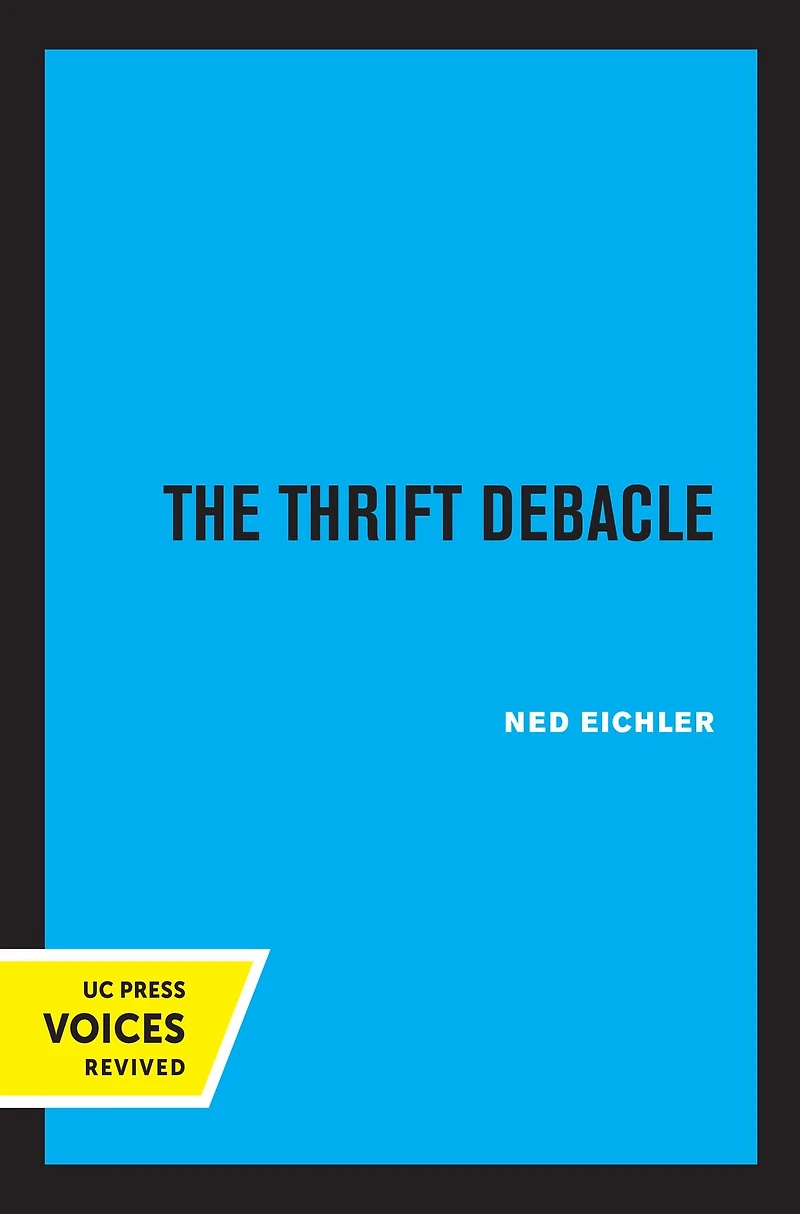

The Thrift Debacle in Chattanooga, TN
By Barnes & Noble
Current price: $23.95
Barnes and Noble
The Thrift Debacle in Chattanooga, TN
By Barnes & Noble
Current price: $23.95
Loading Inventory...
Size: EBook
The Thrift Debacle by Ned Eichler analyzes what he terms the greatest regulatory failure in American history: the collapse of the savings and loan industry and the enormous taxpayer burden created by the Federal Savings and Loan Insurance Corporation (FSLIC). Originally designed in the 1930s to stabilize the housing market during the Great Depression, FSLIC provided federal deposit insurance to thrifts, institutions whose main role was financing residential mortgages. For decades the system seemed stable, but by the late twentieth century changing economic conditions and the political appeal of deregulation destabilized the entire sector. Policymakers, driven by ideology rather than sober assessment, removed protective regulations without addressing the structural weaknesses of thrifts, including their limited purpose, shrinking role, and negligible capital base. Eichler argues that the “debacle” was not the result of deliberate corruption but rather of blind adherence to an idea that ignored fundamental realities. Eichler frames the crisis as a textbook case of policy divorced from prudence. He identifies seven ignored truths: there were already too many banks; thrifts had value only in providing home loans, a declining necessity; they were wholly creatures of the federal government; by 1980 they had virtually no capital; undercapitalized institutions had a record of failure; and the scale of potential losses was enormous. Yet deregulation advocates, supported by Congress and emboldened by the Reagan administration, insisted that deposit insurance, the special role of thrifts, and deregulation could coexist without consequence. In reality, deregulation amplified risk while shielding thrifts from accountability, setting the stage for losses approaching \$100 billion. By showing how ideology overwhelmed economic logic, The Thrift Debacle serves as both history and cautionary tale, underscoring the dangers of ignoring institutional limits when pursuing sweeping reforms in the financial sector. This title is part of UC Press's Voices Revived program, which commemorates University of California Press’s mission to seek out and cultivate the brightest minds and give them voice, reach, and impact. Drawing on a backlist dating to 1893, Voices Revived makes high-quality, peer-reviewed scholarship accessible once again using print-on-demand technology. This title was originally published in 1989.
The Thrift Debacle by Ned Eichler analyzes what he terms the greatest regulatory failure in American history: the collapse of the savings and loan industry and the enormous taxpayer burden created by the Federal Savings and Loan Insurance Corporation (FSLIC). Originally designed in the 1930s to stabilize the housing market during the Great Depression, FSLIC provided federal deposit insurance to thrifts, institutions whose main role was financing residential mortgages. For decades the system seemed stable, but by the late twentieth century changing economic conditions and the political appeal of deregulation destabilized the entire sector. Policymakers, driven by ideology rather than sober assessment, removed protective regulations without addressing the structural weaknesses of thrifts, including their limited purpose, shrinking role, and negligible capital base. Eichler argues that the “debacle” was not the result of deliberate corruption but rather of blind adherence to an idea that ignored fundamental realities. Eichler frames the crisis as a textbook case of policy divorced from prudence. He identifies seven ignored truths: there were already too many banks; thrifts had value only in providing home loans, a declining necessity; they were wholly creatures of the federal government; by 1980 they had virtually no capital; undercapitalized institutions had a record of failure; and the scale of potential losses was enormous. Yet deregulation advocates, supported by Congress and emboldened by the Reagan administration, insisted that deposit insurance, the special role of thrifts, and deregulation could coexist without consequence. In reality, deregulation amplified risk while shielding thrifts from accountability, setting the stage for losses approaching \$100 billion. By showing how ideology overwhelmed economic logic, The Thrift Debacle serves as both history and cautionary tale, underscoring the dangers of ignoring institutional limits when pursuing sweeping reforms in the financial sector. This title is part of UC Press's Voices Revived program, which commemorates University of California Press’s mission to seek out and cultivate the brightest minds and give them voice, reach, and impact. Drawing on a backlist dating to 1893, Voices Revived makes high-quality, peer-reviewed scholarship accessible once again using print-on-demand technology. This title was originally published in 1989.
You May Also Like














More About Barnes and Noble at Hamilton Place
Barnes & Noble is the world’s largest retail bookseller and a leading retailer of content, digital media and educational products. Our Nook Digital business offers a lineup of NOOK® tablets and e-Readers and an expansive collection of digital reading content through the NOOK Store®. Barnes & Noble’s mission is to operate the best omni-channel specialty retail business in America, helping both our customers and booksellers reach their aspirations, while being a credit to the communities we serve.
2100 Hamilton Pl Blvd, Chattanooga, TN 37421, United States
Find Barnes and Noble at Hamilton Place in Chattanooga, TN
Visit Barnes and Noble at Hamilton Place in Chattanooga, TN
