
Home
The Technological Competence of Arbitrators: A Comparative and International Legal Study
Barnes and Noble
Loading Inventory...
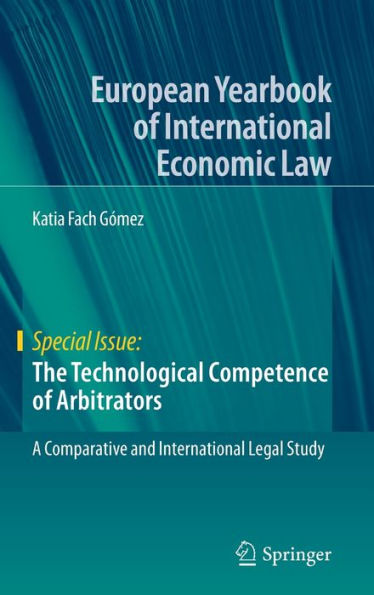
The Technological Competence of Arbitrators: A Comparative and International Legal Study in Chattanooga, TN
Current price: $139.99
Barnes and Noble
The Technological Competence of Arbitrators: A Comparative and International Legal Study in Chattanooga, TN
Current price: $139.99
Loading Inventory...
Size: Hardcover
Arbitration is facing revolutionary changes due to new technologies’ irruption into the entire arbitration proceeding. Wide-ranging technical-legal concepts such as e-discovery, e-hearing, cyber-security prool, e-deliberations, algorithmic decision-making and digital signing have become part of life. Technology’s impact on arbitration is unlikely to decrease after the COVID crisis; on the contrary, how the arbitration community positions itself vis-à-vis technology will be a key factor in determining arbitration’s future. Faced with this challenging scenario, the book discusses a novel legal topic: arbitrators’ relationship with this increasingly ubiquitous, rapidly-changing technology. This innovative book applies journalism’s “5 W questions” to the underexplored issue of arbitrators’ digital competence. It reaches a workable definition of what digital competence in the current arbitration context is, also providing answers to the essential question of why arbitrators’ digital competence is relevant from legal and financial points of view. Attention then shifts to who, with reflections on arbitrators working in a highly technological context and clarification of their relationship with other legal and non-legal actors. The book equally offers an in-depth comparative study of the question of where arbitrators’ technological competence is regulated, with critical analysis of soft and hard law provisions that may impose a digital competence duty. Finally, the book specifies when arbitrators need to be digitally competent and develops legal proposals regarding key procedural stages (initial conference, hearings) and legal topics (cybersecurity, data protection).
The first study to scrutinise the rapidly changing relationship between arbitrators and technology, the book aims to spark a crucial debate among practitioners and scholars. Academically rigorous and using the latest legal material, it emphasises arbitrators’ needs, rights and duties in our technological age, presenting them alongside carefully selected practical topics. The unprecedented and well-grounded proposals for arbitrators’ digital competence are intended to be a call to action for its broad target audience.
The first study to scrutinise the rapidly changing relationship between arbitrators and technology, the book aims to spark a crucial debate among practitioners and scholars. Academically rigorous and using the latest legal material, it emphasises arbitrators’ needs, rights and duties in our technological age, presenting them alongside carefully selected practical topics. The unprecedented and well-grounded proposals for arbitrators’ digital competence are intended to be a call to action for its broad target audience.
Arbitration is facing revolutionary changes due to new technologies’ irruption into the entire arbitration proceeding. Wide-ranging technical-legal concepts such as e-discovery, e-hearing, cyber-security prool, e-deliberations, algorithmic decision-making and digital signing have become part of life. Technology’s impact on arbitration is unlikely to decrease after the COVID crisis; on the contrary, how the arbitration community positions itself vis-à-vis technology will be a key factor in determining arbitration’s future. Faced with this challenging scenario, the book discusses a novel legal topic: arbitrators’ relationship with this increasingly ubiquitous, rapidly-changing technology. This innovative book applies journalism’s “5 W questions” to the underexplored issue of arbitrators’ digital competence. It reaches a workable definition of what digital competence in the current arbitration context is, also providing answers to the essential question of why arbitrators’ digital competence is relevant from legal and financial points of view. Attention then shifts to who, with reflections on arbitrators working in a highly technological context and clarification of their relationship with other legal and non-legal actors. The book equally offers an in-depth comparative study of the question of where arbitrators’ technological competence is regulated, with critical analysis of soft and hard law provisions that may impose a digital competence duty. Finally, the book specifies when arbitrators need to be digitally competent and develops legal proposals regarding key procedural stages (initial conference, hearings) and legal topics (cybersecurity, data protection).
The first study to scrutinise the rapidly changing relationship between arbitrators and technology, the book aims to spark a crucial debate among practitioners and scholars. Academically rigorous and using the latest legal material, it emphasises arbitrators’ needs, rights and duties in our technological age, presenting them alongside carefully selected practical topics. The unprecedented and well-grounded proposals for arbitrators’ digital competence are intended to be a call to action for its broad target audience.
The first study to scrutinise the rapidly changing relationship between arbitrators and technology, the book aims to spark a crucial debate among practitioners and scholars. Academically rigorous and using the latest legal material, it emphasises arbitrators’ needs, rights and duties in our technological age, presenting them alongside carefully selected practical topics. The unprecedented and well-grounded proposals for arbitrators’ digital competence are intended to be a call to action for its broad target audience.
You May Also Like











More About Barnes and Noble at Hamilton Place
Barnes & Noble is the world’s largest retail bookseller and a leading retailer of content, digital media and educational products. Our Nook Digital business offers a lineup of NOOK® tablets and e-Readers and an expansive collection of digital reading content through the NOOK Store®. Barnes & Noble’s mission is to operate the best omni-channel specialty retail business in America, helping both our customers and booksellers reach their aspirations, while being a credit to the communities we serve.
2100 Hamilton Pl Blvd, Chattanooga, TN 37421, United States
Find Barnes and Noble at Hamilton Place in Chattanooga, TN
Visit Barnes and Noble at Hamilton Place in Chattanooga, TN
