
Home
the Steppe and Sea: Pearls Mongol Empire
Barnes and Noble
Loading Inventory...
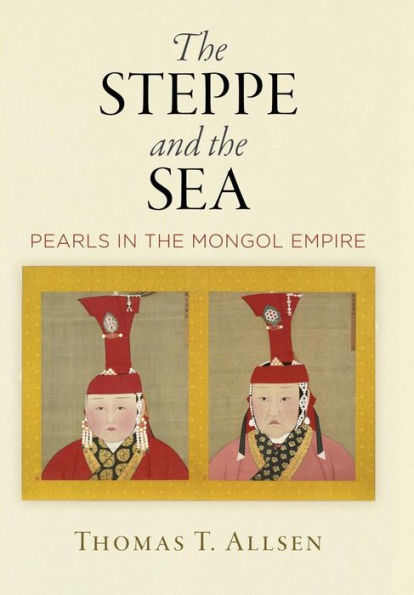
the Steppe and Sea: Pearls Mongol Empire in Chattanooga, TN
Current price: $49.95
Barnes and Noble
the Steppe and Sea: Pearls Mongol Empire in Chattanooga, TN
Current price: $49.95
Loading Inventory...
Size: Hardcover
In 1221, in what we now call Turkmenistan, a captive held by Mongol soldiers confessed that she had swallowed her pearls in order to safeguard them. She was immediately executed and eviscerated. On finding several pearls, Chinggis Qan (Genghis Khan) ordered that they cut open every slain person on the battlefield. Pearls, valued for aesthetic, economic, religious, and political reasons, were the ultimate luxury good of the Middle Ages, and the Chingissid imperium, the largest contiguous land empire in history, was their unmatched collector, promoter, and conveyor. Thomas T. Allsen examines the importance of pearls, as luxury good and political investment, in the Mongolian empire—from its origin in 1206, through its unprecedented expansion, to its division and decline in 1370—in order to track the varied cultural and commercial interactions between the northern steppes and the southern seas.
Focusing first on the acquisition, display, redistribution, and political significance of pearls, Allsen shows how the very act of forming such a vast nomadic empire required the massive accumulation, management, and movement of prestige goods, and how this process brought into being new regimes of consumption on a continental scale. He argues that overland and seaborne trade flourished simultaneously, forming a dynamic exchange system that moved commodities from east to west and north to south, including an enormous quantity of pearls. Tracking the circulation of pearls across time, he highlights the importance of different modes of exchange—booty-taking, tributary relations, market mechanisms, and reciprocal gift-giving. He also sheds light on the ways in which Mongols' marketing strategies made use of not only myth and folklore but also maritime communications networks created by Indian-Buddhist and Muslim merchants skilled in cross-cultural commerce.
In Allsen's analysis, pearls illuminate Mongolian exceptionalism in steppe history, the interconnections between overland and seaborne trade, recurrent patterns in the employment of luxury goods in the political cultures of empires, and the consequences of such goods for local and regional economies.
Focusing first on the acquisition, display, redistribution, and political significance of pearls, Allsen shows how the very act of forming such a vast nomadic empire required the massive accumulation, management, and movement of prestige goods, and how this process brought into being new regimes of consumption on a continental scale. He argues that overland and seaborne trade flourished simultaneously, forming a dynamic exchange system that moved commodities from east to west and north to south, including an enormous quantity of pearls. Tracking the circulation of pearls across time, he highlights the importance of different modes of exchange—booty-taking, tributary relations, market mechanisms, and reciprocal gift-giving. He also sheds light on the ways in which Mongols' marketing strategies made use of not only myth and folklore but also maritime communications networks created by Indian-Buddhist and Muslim merchants skilled in cross-cultural commerce.
In Allsen's analysis, pearls illuminate Mongolian exceptionalism in steppe history, the interconnections between overland and seaborne trade, recurrent patterns in the employment of luxury goods in the political cultures of empires, and the consequences of such goods for local and regional economies.
In 1221, in what we now call Turkmenistan, a captive held by Mongol soldiers confessed that she had swallowed her pearls in order to safeguard them. She was immediately executed and eviscerated. On finding several pearls, Chinggis Qan (Genghis Khan) ordered that they cut open every slain person on the battlefield. Pearls, valued for aesthetic, economic, religious, and political reasons, were the ultimate luxury good of the Middle Ages, and the Chingissid imperium, the largest contiguous land empire in history, was their unmatched collector, promoter, and conveyor. Thomas T. Allsen examines the importance of pearls, as luxury good and political investment, in the Mongolian empire—from its origin in 1206, through its unprecedented expansion, to its division and decline in 1370—in order to track the varied cultural and commercial interactions between the northern steppes and the southern seas.
Focusing first on the acquisition, display, redistribution, and political significance of pearls, Allsen shows how the very act of forming such a vast nomadic empire required the massive accumulation, management, and movement of prestige goods, and how this process brought into being new regimes of consumption on a continental scale. He argues that overland and seaborne trade flourished simultaneously, forming a dynamic exchange system that moved commodities from east to west and north to south, including an enormous quantity of pearls. Tracking the circulation of pearls across time, he highlights the importance of different modes of exchange—booty-taking, tributary relations, market mechanisms, and reciprocal gift-giving. He also sheds light on the ways in which Mongols' marketing strategies made use of not only myth and folklore but also maritime communications networks created by Indian-Buddhist and Muslim merchants skilled in cross-cultural commerce.
In Allsen's analysis, pearls illuminate Mongolian exceptionalism in steppe history, the interconnections between overland and seaborne trade, recurrent patterns in the employment of luxury goods in the political cultures of empires, and the consequences of such goods for local and regional economies.
Focusing first on the acquisition, display, redistribution, and political significance of pearls, Allsen shows how the very act of forming such a vast nomadic empire required the massive accumulation, management, and movement of prestige goods, and how this process brought into being new regimes of consumption on a continental scale. He argues that overland and seaborne trade flourished simultaneously, forming a dynamic exchange system that moved commodities from east to west and north to south, including an enormous quantity of pearls. Tracking the circulation of pearls across time, he highlights the importance of different modes of exchange—booty-taking, tributary relations, market mechanisms, and reciprocal gift-giving. He also sheds light on the ways in which Mongols' marketing strategies made use of not only myth and folklore but also maritime communications networks created by Indian-Buddhist and Muslim merchants skilled in cross-cultural commerce.
In Allsen's analysis, pearls illuminate Mongolian exceptionalism in steppe history, the interconnections between overland and seaborne trade, recurrent patterns in the employment of luxury goods in the political cultures of empires, and the consequences of such goods for local and regional economies.
You May Also Like
















More About Barnes and Noble at Hamilton Place
Barnes & Noble is the world’s largest retail bookseller and a leading retailer of content, digital media and educational products. Our Nook Digital business offers a lineup of NOOK® tablets and e-Readers and an expansive collection of digital reading content through the NOOK Store®. Barnes & Noble’s mission is to operate the best omni-channel specialty retail business in America, helping both our customers and booksellers reach their aspirations, while being a credit to the communities we serve.
2100 Hamilton Pl Blvd, Chattanooga, TN 37421, United States
Find Barnes and Noble at Hamilton Place in Chattanooga, TN
Visit Barnes and Noble at Hamilton Place in Chattanooga, TN
