
Home
The Socio-Cognitive Approach to Communication and Pragmatics
Barnes and Noble
Loading Inventory...
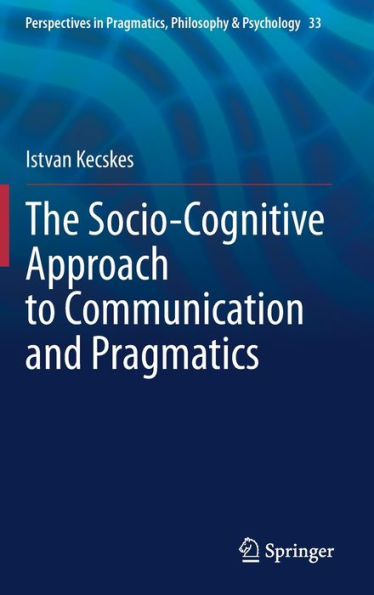
The Socio-Cognitive Approach to Communication and Pragmatics in Chattanooga, TN
Current price: $119.99
Barnes and Noble
The Socio-Cognitive Approach to Communication and Pragmatics in Chattanooga, TN
Current price: $119.99
Loading Inventory...
Size: Hardcover
The book aims to serve as a theoretical framework for the socio-cognitive approach (SCA) that is an alternative to the two main lines of pragmatics research: linguistic-philosophical pragmatics and sociocultural-interactional pragmatics. SCA broadens the scope of the field with an intent to incorporate not only L1 communication but also intercultural communication, and communication in a second language. The author integrates the pragmatic view of cooperation and the cognitive view of egocentrism and emphasizes that both cooperation and egocentrism are manifested in all phases of communication, albeit to varying extents. SCA places equal importance on the social and cognitive individual factors in pragmatics. The author claims that while (social) cooperation is an intention-directed practice that is governed by relevance, (individual) egocentrism is an attention-oriented trait dominated by salience.
The book serves as a theoretical guide for researchers and students who would like to understand how we need to change first language-based theories to make sense of what happens not only in L1 but also in intercultural and multi-lingual interactions.
The book serves as a theoretical guide for researchers and students who would like to understand how we need to change first language-based theories to make sense of what happens not only in L1 but also in intercultural and multi-lingual interactions.
The book aims to serve as a theoretical framework for the socio-cognitive approach (SCA) that is an alternative to the two main lines of pragmatics research: linguistic-philosophical pragmatics and sociocultural-interactional pragmatics. SCA broadens the scope of the field with an intent to incorporate not only L1 communication but also intercultural communication, and communication in a second language. The author integrates the pragmatic view of cooperation and the cognitive view of egocentrism and emphasizes that both cooperation and egocentrism are manifested in all phases of communication, albeit to varying extents. SCA places equal importance on the social and cognitive individual factors in pragmatics. The author claims that while (social) cooperation is an intention-directed practice that is governed by relevance, (individual) egocentrism is an attention-oriented trait dominated by salience.
The book serves as a theoretical guide for researchers and students who would like to understand how we need to change first language-based theories to make sense of what happens not only in L1 but also in intercultural and multi-lingual interactions.
The book serves as a theoretical guide for researchers and students who would like to understand how we need to change first language-based theories to make sense of what happens not only in L1 but also in intercultural and multi-lingual interactions.
You May Also Like


















More About Barnes and Noble at Hamilton Place
Barnes & Noble is the world’s largest retail bookseller and a leading retailer of content, digital media and educational products. Our Nook Digital business offers a lineup of NOOK® tablets and e-Readers and an expansive collection of digital reading content through the NOOK Store®. Barnes & Noble’s mission is to operate the best omni-channel specialty retail business in America, helping both our customers and booksellers reach their aspirations, while being a credit to the communities we serve.
2100 Hamilton Pl Blvd, Chattanooga, TN 37421, United States
Find Barnes and Noble at Hamilton Place in Chattanooga, TN
Visit Barnes and Noble at Hamilton Place in Chattanooga, TN
