
Home
the Scientific Sublime: Popular Science Unravels Mysteries of Universe
Barnes and Noble
Loading Inventory...
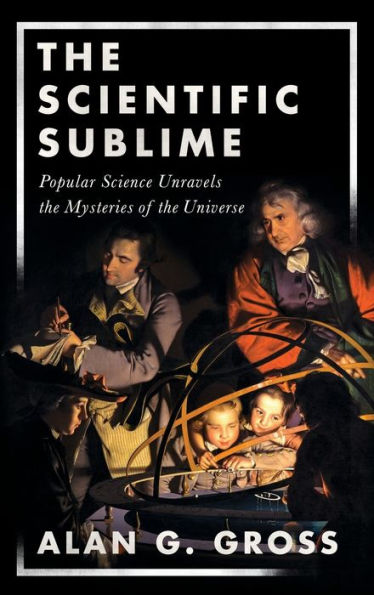
the Scientific Sublime: Popular Science Unravels Mysteries of Universe in Chattanooga, TN
Current price: $19.99
Barnes and Noble
the Scientific Sublime: Popular Science Unravels Mysteries of Universe in Chattanooga, TN
Current price: $19.99
Loading Inventory...
Size: Audiobook
The sublime evokes our awe, our terror, and our wonder. Applied first in ancient Greece to the heights of literary expression, in the 18th-century the sublime was extended to nature and to the sciences, enterprises that viewed the natural world as a manifestation of God's goodness, power, and wisdom.
In
The Scientific Sublime
, Alan Gross reveals the modern-day sublime in popular science. He shows how the great popular scientists of our timeRichard Feynman, Stephen Hawking, Steven Weinberg, Brian Greene, Lisa Randall, Rachel Carson, Stephen Jay Gould, Steven Pinker, Richard Dawkins, and E. O. Wilsonevoke the sublime in response to fundamental questions: How did the universe begin? How did life? How did language? These authors maintain a tradition initiated by Joseph Addison, Edmund Burke, Immanuel Kant, and Adam Smith, towering 18th-century figures who adapted the literary sublime first to nature, then to sciencethough with one crucial difference: religion has been replaced wholly by science.
In a final chapter, Gross explores science's attack on religion, an assault that attempts to sweep permanently under the rug two questions science cannot answer: What is the meaning of life? What is the meaning of the good life?
In
The Scientific Sublime
, Alan Gross reveals the modern-day sublime in popular science. He shows how the great popular scientists of our timeRichard Feynman, Stephen Hawking, Steven Weinberg, Brian Greene, Lisa Randall, Rachel Carson, Stephen Jay Gould, Steven Pinker, Richard Dawkins, and E. O. Wilsonevoke the sublime in response to fundamental questions: How did the universe begin? How did life? How did language? These authors maintain a tradition initiated by Joseph Addison, Edmund Burke, Immanuel Kant, and Adam Smith, towering 18th-century figures who adapted the literary sublime first to nature, then to sciencethough with one crucial difference: religion has been replaced wholly by science.
In a final chapter, Gross explores science's attack on religion, an assault that attempts to sweep permanently under the rug two questions science cannot answer: What is the meaning of life? What is the meaning of the good life?
The sublime evokes our awe, our terror, and our wonder. Applied first in ancient Greece to the heights of literary expression, in the 18th-century the sublime was extended to nature and to the sciences, enterprises that viewed the natural world as a manifestation of God's goodness, power, and wisdom.
In
The Scientific Sublime
, Alan Gross reveals the modern-day sublime in popular science. He shows how the great popular scientists of our timeRichard Feynman, Stephen Hawking, Steven Weinberg, Brian Greene, Lisa Randall, Rachel Carson, Stephen Jay Gould, Steven Pinker, Richard Dawkins, and E. O. Wilsonevoke the sublime in response to fundamental questions: How did the universe begin? How did life? How did language? These authors maintain a tradition initiated by Joseph Addison, Edmund Burke, Immanuel Kant, and Adam Smith, towering 18th-century figures who adapted the literary sublime first to nature, then to sciencethough with one crucial difference: religion has been replaced wholly by science.
In a final chapter, Gross explores science's attack on religion, an assault that attempts to sweep permanently under the rug two questions science cannot answer: What is the meaning of life? What is the meaning of the good life?
In
The Scientific Sublime
, Alan Gross reveals the modern-day sublime in popular science. He shows how the great popular scientists of our timeRichard Feynman, Stephen Hawking, Steven Weinberg, Brian Greene, Lisa Randall, Rachel Carson, Stephen Jay Gould, Steven Pinker, Richard Dawkins, and E. O. Wilsonevoke the sublime in response to fundamental questions: How did the universe begin? How did life? How did language? These authors maintain a tradition initiated by Joseph Addison, Edmund Burke, Immanuel Kant, and Adam Smith, towering 18th-century figures who adapted the literary sublime first to nature, then to sciencethough with one crucial difference: religion has been replaced wholly by science.
In a final chapter, Gross explores science's attack on religion, an assault that attempts to sweep permanently under the rug two questions science cannot answer: What is the meaning of life? What is the meaning of the good life?
You May Also Like









More About Barnes and Noble at Hamilton Place
Barnes & Noble is the world’s largest retail bookseller and a leading retailer of content, digital media and educational products. Our Nook Digital business offers a lineup of NOOK® tablets and e-Readers and an expansive collection of digital reading content through the NOOK Store®. Barnes & Noble’s mission is to operate the best omni-channel specialty retail business in America, helping both our customers and booksellers reach their aspirations, while being a credit to the communities we serve.
2100 Hamilton Pl Blvd, Chattanooga, TN 37421, United States
Find Barnes and Noble at Hamilton Place in Chattanooga, TN
Visit Barnes and Noble at Hamilton Place in Chattanooga, TN