
Home
The Science of Sacrifice: American Literature and Modern Social Theory
Barnes and Noble
Loading Inventory...
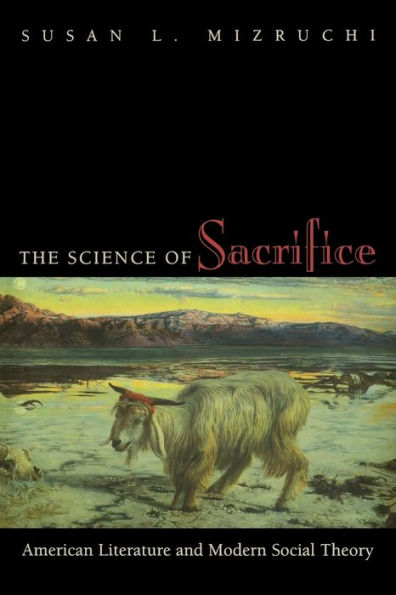
The Science of Sacrifice: American Literature and Modern Social Theory in Chattanooga, TN
Current price: $68.00
Barnes and Noble
The Science of Sacrifice: American Literature and Modern Social Theory in Chattanooga, TN
Current price: $68.00
Loading Inventory...
Size: OS
From ritual killings to subtle acts of self-denial, the practice and rhetoric of sacrifice has a special centrality in modern American literature. In a compelling interdisciplinary investigation, Susan Mizruchi portrays an episode in American cultural history when the literary movement of realism and the fledgling field of sociology both converged in the belief that sacrifice is basic to sociality. This is a book about the fascination that sacrifice held for writersprincipally Herman Melville, Henry James, and W.E.B. Du Boisand also for those who articulated the main tenets of modern social theory, an inquiry that eventually spans historical events such as public lynchings and the political scapegoating of immigrants a century ago.
The execution in
Billy Budd Sailor
, the death of Du Bois's first-born son in
The Souls of Black Folk
, Henry James's preoccupation with renunciation and scapegoating, and the self-denying working classes of Norris and Stein all illustrate repeated stagings of sacrificial rituals from a Biblical past. For Mizruchi, the peculiar persistence of this aesthetic construct becomes a guide to a rich theological and social-scientific tradition distinctive to the late nineteenth and early twentieth centuries, and including such influential works as Smith's
Lectures on the Religion of the Semites
, Frazer's
Golden Bough
, and Ross's
Sin and Society
.
The major features of sacrificeits original association with spiritual doubt, its function as a form of spiritual economics that sustained divisions between the fortunate and the bereft, and its role in fixing boundaries between aliens and kinheld strong symbolic value for writers struggling to reconcile faith with rationalism, and communal coherence with capitalist expansion. Mizruchi eloquently demonstrates how the conceptual power of sacrifice made it a key mediator of cultural change, from the decline of sympathy and the significance of "race" in an emerging multicultural society to the revival of maternal self-sacrifice.
The execution in
Billy Budd Sailor
, the death of Du Bois's first-born son in
The Souls of Black Folk
, Henry James's preoccupation with renunciation and scapegoating, and the self-denying working classes of Norris and Stein all illustrate repeated stagings of sacrificial rituals from a Biblical past. For Mizruchi, the peculiar persistence of this aesthetic construct becomes a guide to a rich theological and social-scientific tradition distinctive to the late nineteenth and early twentieth centuries, and including such influential works as Smith's
Lectures on the Religion of the Semites
, Frazer's
Golden Bough
, and Ross's
Sin and Society
.
The major features of sacrificeits original association with spiritual doubt, its function as a form of spiritual economics that sustained divisions between the fortunate and the bereft, and its role in fixing boundaries between aliens and kinheld strong symbolic value for writers struggling to reconcile faith with rationalism, and communal coherence with capitalist expansion. Mizruchi eloquently demonstrates how the conceptual power of sacrifice made it a key mediator of cultural change, from the decline of sympathy and the significance of "race" in an emerging multicultural society to the revival of maternal self-sacrifice.
From ritual killings to subtle acts of self-denial, the practice and rhetoric of sacrifice has a special centrality in modern American literature. In a compelling interdisciplinary investigation, Susan Mizruchi portrays an episode in American cultural history when the literary movement of realism and the fledgling field of sociology both converged in the belief that sacrifice is basic to sociality. This is a book about the fascination that sacrifice held for writersprincipally Herman Melville, Henry James, and W.E.B. Du Boisand also for those who articulated the main tenets of modern social theory, an inquiry that eventually spans historical events such as public lynchings and the political scapegoating of immigrants a century ago.
The execution in
Billy Budd Sailor
, the death of Du Bois's first-born son in
The Souls of Black Folk
, Henry James's preoccupation with renunciation and scapegoating, and the self-denying working classes of Norris and Stein all illustrate repeated stagings of sacrificial rituals from a Biblical past. For Mizruchi, the peculiar persistence of this aesthetic construct becomes a guide to a rich theological and social-scientific tradition distinctive to the late nineteenth and early twentieth centuries, and including such influential works as Smith's
Lectures on the Religion of the Semites
, Frazer's
Golden Bough
, and Ross's
Sin and Society
.
The major features of sacrificeits original association with spiritual doubt, its function as a form of spiritual economics that sustained divisions between the fortunate and the bereft, and its role in fixing boundaries between aliens and kinheld strong symbolic value for writers struggling to reconcile faith with rationalism, and communal coherence with capitalist expansion. Mizruchi eloquently demonstrates how the conceptual power of sacrifice made it a key mediator of cultural change, from the decline of sympathy and the significance of "race" in an emerging multicultural society to the revival of maternal self-sacrifice.
The execution in
Billy Budd Sailor
, the death of Du Bois's first-born son in
The Souls of Black Folk
, Henry James's preoccupation with renunciation and scapegoating, and the self-denying working classes of Norris and Stein all illustrate repeated stagings of sacrificial rituals from a Biblical past. For Mizruchi, the peculiar persistence of this aesthetic construct becomes a guide to a rich theological and social-scientific tradition distinctive to the late nineteenth and early twentieth centuries, and including such influential works as Smith's
Lectures on the Religion of the Semites
, Frazer's
Golden Bough
, and Ross's
Sin and Society
.
The major features of sacrificeits original association with spiritual doubt, its function as a form of spiritual economics that sustained divisions between the fortunate and the bereft, and its role in fixing boundaries between aliens and kinheld strong symbolic value for writers struggling to reconcile faith with rationalism, and communal coherence with capitalist expansion. Mizruchi eloquently demonstrates how the conceptual power of sacrifice made it a key mediator of cultural change, from the decline of sympathy and the significance of "race" in an emerging multicultural society to the revival of maternal self-sacrifice.
You May Also Like











More About Barnes and Noble at Hamilton Place
Barnes & Noble is the world’s largest retail bookseller and a leading retailer of content, digital media and educational products. Our Nook Digital business offers a lineup of NOOK® tablets and e-Readers and an expansive collection of digital reading content through the NOOK Store®. Barnes & Noble’s mission is to operate the best omni-channel specialty retail business in America, helping both our customers and booksellers reach their aspirations, while being a credit to the communities we serve.
2100 Hamilton Pl Blvd, Chattanooga, TN 37421, United States
Find Barnes and Noble at Hamilton Place in Chattanooga, TN
Visit Barnes and Noble at Hamilton Place in Chattanooga, TN
