
Home
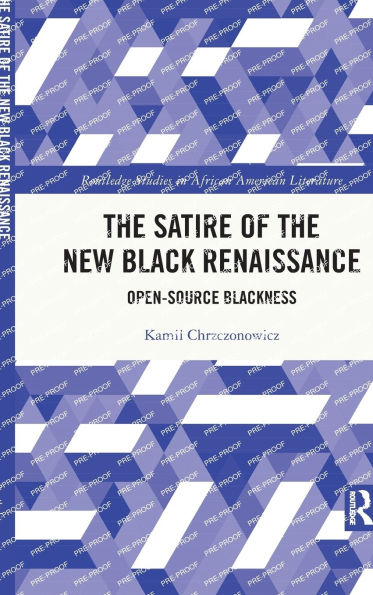
the Satire of New Black Renaissance: Open-Source Blackness
Barnes and Noble
Loading Inventory...
the Satire of New Black Renaissance: Open-Source Blackness in Chattanooga, TN
Current price: $190.00
Barnes and Noble
the Satire of New Black Renaissance: Open-Source Blackness in Chattanooga, TN
Current price: $190.00
Loading Inventory...
Size: Hardcover
How do twenty-first century Black satirists rewrite American ideas of race? This book plunges into the New Black Renaissance – a flowering of the 2000s and 2010s African American culture – and argues that its most potent tool is anti-essentialist satire. The study traces what Baratunde Thurston calls “Open-source Blackness,” an ethos that prizes individuality, inclusivity, and remix.
To map this new terrain, this volume offers close readings of three signature works: Percival Everett’s metafictional
Erasure
, Justin Simien’s campus satire
Dear White People
, and Thurston’s own multimedia endeavors – his memoir
How to Be Black
and the playful software experiments developed under the auspices of his company, Cultivated Wit.
Together, these texts show how literature, film, and technology fracture worn stereotypes and invite broader co-creation of (non-)racial identity. The result is the first sustained academic account of Open-source Blackness – of interest to students and scholars in literary, media, and cultural studies.
To map this new terrain, this volume offers close readings of three signature works: Percival Everett’s metafictional
Erasure
, Justin Simien’s campus satire
Dear White People
, and Thurston’s own multimedia endeavors – his memoir
How to Be Black
and the playful software experiments developed under the auspices of his company, Cultivated Wit.
Together, these texts show how literature, film, and technology fracture worn stereotypes and invite broader co-creation of (non-)racial identity. The result is the first sustained academic account of Open-source Blackness – of interest to students and scholars in literary, media, and cultural studies.
How do twenty-first century Black satirists rewrite American ideas of race? This book plunges into the New Black Renaissance – a flowering of the 2000s and 2010s African American culture – and argues that its most potent tool is anti-essentialist satire. The study traces what Baratunde Thurston calls “Open-source Blackness,” an ethos that prizes individuality, inclusivity, and remix.
To map this new terrain, this volume offers close readings of three signature works: Percival Everett’s metafictional
Erasure
, Justin Simien’s campus satire
Dear White People
, and Thurston’s own multimedia endeavors – his memoir
How to Be Black
and the playful software experiments developed under the auspices of his company, Cultivated Wit.
Together, these texts show how literature, film, and technology fracture worn stereotypes and invite broader co-creation of (non-)racial identity. The result is the first sustained academic account of Open-source Blackness – of interest to students and scholars in literary, media, and cultural studies.
To map this new terrain, this volume offers close readings of three signature works: Percival Everett’s metafictional
Erasure
, Justin Simien’s campus satire
Dear White People
, and Thurston’s own multimedia endeavors – his memoir
How to Be Black
and the playful software experiments developed under the auspices of his company, Cultivated Wit.
Together, these texts show how literature, film, and technology fracture worn stereotypes and invite broader co-creation of (non-)racial identity. The result is the first sustained academic account of Open-source Blackness – of interest to students and scholars in literary, media, and cultural studies.
You May Also Like








More About Barnes and Noble at Hamilton Place
Barnes & Noble is the world’s largest retail bookseller and a leading retailer of content, digital media and educational products. Our Nook Digital business offers a lineup of NOOK® tablets and e-Readers and an expansive collection of digital reading content through the NOOK Store®. Barnes & Noble’s mission is to operate the best omni-channel specialty retail business in America, helping both our customers and booksellers reach their aspirations, while being a credit to the communities we serve.
2100 Hamilton Pl Blvd, Chattanooga, TN 37421, United States
Find Barnes and Noble at Hamilton Place in Chattanooga, TN
Visit Barnes and Noble at Hamilton Place in Chattanooga, TN
