
Home
The Religious Architecture of Alvar, Aino and Elissa Aalto
Barnes and Noble
Loading Inventory...

The Religious Architecture of Alvar, Aino and Elissa Aalto in Chattanooga, TN
Current price: $99.99
Barnes and Noble
The Religious Architecture of Alvar, Aino and Elissa Aalto in Chattanooga, TN
Current price: $99.99
Loading Inventory...
Size: OS
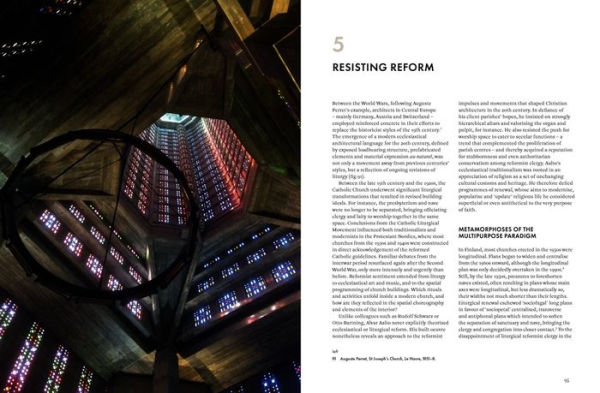
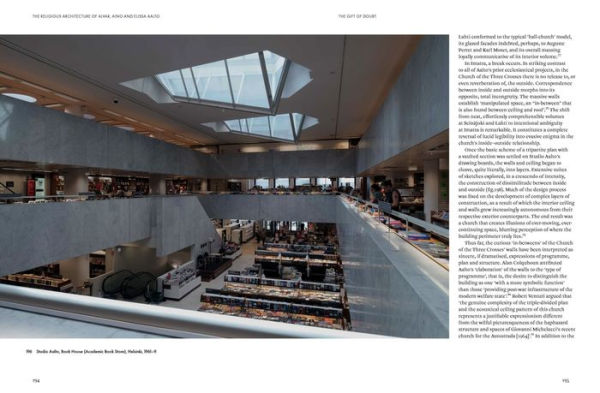
This book offers the first critical account of Studio Aalto’s religious modern architecture. Aalto’s ecclesiastical oeuvre is viewed as an evocative subgenre of the practice's portfolio, but its relationship to religion has eluded enquiry. Where previously discussed, the longstanding collaboration between Aalto and the Church has been put down to reciprocal expediency, and the buildings perceived as spatially and structurally stirring experiments, yet devoid of religious meanings or implications. The idiosyncratic plasticity of the Church of the Three Crosses (1955–58) in Imatra, Finland—the most famous and architecturally impressive of Aalto’s churches—is cited as ultimate evidence of Aalto’s exploitation of the religious brief for the creation of a 'sculptural irrationality'.
This book challenges the assumed autonomy of Studio Aalto’s ecclesiastical oeuvre from religion. Analysing designs for churches, parish centres, funerary chapels and cemeteries in Finland, Denmark, Germany and Italy, the book shows that Aalto’s engagement with religion transcended artistic opportunism. The book addresses Aalto’s sacred oeuvre in its entirety, yet pays particular attention to the Church of the Three Crosses, broadly considered the apotheosis of Aalto’s sacred career. Through a detailed analysis of the religious actors and factors that shaped the design and construction of Aalto’s sacred works—from local parish building committees to bishops, and from liturgical reform movements to post-war debates on sacred art—this book shows that religious influences were neither extrinsic nor peripheral to Aalto’s modernism, but intrinsic and intimately related to it. The study of previously uncovered primary archival materials establishes that Aalto’s engagement with the Church was a consciously and productively symbiotic partnership which drew from shared interests and values, yet which also encompassed compromise and conflict. The resultant buildings neither glorify nor deny institutional religion — instead, this book argues, they challenge rigid dogmatism in religion as much as in modern architecture.
This book challenges the assumed autonomy of Studio Aalto’s ecclesiastical oeuvre from religion. Analysing designs for churches, parish centres, funerary chapels and cemeteries in Finland, Denmark, Germany and Italy, the book shows that Aalto’s engagement with religion transcended artistic opportunism. The book addresses Aalto’s sacred oeuvre in its entirety, yet pays particular attention to the Church of the Three Crosses, broadly considered the apotheosis of Aalto’s sacred career. Through a detailed analysis of the religious actors and factors that shaped the design and construction of Aalto’s sacred works—from local parish building committees to bishops, and from liturgical reform movements to post-war debates on sacred art—this book shows that religious influences were neither extrinsic nor peripheral to Aalto’s modernism, but intrinsic and intimately related to it. The study of previously uncovered primary archival materials establishes that Aalto’s engagement with the Church was a consciously and productively symbiotic partnership which drew from shared interests and values, yet which also encompassed compromise and conflict. The resultant buildings neither glorify nor deny institutional religion — instead, this book argues, they challenge rigid dogmatism in religion as much as in modern architecture.
This book offers the first critical account of Studio Aalto’s religious modern architecture. Aalto’s ecclesiastical oeuvre is viewed as an evocative subgenre of the practice's portfolio, but its relationship to religion has eluded enquiry. Where previously discussed, the longstanding collaboration between Aalto and the Church has been put down to reciprocal expediency, and the buildings perceived as spatially and structurally stirring experiments, yet devoid of religious meanings or implications. The idiosyncratic plasticity of the Church of the Three Crosses (1955–58) in Imatra, Finland—the most famous and architecturally impressive of Aalto’s churches—is cited as ultimate evidence of Aalto’s exploitation of the religious brief for the creation of a 'sculptural irrationality'.
This book challenges the assumed autonomy of Studio Aalto’s ecclesiastical oeuvre from religion. Analysing designs for churches, parish centres, funerary chapels and cemeteries in Finland, Denmark, Germany and Italy, the book shows that Aalto’s engagement with religion transcended artistic opportunism. The book addresses Aalto’s sacred oeuvre in its entirety, yet pays particular attention to the Church of the Three Crosses, broadly considered the apotheosis of Aalto’s sacred career. Through a detailed analysis of the religious actors and factors that shaped the design and construction of Aalto’s sacred works—from local parish building committees to bishops, and from liturgical reform movements to post-war debates on sacred art—this book shows that religious influences were neither extrinsic nor peripheral to Aalto’s modernism, but intrinsic and intimately related to it. The study of previously uncovered primary archival materials establishes that Aalto’s engagement with the Church was a consciously and productively symbiotic partnership which drew from shared interests and values, yet which also encompassed compromise and conflict. The resultant buildings neither glorify nor deny institutional religion — instead, this book argues, they challenge rigid dogmatism in religion as much as in modern architecture.
This book challenges the assumed autonomy of Studio Aalto’s ecclesiastical oeuvre from religion. Analysing designs for churches, parish centres, funerary chapels and cemeteries in Finland, Denmark, Germany and Italy, the book shows that Aalto’s engagement with religion transcended artistic opportunism. The book addresses Aalto’s sacred oeuvre in its entirety, yet pays particular attention to the Church of the Three Crosses, broadly considered the apotheosis of Aalto’s sacred career. Through a detailed analysis of the religious actors and factors that shaped the design and construction of Aalto’s sacred works—from local parish building committees to bishops, and from liturgical reform movements to post-war debates on sacred art—this book shows that religious influences were neither extrinsic nor peripheral to Aalto’s modernism, but intrinsic and intimately related to it. The study of previously uncovered primary archival materials establishes that Aalto’s engagement with the Church was a consciously and productively symbiotic partnership which drew from shared interests and values, yet which also encompassed compromise and conflict. The resultant buildings neither glorify nor deny institutional religion — instead, this book argues, they challenge rigid dogmatism in religion as much as in modern architecture.
You May Also Like

















More About Barnes and Noble at Hamilton Place
Barnes & Noble is the world’s largest retail bookseller and a leading retailer of content, digital media and educational products. Our Nook Digital business offers a lineup of NOOK® tablets and e-Readers and an expansive collection of digital reading content through the NOOK Store®. Barnes & Noble’s mission is to operate the best omni-channel specialty retail business in America, helping both our customers and booksellers reach their aspirations, while being a credit to the communities we serve.
2100 Hamilton Pl Blvd, Chattanooga, TN 37421, United States
Find Barnes and Noble at Hamilton Place in Chattanooga, TN
Visit Barnes and Noble at Hamilton Place in Chattanooga, TN