
Home
The Problem of Solidarity: Theories and Models
Barnes and Noble
Loading Inventory...
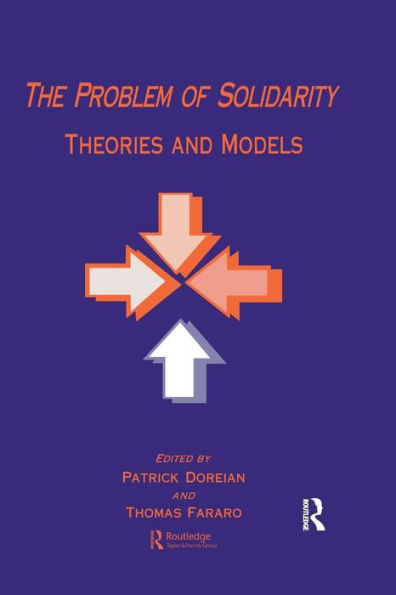
The Problem of Solidarity: Theories and Models in Chattanooga, TN
Current price: $120.00
Barnes and Noble
The Problem of Solidarity: Theories and Models in Chattanooga, TN
Current price: $120.00
Loading Inventory...
Size: Hardcover
Presently the world is undergoing tremendous social, cultural and economic transformation. For sociologists, the challenge is arriving at a sound mapping of this tumultuous world stage.
In this book, the contributing authors consider solidarity as a cognitive problem of basic science. They examine how solidarity is produced and reproduced, how it is related to social processes, and how such processes can be formalized and create conditions for productively studying their properties. Mathematical models and representations are presented by the authors as a coherent set of tools for understanding many social phenomena.
In this book, the contributing authors consider solidarity as a cognitive problem of basic science. They examine how solidarity is produced and reproduced, how it is related to social processes, and how such processes can be formalized and create conditions for productively studying their properties. Mathematical models and representations are presented by the authors as a coherent set of tools for understanding many social phenomena.
Presently the world is undergoing tremendous social, cultural and economic transformation. For sociologists, the challenge is arriving at a sound mapping of this tumultuous world stage.
In this book, the contributing authors consider solidarity as a cognitive problem of basic science. They examine how solidarity is produced and reproduced, how it is related to social processes, and how such processes can be formalized and create conditions for productively studying their properties. Mathematical models and representations are presented by the authors as a coherent set of tools for understanding many social phenomena.
In this book, the contributing authors consider solidarity as a cognitive problem of basic science. They examine how solidarity is produced and reproduced, how it is related to social processes, and how such processes can be formalized and create conditions for productively studying their properties. Mathematical models and representations are presented by the authors as a coherent set of tools for understanding many social phenomena.
You May Also Like


















More About Barnes and Noble at Hamilton Place
Barnes & Noble is the world’s largest retail bookseller and a leading retailer of content, digital media and educational products. Our Nook Digital business offers a lineup of NOOK® tablets and e-Readers and an expansive collection of digital reading content through the NOOK Store®. Barnes & Noble’s mission is to operate the best omni-channel specialty retail business in America, helping both our customers and booksellers reach their aspirations, while being a credit to the communities we serve.
2100 Hamilton Pl Blvd, Chattanooga, TN 37421, United States
Find Barnes and Noble at Hamilton Place in Chattanooga, TN
Visit Barnes and Noble at Hamilton Place in Chattanooga, TN
