
Home
The Political Economy of Long-term Planning: Using Strategic Analysis and Foresight to Support Policymaking
Barnes and Noble
Loading Inventory...
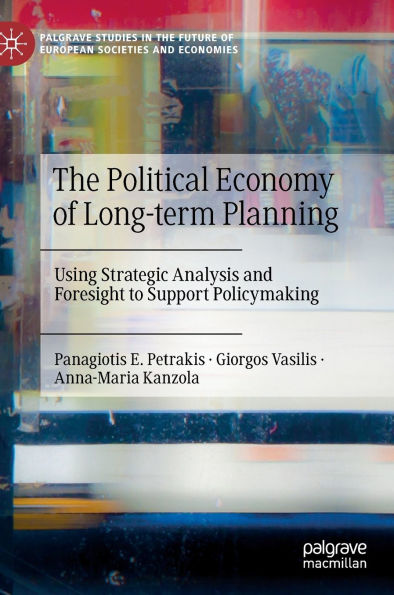
The Political Economy of Long-term Planning: Using Strategic Analysis and Foresight to Support Policymaking in Chattanooga, TN
Current price: $129.99
Barnes and Noble
The Political Economy of Long-term Planning: Using Strategic Analysis and Foresight to Support Policymaking in Chattanooga, TN
Current price: $129.99
Loading Inventory...
Size: Hardcover
This book breaks down new ways to use foresight and economic theory to enhance economic planning at a national level.
Economic forecasting models often rely on time-series analysis. While important, these models can limit an economist’s ability to foresee economic outcomes comprehensively. Effective economic planning and policymaking require a deep understanding of the socioeconomic and political forces that shape future economic outcomes. Using an interdisciplinary approach to economic theory and foresight, this book explores a new way to approach economic planning.
Emphasizing resilience, adaptability, and future-oriented behavior, this book highlights how policymakers and researchers can integrate foresight and futures methodologies at local and national levels. It explores the methodological challenges inherent in foresight and offers a comprehensive guide to developing and utilizing scenarios. The chapters examine factors related to human thinking and behaviors, demonstrating how this knowledge can be used to support emerging developments across various economies.
The book provides resources and management tools to help readers understand economic development using economic foresight. Acknowledging both the challenges and opportunities of long-term planning within developing economies, the authors provide recent case studies from Greece and beyond. Readers will gain a thorough understanding of the political economy of foresight and the essential theories needed to illustrate unique dynamics of socioeconomic change.
Economic forecasting models often rely on time-series analysis. While important, these models can limit an economist’s ability to foresee economic outcomes comprehensively. Effective economic planning and policymaking require a deep understanding of the socioeconomic and political forces that shape future economic outcomes. Using an interdisciplinary approach to economic theory and foresight, this book explores a new way to approach economic planning.
Emphasizing resilience, adaptability, and future-oriented behavior, this book highlights how policymakers and researchers can integrate foresight and futures methodologies at local and national levels. It explores the methodological challenges inherent in foresight and offers a comprehensive guide to developing and utilizing scenarios. The chapters examine factors related to human thinking and behaviors, demonstrating how this knowledge can be used to support emerging developments across various economies.
The book provides resources and management tools to help readers understand economic development using economic foresight. Acknowledging both the challenges and opportunities of long-term planning within developing economies, the authors provide recent case studies from Greece and beyond. Readers will gain a thorough understanding of the political economy of foresight and the essential theories needed to illustrate unique dynamics of socioeconomic change.
This book breaks down new ways to use foresight and economic theory to enhance economic planning at a national level.
Economic forecasting models often rely on time-series analysis. While important, these models can limit an economist’s ability to foresee economic outcomes comprehensively. Effective economic planning and policymaking require a deep understanding of the socioeconomic and political forces that shape future economic outcomes. Using an interdisciplinary approach to economic theory and foresight, this book explores a new way to approach economic planning.
Emphasizing resilience, adaptability, and future-oriented behavior, this book highlights how policymakers and researchers can integrate foresight and futures methodologies at local and national levels. It explores the methodological challenges inherent in foresight and offers a comprehensive guide to developing and utilizing scenarios. The chapters examine factors related to human thinking and behaviors, demonstrating how this knowledge can be used to support emerging developments across various economies.
The book provides resources and management tools to help readers understand economic development using economic foresight. Acknowledging both the challenges and opportunities of long-term planning within developing economies, the authors provide recent case studies from Greece and beyond. Readers will gain a thorough understanding of the political economy of foresight and the essential theories needed to illustrate unique dynamics of socioeconomic change.
Economic forecasting models often rely on time-series analysis. While important, these models can limit an economist’s ability to foresee economic outcomes comprehensively. Effective economic planning and policymaking require a deep understanding of the socioeconomic and political forces that shape future economic outcomes. Using an interdisciplinary approach to economic theory and foresight, this book explores a new way to approach economic planning.
Emphasizing resilience, adaptability, and future-oriented behavior, this book highlights how policymakers and researchers can integrate foresight and futures methodologies at local and national levels. It explores the methodological challenges inherent in foresight and offers a comprehensive guide to developing and utilizing scenarios. The chapters examine factors related to human thinking and behaviors, demonstrating how this knowledge can be used to support emerging developments across various economies.
The book provides resources and management tools to help readers understand economic development using economic foresight. Acknowledging both the challenges and opportunities of long-term planning within developing economies, the authors provide recent case studies from Greece and beyond. Readers will gain a thorough understanding of the political economy of foresight and the essential theories needed to illustrate unique dynamics of socioeconomic change.
You May Also Like









More About Barnes and Noble at Hamilton Place
Barnes & Noble is the world’s largest retail bookseller and a leading retailer of content, digital media and educational products. Our Nook Digital business offers a lineup of NOOK® tablets and e-Readers and an expansive collection of digital reading content through the NOOK Store®. Barnes & Noble’s mission is to operate the best omni-channel specialty retail business in America, helping both our customers and booksellers reach their aspirations, while being a credit to the communities we serve.
2100 Hamilton Pl Blvd, Chattanooga, TN 37421, United States
Find Barnes and Noble at Hamilton Place in Chattanooga, TN
Visit Barnes and Noble at Hamilton Place in Chattanooga, TN
