
Home
the Political Ecology of Education: Brazil's Landless Workers' Movement and Politics Knowledge
Barnes and Noble
Loading Inventory...
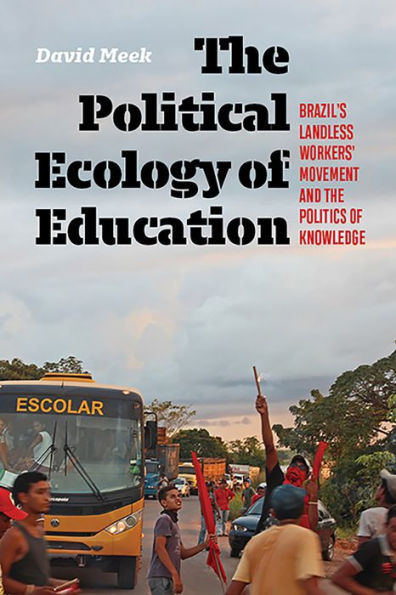
the Political Ecology of Education: Brazil's Landless Workers' Movement and Politics Knowledge in Chattanooga, TN
Current price: $28.99
Barnes and Noble
the Political Ecology of Education: Brazil's Landless Workers' Movement and Politics Knowledge in Chattanooga, TN
Current price: $28.99
Loading Inventory...
Size: Paperback
Agrarian social movements are at a crossroads. Although these movements have made significant strides in advancing the concept of food sovereignty, the reality is that many of their members remain engaged in environmentally degrading forms of agriculture, and the lands they farm are increasingly unproductive. Whether movement farmers will be able to remain living on the land, and dedicated to alternative agricultural practices, is a pressing question.
The Political Ecology of Education
examines the opportunities for and constraints on advancing food sovereignty in the 17 de Abril settlement, a community born out of a massacre of landless Brazilian workers in 1996. Based on immersive fieldwork over the course of seven years, David Meek makes the provocative argument that critical forms of food systems education are integral to agrarian social movements’ survival. While the need for critical approaches is especially immediate in the Amazon, Meek’s study speaks to the burgeoning attention to food systems education at various educational levels worldwide, from primary to postgraduate programs. His book calls us to rethink the politics of the possible within these pedagogies.
The Political Ecology of Education
examines the opportunities for and constraints on advancing food sovereignty in the 17 de Abril settlement, a community born out of a massacre of landless Brazilian workers in 1996. Based on immersive fieldwork over the course of seven years, David Meek makes the provocative argument that critical forms of food systems education are integral to agrarian social movements’ survival. While the need for critical approaches is especially immediate in the Amazon, Meek’s study speaks to the burgeoning attention to food systems education at various educational levels worldwide, from primary to postgraduate programs. His book calls us to rethink the politics of the possible within these pedagogies.
Agrarian social movements are at a crossroads. Although these movements have made significant strides in advancing the concept of food sovereignty, the reality is that many of their members remain engaged in environmentally degrading forms of agriculture, and the lands they farm are increasingly unproductive. Whether movement farmers will be able to remain living on the land, and dedicated to alternative agricultural practices, is a pressing question.
The Political Ecology of Education
examines the opportunities for and constraints on advancing food sovereignty in the 17 de Abril settlement, a community born out of a massacre of landless Brazilian workers in 1996. Based on immersive fieldwork over the course of seven years, David Meek makes the provocative argument that critical forms of food systems education are integral to agrarian social movements’ survival. While the need for critical approaches is especially immediate in the Amazon, Meek’s study speaks to the burgeoning attention to food systems education at various educational levels worldwide, from primary to postgraduate programs. His book calls us to rethink the politics of the possible within these pedagogies.
The Political Ecology of Education
examines the opportunities for and constraints on advancing food sovereignty in the 17 de Abril settlement, a community born out of a massacre of landless Brazilian workers in 1996. Based on immersive fieldwork over the course of seven years, David Meek makes the provocative argument that critical forms of food systems education are integral to agrarian social movements’ survival. While the need for critical approaches is especially immediate in the Amazon, Meek’s study speaks to the burgeoning attention to food systems education at various educational levels worldwide, from primary to postgraduate programs. His book calls us to rethink the politics of the possible within these pedagogies.
You May Also Like








More About Barnes and Noble at Hamilton Place
Barnes & Noble is the world’s largest retail bookseller and a leading retailer of content, digital media and educational products. Our Nook Digital business offers a lineup of NOOK® tablets and e-Readers and an expansive collection of digital reading content through the NOOK Store®. Barnes & Noble’s mission is to operate the best omni-channel specialty retail business in America, helping both our customers and booksellers reach their aspirations, while being a credit to the communities we serve.
2100 Hamilton Pl Blvd, Chattanooga, TN 37421, United States
Find Barnes and Noble at Hamilton Place in Chattanooga, TN
Visit Barnes and Noble at Hamilton Place in Chattanooga, TN
