
Home
The Poetics of Scientific Investigation Seventeenth-Century England
Barnes and Noble
Loading Inventory...
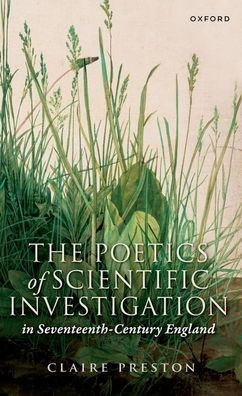
The Poetics of Scientific Investigation Seventeenth-Century England in Chattanooga, TN
Current price: $150.00
Barnes and Noble
The Poetics of Scientific Investigation Seventeenth-Century England in Chattanooga, TN
Current price: $150.00
Loading Inventory...
Size: Hardcover
How should science be written? It is a question that piqued natural philosophers of the seventeenth century as they experimented with the rhetorical figures, neologisms, verse-forms, and generic variety that characterise the literary texture of their work. Inspired laymen were quick to borrow from the new philosophy and from practising scientists in order to deploy ideas and images from astronomy, optics, chemistry, biology, and medicine. Between them, scientists, natural historians, poets, dramatists, and essayists produced new, adjusted, or hybrid literary forms.
The Poetics of Scientific Investigation in Seventeenth-Century England
examines those forms and that literary-scientific texture, as well as representations of the scientificthe laboratory, collaborative experimental retirement, and the canons of scientific conversationand proposes that the writing of seventeenth-century science mirrors the intellectual and investigative processes of early modern science itself.
The Poetics of Scientific Investigation in Seventeenth-Century England
examines those forms and that literary-scientific texture, as well as representations of the scientificthe laboratory, collaborative experimental retirement, and the canons of scientific conversationand proposes that the writing of seventeenth-century science mirrors the intellectual and investigative processes of early modern science itself.
How should science be written? It is a question that piqued natural philosophers of the seventeenth century as they experimented with the rhetorical figures, neologisms, verse-forms, and generic variety that characterise the literary texture of their work. Inspired laymen were quick to borrow from the new philosophy and from practising scientists in order to deploy ideas and images from astronomy, optics, chemistry, biology, and medicine. Between them, scientists, natural historians, poets, dramatists, and essayists produced new, adjusted, or hybrid literary forms.
The Poetics of Scientific Investigation in Seventeenth-Century England
examines those forms and that literary-scientific texture, as well as representations of the scientificthe laboratory, collaborative experimental retirement, and the canons of scientific conversationand proposes that the writing of seventeenth-century science mirrors the intellectual and investigative processes of early modern science itself.
The Poetics of Scientific Investigation in Seventeenth-Century England
examines those forms and that literary-scientific texture, as well as representations of the scientificthe laboratory, collaborative experimental retirement, and the canons of scientific conversationand proposes that the writing of seventeenth-century science mirrors the intellectual and investigative processes of early modern science itself.
You May Also Like















More About Barnes and Noble at Hamilton Place
Barnes & Noble is the world’s largest retail bookseller and a leading retailer of content, digital media and educational products. Our Nook Digital business offers a lineup of NOOK® tablets and e-Readers and an expansive collection of digital reading content through the NOOK Store®. Barnes & Noble’s mission is to operate the best omni-channel specialty retail business in America, helping both our customers and booksellers reach their aspirations, while being a credit to the communities we serve.
2100 Hamilton Pl Blvd, Chattanooga, TN 37421, United States
Find Barnes and Noble at Hamilton Place in Chattanooga, TN
Visit Barnes and Noble at Hamilton Place in Chattanooga, TN
