
Home
The Poet as Experiencer: Wallace Stevens and Nonhuman Intelligence
Barnes and Noble
Loading Inventory...
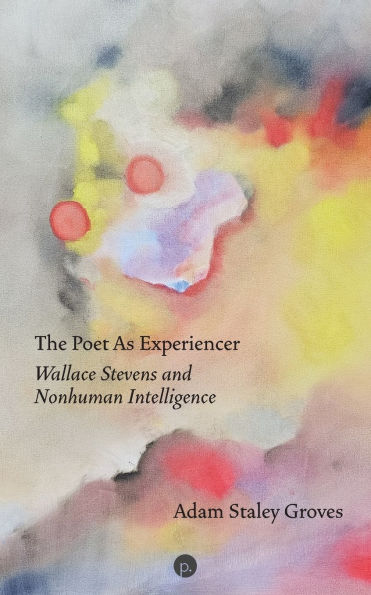
The Poet as Experiencer: Wallace Stevens and Nonhuman Intelligence in Chattanooga, TN
Current price: $23.00
Barnes and Noble
The Poet as Experiencer: Wallace Stevens and Nonhuman Intelligence in Chattanooga, TN
Current price: $23.00
Loading Inventory...
Size: OS
In
The Poet as Experiencer: Wallace Stevens and Nonhuman Intelligence,
Adam Staley Groves approaches Stevens, not merely as poet-thinker but rather as experiencer and theorist of what is today called "the phenomenon" (UFOs). Challenging both Stevens scholarship and our broader understanding of poetic consciousness, the book presents a radical appraisal of Stevens's oeuvre as an extended, coded testimony of contact with nonhuman intelligence. Drawing from journals, uncollected poems, and landmark works such as
Harmonium
and
The Necessary Angel,
Groves argues that Stevens's poetic evolution mirrors the psychological and spiritual trajectory of an experiencer grappling with anomalous phenomena long before cognitive frameworks for such were culturally available.
From moths and owls to missing time and the ethics of the imagination, Groves reads Stevens's work as a sustained effort to reckon with anomalous phenomena whose language has not yet come. Through careful textual analysis and historical correlation, Groves positions the poet within a lineage that includes Coleridge, Baudelaire, Kierkegaard, and Nietzsche, who are recast not only as theorists of the imagination but as precursors to a modern metaphysical crisis now resurfacing through the contemporary discourse on UFOs and UAPs (Unidentified Anomalous Phenomena). Integrating rigorous literary scholarship with insights from ufology, psychology, and metaphysical philosophy, Groves investigates Stevens's use of abstraction, the ethics of poetic imagination, and the emergence of the "true subject" as a form of ontological rupture. In doing so, the book bridges the hermetic with the historical, and the poetic with the paranormal.
Adam Staley Groves
is a poet, painter, academic teacher, and independent scholar permanently based in Singapore. His published research includes the theory of poetry, philosophy, and technology. Adam is the author of two volumes of poetry
Poetry Vocare
(2011) and
Filial Arcade
(2013).
The Poet as Experiencer: Wallace Stevens and Nonhuman Intelligence,
Adam Staley Groves approaches Stevens, not merely as poet-thinker but rather as experiencer and theorist of what is today called "the phenomenon" (UFOs). Challenging both Stevens scholarship and our broader understanding of poetic consciousness, the book presents a radical appraisal of Stevens's oeuvre as an extended, coded testimony of contact with nonhuman intelligence. Drawing from journals, uncollected poems, and landmark works such as
Harmonium
and
The Necessary Angel,
Groves argues that Stevens's poetic evolution mirrors the psychological and spiritual trajectory of an experiencer grappling with anomalous phenomena long before cognitive frameworks for such were culturally available.
From moths and owls to missing time and the ethics of the imagination, Groves reads Stevens's work as a sustained effort to reckon with anomalous phenomena whose language has not yet come. Through careful textual analysis and historical correlation, Groves positions the poet within a lineage that includes Coleridge, Baudelaire, Kierkegaard, and Nietzsche, who are recast not only as theorists of the imagination but as precursors to a modern metaphysical crisis now resurfacing through the contemporary discourse on UFOs and UAPs (Unidentified Anomalous Phenomena). Integrating rigorous literary scholarship with insights from ufology, psychology, and metaphysical philosophy, Groves investigates Stevens's use of abstraction, the ethics of poetic imagination, and the emergence of the "true subject" as a form of ontological rupture. In doing so, the book bridges the hermetic with the historical, and the poetic with the paranormal.
Adam Staley Groves
is a poet, painter, academic teacher, and independent scholar permanently based in Singapore. His published research includes the theory of poetry, philosophy, and technology. Adam is the author of two volumes of poetry
Poetry Vocare
(2011) and
Filial Arcade
(2013).
In
The Poet as Experiencer: Wallace Stevens and Nonhuman Intelligence,
Adam Staley Groves approaches Stevens, not merely as poet-thinker but rather as experiencer and theorist of what is today called "the phenomenon" (UFOs). Challenging both Stevens scholarship and our broader understanding of poetic consciousness, the book presents a radical appraisal of Stevens's oeuvre as an extended, coded testimony of contact with nonhuman intelligence. Drawing from journals, uncollected poems, and landmark works such as
Harmonium
and
The Necessary Angel,
Groves argues that Stevens's poetic evolution mirrors the psychological and spiritual trajectory of an experiencer grappling with anomalous phenomena long before cognitive frameworks for such were culturally available.
From moths and owls to missing time and the ethics of the imagination, Groves reads Stevens's work as a sustained effort to reckon with anomalous phenomena whose language has not yet come. Through careful textual analysis and historical correlation, Groves positions the poet within a lineage that includes Coleridge, Baudelaire, Kierkegaard, and Nietzsche, who are recast not only as theorists of the imagination but as precursors to a modern metaphysical crisis now resurfacing through the contemporary discourse on UFOs and UAPs (Unidentified Anomalous Phenomena). Integrating rigorous literary scholarship with insights from ufology, psychology, and metaphysical philosophy, Groves investigates Stevens's use of abstraction, the ethics of poetic imagination, and the emergence of the "true subject" as a form of ontological rupture. In doing so, the book bridges the hermetic with the historical, and the poetic with the paranormal.
Adam Staley Groves
is a poet, painter, academic teacher, and independent scholar permanently based in Singapore. His published research includes the theory of poetry, philosophy, and technology. Adam is the author of two volumes of poetry
Poetry Vocare
(2011) and
Filial Arcade
(2013).
The Poet as Experiencer: Wallace Stevens and Nonhuman Intelligence,
Adam Staley Groves approaches Stevens, not merely as poet-thinker but rather as experiencer and theorist of what is today called "the phenomenon" (UFOs). Challenging both Stevens scholarship and our broader understanding of poetic consciousness, the book presents a radical appraisal of Stevens's oeuvre as an extended, coded testimony of contact with nonhuman intelligence. Drawing from journals, uncollected poems, and landmark works such as
Harmonium
and
The Necessary Angel,
Groves argues that Stevens's poetic evolution mirrors the psychological and spiritual trajectory of an experiencer grappling with anomalous phenomena long before cognitive frameworks for such were culturally available.
From moths and owls to missing time and the ethics of the imagination, Groves reads Stevens's work as a sustained effort to reckon with anomalous phenomena whose language has not yet come. Through careful textual analysis and historical correlation, Groves positions the poet within a lineage that includes Coleridge, Baudelaire, Kierkegaard, and Nietzsche, who are recast not only as theorists of the imagination but as precursors to a modern metaphysical crisis now resurfacing through the contemporary discourse on UFOs and UAPs (Unidentified Anomalous Phenomena). Integrating rigorous literary scholarship with insights from ufology, psychology, and metaphysical philosophy, Groves investigates Stevens's use of abstraction, the ethics of poetic imagination, and the emergence of the "true subject" as a form of ontological rupture. In doing so, the book bridges the hermetic with the historical, and the poetic with the paranormal.
Adam Staley Groves
is a poet, painter, academic teacher, and independent scholar permanently based in Singapore. His published research includes the theory of poetry, philosophy, and technology. Adam is the author of two volumes of poetry
Poetry Vocare
(2011) and
Filial Arcade
(2013).
You May Also Like










More About Barnes and Noble at Hamilton Place
Barnes & Noble is the world’s largest retail bookseller and a leading retailer of content, digital media and educational products. Our Nook Digital business offers a lineup of NOOK® tablets and e-Readers and an expansive collection of digital reading content through the NOOK Store®. Barnes & Noble’s mission is to operate the best omni-channel specialty retail business in America, helping both our customers and booksellers reach their aspirations, while being a credit to the communities we serve.
2100 Hamilton Pl Blvd, Chattanooga, TN 37421, United States
Find Barnes and Noble at Hamilton Place in Chattanooga, TN
Visit Barnes and Noble at Hamilton Place in Chattanooga, TN
