
Home
the Phenomenology of Second-Person Plural
Barnes and Noble
Loading Inventory...
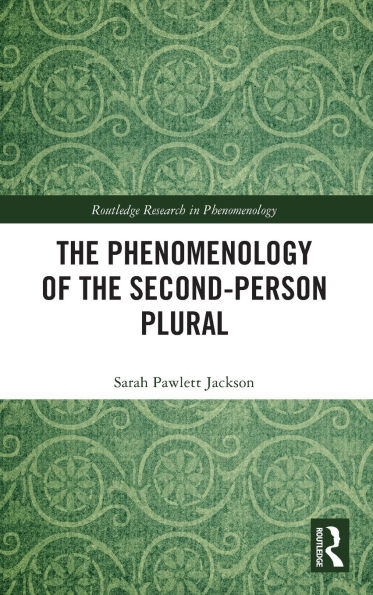
the Phenomenology of Second-Person Plural in Chattanooga, TN
Current price: $190.00
Barnes and Noble
the Phenomenology of Second-Person Plural in Chattanooga, TN
Current price: $190.00
Loading Inventory...
Size: Hardcover
This book presents the case that there are forms of human interaction which should be understood as properly
second-person plural
. It engages with the work of Sartre, Levinas and contemporary phenomenology to show that this claim is not just about grammatical forms of address, but about the phenomenology and structure of our intersubjective experience.
While there has been plenty of recent work exploring the phenomenology of the
second-person singular
and the
first-person plural
, we have not so far seen a systematic account of the second-person plural: the
I-yous
or
we-you
. This book outlines the phenomenology of the specific structures of interlocking intersubjective reciprocity which need to be in place between multiple subjects for an interaction to be properly second-person plural. The author considers and defends her account from various possible objections – both a conceptual worry, and a range of empirical worries. These objections are shown to be misguided, and the thread that runs through them – a problematically disembodied conception of the human subject – is exposed. She proceeds to offer a positive account of the second-person plural, supported by an understanding of subjectivity as necessarily embodied and embedded in the world. This account opens an exciting path for further analyses of complex multi-person intersubjectivities in small group contexts.
The Phenomenology of the Second-Person Plural
will appeal to scholars and graduate students working in phenomenology, social ontology, and the philosophy of intersubjectivity.
second-person plural
. It engages with the work of Sartre, Levinas and contemporary phenomenology to show that this claim is not just about grammatical forms of address, but about the phenomenology and structure of our intersubjective experience.
While there has been plenty of recent work exploring the phenomenology of the
second-person singular
and the
first-person plural
, we have not so far seen a systematic account of the second-person plural: the
I-yous
or
we-you
. This book outlines the phenomenology of the specific structures of interlocking intersubjective reciprocity which need to be in place between multiple subjects for an interaction to be properly second-person plural. The author considers and defends her account from various possible objections – both a conceptual worry, and a range of empirical worries. These objections are shown to be misguided, and the thread that runs through them – a problematically disembodied conception of the human subject – is exposed. She proceeds to offer a positive account of the second-person plural, supported by an understanding of subjectivity as necessarily embodied and embedded in the world. This account opens an exciting path for further analyses of complex multi-person intersubjectivities in small group contexts.
The Phenomenology of the Second-Person Plural
will appeal to scholars and graduate students working in phenomenology, social ontology, and the philosophy of intersubjectivity.
This book presents the case that there are forms of human interaction which should be understood as properly
second-person plural
. It engages with the work of Sartre, Levinas and contemporary phenomenology to show that this claim is not just about grammatical forms of address, but about the phenomenology and structure of our intersubjective experience.
While there has been plenty of recent work exploring the phenomenology of the
second-person singular
and the
first-person plural
, we have not so far seen a systematic account of the second-person plural: the
I-yous
or
we-you
. This book outlines the phenomenology of the specific structures of interlocking intersubjective reciprocity which need to be in place between multiple subjects for an interaction to be properly second-person plural. The author considers and defends her account from various possible objections – both a conceptual worry, and a range of empirical worries. These objections are shown to be misguided, and the thread that runs through them – a problematically disembodied conception of the human subject – is exposed. She proceeds to offer a positive account of the second-person plural, supported by an understanding of subjectivity as necessarily embodied and embedded in the world. This account opens an exciting path for further analyses of complex multi-person intersubjectivities in small group contexts.
The Phenomenology of the Second-Person Plural
will appeal to scholars and graduate students working in phenomenology, social ontology, and the philosophy of intersubjectivity.
second-person plural
. It engages with the work of Sartre, Levinas and contemporary phenomenology to show that this claim is not just about grammatical forms of address, but about the phenomenology and structure of our intersubjective experience.
While there has been plenty of recent work exploring the phenomenology of the
second-person singular
and the
first-person plural
, we have not so far seen a systematic account of the second-person plural: the
I-yous
or
we-you
. This book outlines the phenomenology of the specific structures of interlocking intersubjective reciprocity which need to be in place between multiple subjects for an interaction to be properly second-person plural. The author considers and defends her account from various possible objections – both a conceptual worry, and a range of empirical worries. These objections are shown to be misguided, and the thread that runs through them – a problematically disembodied conception of the human subject – is exposed. She proceeds to offer a positive account of the second-person plural, supported by an understanding of subjectivity as necessarily embodied and embedded in the world. This account opens an exciting path for further analyses of complex multi-person intersubjectivities in small group contexts.
The Phenomenology of the Second-Person Plural
will appeal to scholars and graduate students working in phenomenology, social ontology, and the philosophy of intersubjectivity.
You May Also Like


















More About Barnes and Noble at Hamilton Place
Barnes & Noble is the world’s largest retail bookseller and a leading retailer of content, digital media and educational products. Our Nook Digital business offers a lineup of NOOK® tablets and e-Readers and an expansive collection of digital reading content through the NOOK Store®. Barnes & Noble’s mission is to operate the best omni-channel specialty retail business in America, helping both our customers and booksellers reach their aspirations, while being a credit to the communities we serve.
2100 Hamilton Pl Blvd, Chattanooga, TN 37421, United States
Find Barnes and Noble at Hamilton Place in Chattanooga, TN
Visit Barnes and Noble at Hamilton Place in Chattanooga, TN
