
Home
The Outcasts, and Other Stories
Barnes and Noble
Loading Inventory...
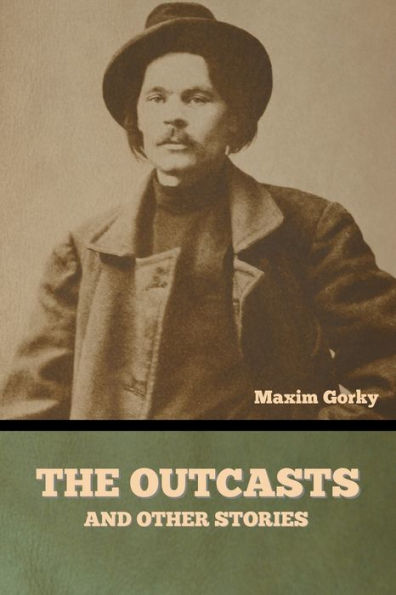
The Outcasts, and Other Stories in Chattanooga, TN
Current price: $29.95
Barnes and Noble
The Outcasts, and Other Stories in Chattanooga, TN
Current price: $29.95
Loading Inventory...
Size: Hardcover
Alexei Maximovich Peshkov (28 March [O.S. 16 March] 1868 - 18 June 1936), popularly known as Maxim Gorky, was a Russian writer and political activist. He was nominated five times for the Nobel Prize in Literature. Before his success as an author, he travelled widely across the Russian Empire changing jobs frequently, experiences which would later influence his writing.
Gorky's most famous works are a short story collection Sketches and Stories (1899), plays The Philistines (1901), The Lower Depths (1902) and Children of the Sun (1905), a poem The Song of the Stormy Petrel (1901), his autobiographical trilogy My Childhood, In the World, My Universities (1913-1923), and a novel Mother (1906). Gorky himself judged some of these works as failures, and Mother has been frequently criticized (Gorky himself thought of Mother as one of his biggest failures). However, there have been warmer judgements of some less-known post-revolutionary works such as the cycles Fragments from My Diary (1924) and Stories of 1922-1924 (1925), the novels The Artamonov Business (1925) and The Life of Klim Samgin (1925-1936); the latter is considered Gorky's masterpiece and sometimes being viewed by critics as a modernist work. Unlike his pre-revolutionary writings (known for their "anti-psychologism"), these differ with an ambivalent portrayal of the Russian Revolution and "unmodern interest to human psychology" (as noted by D. S. Mirsky). He had associations with fellow Russian writers Leo Tolstoy and Anton Chekhov; Gorky would later mention them in his memoirs.
Gorky was active in the emerging Marxist communist movement. He publicly opposed the Tsarist regime, and for a time closely associated himself with Lenin and Bogdanov's Bolshevik wing of the party. For a significant part of his life, he was exiled from Russia and later the Soviet Union. In 1932, he returned to the USSR on Joseph Stalin's personal invitation and lived there until his death in June 1936. After his return he was officially declared the "founder of Socialist Realism". Despite his official reputation, Gorky's relations with the Soviet regime were rather difficult. Modern scholars consider his ideology of God-Building as distinct from the official Marxism-Leninism, and his work fits uneasily under the Socialist Realist label. His work remains controversial. (wikipedia.org)
Gorky's most famous works are a short story collection Sketches and Stories (1899), plays The Philistines (1901), The Lower Depths (1902) and Children of the Sun (1905), a poem The Song of the Stormy Petrel (1901), his autobiographical trilogy My Childhood, In the World, My Universities (1913-1923), and a novel Mother (1906). Gorky himself judged some of these works as failures, and Mother has been frequently criticized (Gorky himself thought of Mother as one of his biggest failures). However, there have been warmer judgements of some less-known post-revolutionary works such as the cycles Fragments from My Diary (1924) and Stories of 1922-1924 (1925), the novels The Artamonov Business (1925) and The Life of Klim Samgin (1925-1936); the latter is considered Gorky's masterpiece and sometimes being viewed by critics as a modernist work. Unlike his pre-revolutionary writings (known for their "anti-psychologism"), these differ with an ambivalent portrayal of the Russian Revolution and "unmodern interest to human psychology" (as noted by D. S. Mirsky). He had associations with fellow Russian writers Leo Tolstoy and Anton Chekhov; Gorky would later mention them in his memoirs.
Gorky was active in the emerging Marxist communist movement. He publicly opposed the Tsarist regime, and for a time closely associated himself with Lenin and Bogdanov's Bolshevik wing of the party. For a significant part of his life, he was exiled from Russia and later the Soviet Union. In 1932, he returned to the USSR on Joseph Stalin's personal invitation and lived there until his death in June 1936. After his return he was officially declared the "founder of Socialist Realism". Despite his official reputation, Gorky's relations with the Soviet regime were rather difficult. Modern scholars consider his ideology of God-Building as distinct from the official Marxism-Leninism, and his work fits uneasily under the Socialist Realist label. His work remains controversial. (wikipedia.org)
Alexei Maximovich Peshkov (28 March [O.S. 16 March] 1868 - 18 June 1936), popularly known as Maxim Gorky, was a Russian writer and political activist. He was nominated five times for the Nobel Prize in Literature. Before his success as an author, he travelled widely across the Russian Empire changing jobs frequently, experiences which would later influence his writing.
Gorky's most famous works are a short story collection Sketches and Stories (1899), plays The Philistines (1901), The Lower Depths (1902) and Children of the Sun (1905), a poem The Song of the Stormy Petrel (1901), his autobiographical trilogy My Childhood, In the World, My Universities (1913-1923), and a novel Mother (1906). Gorky himself judged some of these works as failures, and Mother has been frequently criticized (Gorky himself thought of Mother as one of his biggest failures). However, there have been warmer judgements of some less-known post-revolutionary works such as the cycles Fragments from My Diary (1924) and Stories of 1922-1924 (1925), the novels The Artamonov Business (1925) and The Life of Klim Samgin (1925-1936); the latter is considered Gorky's masterpiece and sometimes being viewed by critics as a modernist work. Unlike his pre-revolutionary writings (known for their "anti-psychologism"), these differ with an ambivalent portrayal of the Russian Revolution and "unmodern interest to human psychology" (as noted by D. S. Mirsky). He had associations with fellow Russian writers Leo Tolstoy and Anton Chekhov; Gorky would later mention them in his memoirs.
Gorky was active in the emerging Marxist communist movement. He publicly opposed the Tsarist regime, and for a time closely associated himself with Lenin and Bogdanov's Bolshevik wing of the party. For a significant part of his life, he was exiled from Russia and later the Soviet Union. In 1932, he returned to the USSR on Joseph Stalin's personal invitation and lived there until his death in June 1936. After his return he was officially declared the "founder of Socialist Realism". Despite his official reputation, Gorky's relations with the Soviet regime were rather difficult. Modern scholars consider his ideology of God-Building as distinct from the official Marxism-Leninism, and his work fits uneasily under the Socialist Realist label. His work remains controversial. (wikipedia.org)
Gorky's most famous works are a short story collection Sketches and Stories (1899), plays The Philistines (1901), The Lower Depths (1902) and Children of the Sun (1905), a poem The Song of the Stormy Petrel (1901), his autobiographical trilogy My Childhood, In the World, My Universities (1913-1923), and a novel Mother (1906). Gorky himself judged some of these works as failures, and Mother has been frequently criticized (Gorky himself thought of Mother as one of his biggest failures). However, there have been warmer judgements of some less-known post-revolutionary works such as the cycles Fragments from My Diary (1924) and Stories of 1922-1924 (1925), the novels The Artamonov Business (1925) and The Life of Klim Samgin (1925-1936); the latter is considered Gorky's masterpiece and sometimes being viewed by critics as a modernist work. Unlike his pre-revolutionary writings (known for their "anti-psychologism"), these differ with an ambivalent portrayal of the Russian Revolution and "unmodern interest to human psychology" (as noted by D. S. Mirsky). He had associations with fellow Russian writers Leo Tolstoy and Anton Chekhov; Gorky would later mention them in his memoirs.
Gorky was active in the emerging Marxist communist movement. He publicly opposed the Tsarist regime, and for a time closely associated himself with Lenin and Bogdanov's Bolshevik wing of the party. For a significant part of his life, he was exiled from Russia and later the Soviet Union. In 1932, he returned to the USSR on Joseph Stalin's personal invitation and lived there until his death in June 1936. After his return he was officially declared the "founder of Socialist Realism". Despite his official reputation, Gorky's relations with the Soviet regime were rather difficult. Modern scholars consider his ideology of God-Building as distinct from the official Marxism-Leninism, and his work fits uneasily under the Socialist Realist label. His work remains controversial. (wikipedia.org)
You May Also Like








More About Barnes and Noble at Hamilton Place
Barnes & Noble is the world’s largest retail bookseller and a leading retailer of content, digital media and educational products. Our Nook Digital business offers a lineup of NOOK® tablets and e-Readers and an expansive collection of digital reading content through the NOOK Store®. Barnes & Noble’s mission is to operate the best omni-channel specialty retail business in America, helping both our customers and booksellers reach their aspirations, while being a credit to the communities we serve.
2100 Hamilton Pl Blvd, Chattanooga, TN 37421, United States
Find Barnes and Noble at Hamilton Place in Chattanooga, TN
Visit Barnes and Noble at Hamilton Place in Chattanooga, TN
