
Home
The Ortoq System of the Mongol Partnership Empires: The World's First Rhizomatic, Decentralized, Transcontinental Investment Partnership Network
Barnes and Noble
Loading Inventory...
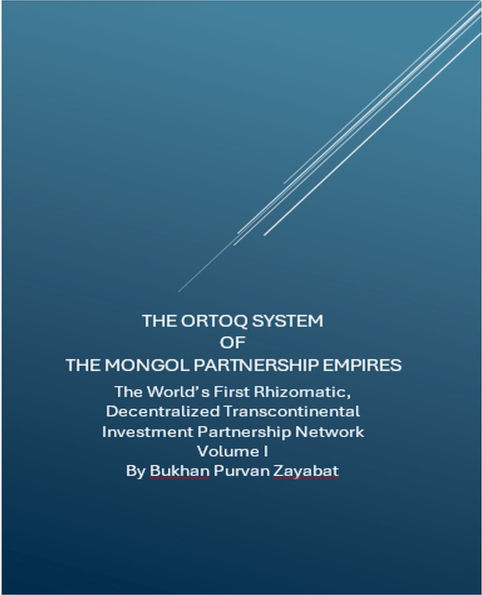
The Ortoq System of the Mongol Partnership Empires: The World's First Rhizomatic, Decentralized, Transcontinental Investment Partnership Network in Chattanooga, TN
Current price: $67.99
Barnes and Noble
The Ortoq System of the Mongol Partnership Empires: The World's First Rhizomatic, Decentralized, Transcontinental Investment Partnership Network in Chattanooga, TN
Current price: $67.99
Loading Inventory...
Size: OS
The Ortoq System of the Mongol Partnership Empires: The World's First Rhizomatic, Decentralized, Transcontinental Investment Network
explores one of history's most innovative and underappreciated financial systems. Emerging from the strategic vision of Genghis Khan and evolving across the four successor khanates-the Yuan Dynasty, Chagatai Khanate, Ilkhanate, and Golden Horde that together formed the Mongol Partnership Empires-the Ortoq system became a dynamic model of decentralized, multi-ethnic, cross-border investment partnerships spanning the vast expanse of Eurasia.
A groundbreaking analysis of the Ortoq system as the world's first rhizomatic and decentralized transcontinental investment network, this book traces how the Mongol world operated not through rigid centralization, but through fluid, adaptive, and horizontally networked systems of finance. Rather than enforcing top-down economic control, the Mongols cultivated a rhizomatic financial infrastructure rooted in mobility, pragmatism, and pluralism. The Ortoq system enabled Mongol elites to form profit-sharing partnerships with Uyghur, Persian, Chinese, and other merchant groups to finance trade caravans, mining operations, urban development, and infrastructure along the Silk Road.
These proto-capitalist alliances were not governed by central banks or imperial treasuries, but by trust-based contracts embedded in the rhythms of nomadic culture. The Ortoq was at once flexible, scalable, and trans-ethnic - a forerunner of distributed economic systems and postmodern governance structures.
This book reinterprets the Ortoq system through the lens of contemporary theory-drawing on Deleuze and Guattari's concept of the rhizome and the philosophical framework of postmodern nomad thought. It argues that the Mongol investment network was not only a product of imperial ambition, but also an early experiment in global finance, distributed governance, and pluralistic partnership capitalism. By reframing the Mongol Empire not simply as a military superpower, but as a sophisticated economic and institutional platform, this work opens new pathways for understanding globalization, historical finance, and the creative power of nomadic institutions in shaping world history.
explores one of history's most innovative and underappreciated financial systems. Emerging from the strategic vision of Genghis Khan and evolving across the four successor khanates-the Yuan Dynasty, Chagatai Khanate, Ilkhanate, and Golden Horde that together formed the Mongol Partnership Empires-the Ortoq system became a dynamic model of decentralized, multi-ethnic, cross-border investment partnerships spanning the vast expanse of Eurasia.
A groundbreaking analysis of the Ortoq system as the world's first rhizomatic and decentralized transcontinental investment network, this book traces how the Mongol world operated not through rigid centralization, but through fluid, adaptive, and horizontally networked systems of finance. Rather than enforcing top-down economic control, the Mongols cultivated a rhizomatic financial infrastructure rooted in mobility, pragmatism, and pluralism. The Ortoq system enabled Mongol elites to form profit-sharing partnerships with Uyghur, Persian, Chinese, and other merchant groups to finance trade caravans, mining operations, urban development, and infrastructure along the Silk Road.
These proto-capitalist alliances were not governed by central banks or imperial treasuries, but by trust-based contracts embedded in the rhythms of nomadic culture. The Ortoq was at once flexible, scalable, and trans-ethnic - a forerunner of distributed economic systems and postmodern governance structures.
This book reinterprets the Ortoq system through the lens of contemporary theory-drawing on Deleuze and Guattari's concept of the rhizome and the philosophical framework of postmodern nomad thought. It argues that the Mongol investment network was not only a product of imperial ambition, but also an early experiment in global finance, distributed governance, and pluralistic partnership capitalism. By reframing the Mongol Empire not simply as a military superpower, but as a sophisticated economic and institutional platform, this work opens new pathways for understanding globalization, historical finance, and the creative power of nomadic institutions in shaping world history.
The Ortoq System of the Mongol Partnership Empires: The World's First Rhizomatic, Decentralized, Transcontinental Investment Network
explores one of history's most innovative and underappreciated financial systems. Emerging from the strategic vision of Genghis Khan and evolving across the four successor khanates-the Yuan Dynasty, Chagatai Khanate, Ilkhanate, and Golden Horde that together formed the Mongol Partnership Empires-the Ortoq system became a dynamic model of decentralized, multi-ethnic, cross-border investment partnerships spanning the vast expanse of Eurasia.
A groundbreaking analysis of the Ortoq system as the world's first rhizomatic and decentralized transcontinental investment network, this book traces how the Mongol world operated not through rigid centralization, but through fluid, adaptive, and horizontally networked systems of finance. Rather than enforcing top-down economic control, the Mongols cultivated a rhizomatic financial infrastructure rooted in mobility, pragmatism, and pluralism. The Ortoq system enabled Mongol elites to form profit-sharing partnerships with Uyghur, Persian, Chinese, and other merchant groups to finance trade caravans, mining operations, urban development, and infrastructure along the Silk Road.
These proto-capitalist alliances were not governed by central banks or imperial treasuries, but by trust-based contracts embedded in the rhythms of nomadic culture. The Ortoq was at once flexible, scalable, and trans-ethnic - a forerunner of distributed economic systems and postmodern governance structures.
This book reinterprets the Ortoq system through the lens of contemporary theory-drawing on Deleuze and Guattari's concept of the rhizome and the philosophical framework of postmodern nomad thought. It argues that the Mongol investment network was not only a product of imperial ambition, but also an early experiment in global finance, distributed governance, and pluralistic partnership capitalism. By reframing the Mongol Empire not simply as a military superpower, but as a sophisticated economic and institutional platform, this work opens new pathways for understanding globalization, historical finance, and the creative power of nomadic institutions in shaping world history.
explores one of history's most innovative and underappreciated financial systems. Emerging from the strategic vision of Genghis Khan and evolving across the four successor khanates-the Yuan Dynasty, Chagatai Khanate, Ilkhanate, and Golden Horde that together formed the Mongol Partnership Empires-the Ortoq system became a dynamic model of decentralized, multi-ethnic, cross-border investment partnerships spanning the vast expanse of Eurasia.
A groundbreaking analysis of the Ortoq system as the world's first rhizomatic and decentralized transcontinental investment network, this book traces how the Mongol world operated not through rigid centralization, but through fluid, adaptive, and horizontally networked systems of finance. Rather than enforcing top-down economic control, the Mongols cultivated a rhizomatic financial infrastructure rooted in mobility, pragmatism, and pluralism. The Ortoq system enabled Mongol elites to form profit-sharing partnerships with Uyghur, Persian, Chinese, and other merchant groups to finance trade caravans, mining operations, urban development, and infrastructure along the Silk Road.
These proto-capitalist alliances were not governed by central banks or imperial treasuries, but by trust-based contracts embedded in the rhythms of nomadic culture. The Ortoq was at once flexible, scalable, and trans-ethnic - a forerunner of distributed economic systems and postmodern governance structures.
This book reinterprets the Ortoq system through the lens of contemporary theory-drawing on Deleuze and Guattari's concept of the rhizome and the philosophical framework of postmodern nomad thought. It argues that the Mongol investment network was not only a product of imperial ambition, but also an early experiment in global finance, distributed governance, and pluralistic partnership capitalism. By reframing the Mongol Empire not simply as a military superpower, but as a sophisticated economic and institutional platform, this work opens new pathways for understanding globalization, historical finance, and the creative power of nomadic institutions in shaping world history.
You May Also Like










More About Barnes and Noble at Hamilton Place
Barnes & Noble is the world’s largest retail bookseller and a leading retailer of content, digital media and educational products. Our Nook Digital business offers a lineup of NOOK® tablets and e-Readers and an expansive collection of digital reading content through the NOOK Store®. Barnes & Noble’s mission is to operate the best omni-channel specialty retail business in America, helping both our customers and booksellers reach their aspirations, while being a credit to the communities we serve.
2100 Hamilton Pl Blvd, Chattanooga, TN 37421, United States
Find Barnes and Noble at Hamilton Place in Chattanooga, TN
Visit Barnes and Noble at Hamilton Place in Chattanooga, TN
