
Home
the Normans and 'Norman Edge': Peoples, Polities Identities on Frontiers of Medieval Europe
Barnes and Noble
Loading Inventory...
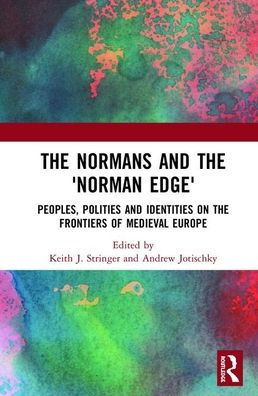
the Normans and 'Norman Edge': Peoples, Polities Identities on Frontiers of Medieval Europe in Chattanooga, TN
Current price: $200.00
Barnes and Noble
the Normans and 'Norman Edge': Peoples, Polities Identities on Frontiers of Medieval Europe in Chattanooga, TN
Current price: $200.00
Loading Inventory...
Size: Hardcover
Modern historians of the Normans have tended to treat their enterprises and achievements as a series of separate and discrete histories. Such treatments are valid and valuable, but historical understanding of the Normans also depends as much on broader approaches akin to those adopted in this book. As the successor volume to
Norman Expansion: Connections, Continuities and Contrasts
, it complements and significantly extends its findings to provide a fuller appreciation of the roles played by the Normans as one of the most dynamic and transformative forces in the history of medieval ‘Outer Europe’. It includes panoramic essays that dissect the conceptual and methodological issues concerned, suggest strategies for avoiding associated pitfalls, and indicate how far and in what ways the Normans and their legacies served to reshape sociopolitical landscapes across a vast geography extending from the remoter corners of the British Isles to the Mediterranean basin. Leading experts in their fields also provide case-by-case analyses, set within and between different areas, of themes such as lordship and domination, identities and identification, naming patterns, marriage policies, saints’ cults, intercultural exchanges, and diaspora–homeland connections.
The Normans and the ‘Norman Edge’ therefore presents a potent combination of thought-provoking overviews and fresh insights derived from new research, and its wide-ranging comparative focus has the advantage of illuminating aspects of the Norman past that traditional regional or national histories often do not reveal so clearly. It likewise makes a major contribution to current Norman scholarship by reconsidering the links between Norman expansion and ‘state-formation’; the extent to which Norman practices and priorities were distinctive; the balance between continuity and innovation; relations between the Normans and the indigenous peoples and cultures they encountered; and, not least, forms of Norman identity and their resilience over time. An extensive bibliography is also one of this book’s strengths.
Norman Expansion: Connections, Continuities and Contrasts
, it complements and significantly extends its findings to provide a fuller appreciation of the roles played by the Normans as one of the most dynamic and transformative forces in the history of medieval ‘Outer Europe’. It includes panoramic essays that dissect the conceptual and methodological issues concerned, suggest strategies for avoiding associated pitfalls, and indicate how far and in what ways the Normans and their legacies served to reshape sociopolitical landscapes across a vast geography extending from the remoter corners of the British Isles to the Mediterranean basin. Leading experts in their fields also provide case-by-case analyses, set within and between different areas, of themes such as lordship and domination, identities and identification, naming patterns, marriage policies, saints’ cults, intercultural exchanges, and diaspora–homeland connections.
The Normans and the ‘Norman Edge’ therefore presents a potent combination of thought-provoking overviews and fresh insights derived from new research, and its wide-ranging comparative focus has the advantage of illuminating aspects of the Norman past that traditional regional or national histories often do not reveal so clearly. It likewise makes a major contribution to current Norman scholarship by reconsidering the links between Norman expansion and ‘state-formation’; the extent to which Norman practices and priorities were distinctive; the balance between continuity and innovation; relations between the Normans and the indigenous peoples and cultures they encountered; and, not least, forms of Norman identity and their resilience over time. An extensive bibliography is also one of this book’s strengths.
Modern historians of the Normans have tended to treat their enterprises and achievements as a series of separate and discrete histories. Such treatments are valid and valuable, but historical understanding of the Normans also depends as much on broader approaches akin to those adopted in this book. As the successor volume to
Norman Expansion: Connections, Continuities and Contrasts
, it complements and significantly extends its findings to provide a fuller appreciation of the roles played by the Normans as one of the most dynamic and transformative forces in the history of medieval ‘Outer Europe’. It includes panoramic essays that dissect the conceptual and methodological issues concerned, suggest strategies for avoiding associated pitfalls, and indicate how far and in what ways the Normans and their legacies served to reshape sociopolitical landscapes across a vast geography extending from the remoter corners of the British Isles to the Mediterranean basin. Leading experts in their fields also provide case-by-case analyses, set within and between different areas, of themes such as lordship and domination, identities and identification, naming patterns, marriage policies, saints’ cults, intercultural exchanges, and diaspora–homeland connections.
The Normans and the ‘Norman Edge’ therefore presents a potent combination of thought-provoking overviews and fresh insights derived from new research, and its wide-ranging comparative focus has the advantage of illuminating aspects of the Norman past that traditional regional or national histories often do not reveal so clearly. It likewise makes a major contribution to current Norman scholarship by reconsidering the links between Norman expansion and ‘state-formation’; the extent to which Norman practices and priorities were distinctive; the balance between continuity and innovation; relations between the Normans and the indigenous peoples and cultures they encountered; and, not least, forms of Norman identity and their resilience over time. An extensive bibliography is also one of this book’s strengths.
Norman Expansion: Connections, Continuities and Contrasts
, it complements and significantly extends its findings to provide a fuller appreciation of the roles played by the Normans as one of the most dynamic and transformative forces in the history of medieval ‘Outer Europe’. It includes panoramic essays that dissect the conceptual and methodological issues concerned, suggest strategies for avoiding associated pitfalls, and indicate how far and in what ways the Normans and their legacies served to reshape sociopolitical landscapes across a vast geography extending from the remoter corners of the British Isles to the Mediterranean basin. Leading experts in their fields also provide case-by-case analyses, set within and between different areas, of themes such as lordship and domination, identities and identification, naming patterns, marriage policies, saints’ cults, intercultural exchanges, and diaspora–homeland connections.
The Normans and the ‘Norman Edge’ therefore presents a potent combination of thought-provoking overviews and fresh insights derived from new research, and its wide-ranging comparative focus has the advantage of illuminating aspects of the Norman past that traditional regional or national histories often do not reveal so clearly. It likewise makes a major contribution to current Norman scholarship by reconsidering the links between Norman expansion and ‘state-formation’; the extent to which Norman practices and priorities were distinctive; the balance between continuity and innovation; relations between the Normans and the indigenous peoples and cultures they encountered; and, not least, forms of Norman identity and their resilience over time. An extensive bibliography is also one of this book’s strengths.
You May Also Like










More About Barnes and Noble at Hamilton Place
Barnes & Noble is the world’s largest retail bookseller and a leading retailer of content, digital media and educational products. Our Nook Digital business offers a lineup of NOOK® tablets and e-Readers and an expansive collection of digital reading content through the NOOK Store®. Barnes & Noble’s mission is to operate the best omni-channel specialty retail business in America, helping both our customers and booksellers reach their aspirations, while being a credit to the communities we serve.
2100 Hamilton Pl Blvd, Chattanooga, TN 37421, United States
Find Barnes and Noble at Hamilton Place in Chattanooga, TN
Visit Barnes and Noble at Hamilton Place in Chattanooga, TN
