
Home
The Nature of Educational Theories: Goal-Directed, Equivalence and Interlevel Theories
Barnes and Noble
Loading Inventory...
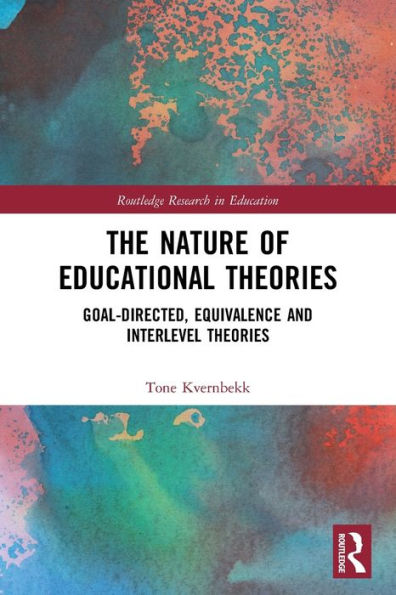
The Nature of Educational Theories: Goal-Directed, Equivalence and Interlevel Theories in Chattanooga, TN
Current price: $190.00
Barnes and Noble
The Nature of Educational Theories: Goal-Directed, Equivalence and Interlevel Theories in Chattanooga, TN
Current price: $190.00
Loading Inventory...
Size: Hardcover
This important book offers a meta-theoretical account of educational theories and how they work. It offers a classification scheme of distinct types of educational theory in which the account developed can inform the work of educational theorists and practitioners.
Kvernbekk observes throughout how meta-theoretical knowledge of the structure of theory types will improve the understanding and representation of educational phenomena and enhance theorists’ and practitioners’ ability to change those phenomena for the better. She explains how philosophical accounts of scientific theories can help us understand the nature of educational theories by applying two influential but different theory conceptions – the Received View and the Semantic Conception – to the field of education. Kvernbekk argues that educational theories, like other scientific theories, are representational devices that allow us to understand, describe and explain phenomena, and, when desired, to change them. The classification scheme offered allows us to discriminate distinct types of educational theory: goal-directed, equivalence and interlevel theories. Examples of all three types are discussed, explaining their structure, what they say
about the phenomena and how
they say it. The book also offers a critical overview of different conceptions of practice and different understandings of the theory–practice relationship.
Encouraging a strong understanding of what theories say about the phenomena they represent, this book will be of interest to educational researchers and postgraduate students in the fields of philosophy of education, education theory and education policy, and to philosophers of science and philosophers working on ‘practical’ philosophical issues.
Kvernbekk observes throughout how meta-theoretical knowledge of the structure of theory types will improve the understanding and representation of educational phenomena and enhance theorists’ and practitioners’ ability to change those phenomena for the better. She explains how philosophical accounts of scientific theories can help us understand the nature of educational theories by applying two influential but different theory conceptions – the Received View and the Semantic Conception – to the field of education. Kvernbekk argues that educational theories, like other scientific theories, are representational devices that allow us to understand, describe and explain phenomena, and, when desired, to change them. The classification scheme offered allows us to discriminate distinct types of educational theory: goal-directed, equivalence and interlevel theories. Examples of all three types are discussed, explaining their structure, what they say
about the phenomena and how
they say it. The book also offers a critical overview of different conceptions of practice and different understandings of the theory–practice relationship.
Encouraging a strong understanding of what theories say about the phenomena they represent, this book will be of interest to educational researchers and postgraduate students in the fields of philosophy of education, education theory and education policy, and to philosophers of science and philosophers working on ‘practical’ philosophical issues.
This important book offers a meta-theoretical account of educational theories and how they work. It offers a classification scheme of distinct types of educational theory in which the account developed can inform the work of educational theorists and practitioners.
Kvernbekk observes throughout how meta-theoretical knowledge of the structure of theory types will improve the understanding and representation of educational phenomena and enhance theorists’ and practitioners’ ability to change those phenomena for the better. She explains how philosophical accounts of scientific theories can help us understand the nature of educational theories by applying two influential but different theory conceptions – the Received View and the Semantic Conception – to the field of education. Kvernbekk argues that educational theories, like other scientific theories, are representational devices that allow us to understand, describe and explain phenomena, and, when desired, to change them. The classification scheme offered allows us to discriminate distinct types of educational theory: goal-directed, equivalence and interlevel theories. Examples of all three types are discussed, explaining their structure, what they say
about the phenomena and how
they say it. The book also offers a critical overview of different conceptions of practice and different understandings of the theory–practice relationship.
Encouraging a strong understanding of what theories say about the phenomena they represent, this book will be of interest to educational researchers and postgraduate students in the fields of philosophy of education, education theory and education policy, and to philosophers of science and philosophers working on ‘practical’ philosophical issues.
Kvernbekk observes throughout how meta-theoretical knowledge of the structure of theory types will improve the understanding and representation of educational phenomena and enhance theorists’ and practitioners’ ability to change those phenomena for the better. She explains how philosophical accounts of scientific theories can help us understand the nature of educational theories by applying two influential but different theory conceptions – the Received View and the Semantic Conception – to the field of education. Kvernbekk argues that educational theories, like other scientific theories, are representational devices that allow us to understand, describe and explain phenomena, and, when desired, to change them. The classification scheme offered allows us to discriminate distinct types of educational theory: goal-directed, equivalence and interlevel theories. Examples of all three types are discussed, explaining their structure, what they say
about the phenomena and how
they say it. The book also offers a critical overview of different conceptions of practice and different understandings of the theory–practice relationship.
Encouraging a strong understanding of what theories say about the phenomena they represent, this book will be of interest to educational researchers and postgraduate students in the fields of philosophy of education, education theory and education policy, and to philosophers of science and philosophers working on ‘practical’ philosophical issues.
You May Also Like











More About Barnes and Noble at Hamilton Place
Barnes & Noble is the world’s largest retail bookseller and a leading retailer of content, digital media and educational products. Our Nook Digital business offers a lineup of NOOK® tablets and e-Readers and an expansive collection of digital reading content through the NOOK Store®. Barnes & Noble’s mission is to operate the best omni-channel specialty retail business in America, helping both our customers and booksellers reach their aspirations, while being a credit to the communities we serve.
2100 Hamilton Pl Blvd, Chattanooga, TN 37421, United States
Find Barnes and Noble at Hamilton Place in Chattanooga, TN
Visit Barnes and Noble at Hamilton Place in Chattanooga, TN
