
Home
the Myth of Fall Nineteenth-Century Literature
Barnes and Noble
Loading Inventory...
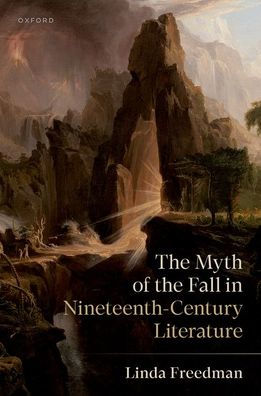
the Myth of Fall Nineteenth-Century Literature in Chattanooga, TN
Current price: $130.00
Barnes and Noble
the Myth of Fall Nineteenth-Century Literature in Chattanooga, TN
Current price: $130.00
Loading Inventory...
Size: Hardcover
Why does the myth of the Fall continue to matter in an increasingly secularised world?
Why do we continue to imagine a point where everything went wrong, and why must we imagine that things were once better than they are now?
Modern political theodicies repeatedly play to the myth of the Fall as empowering human authorship, promising to 'take back control' or 'make America great again'. The myth of the Fall is so absorbed into western culture that we sometimes don't even notice it's there, let alone think about why and how it has persisted through secularisation. It is often pernicious, playing on feelings of innate supremacy and lost dominion. Linda Freedman shows that it is also creative, the first act of disobedience and resistance which set new human stories in motion and gave narrative shape to existence.
Nineteenth-century writers were so steeped in Christian traditions that the Fall remained an ineluctable structure of thought and even those who resisted or tried to secularise its doctrinal orthodoxies tended to affirm its logic. It was a political, social, and cultural force as well as an aesthetic preoccupation, a way of reflecting on the limitations and possibilities of art and literature, driving innovations in prose, poetry, and the novel.
Rethinking narratives of American exceptionalism with transatlantic and anti-racist writings, Freedman captures some of the most theologically imaginative and aesthetically and politically interesting textures of the Fall in nineteenth-century literature. The myth of the Fall survives as much more than a judgmental and repressive social mechanism and mattered to people living vastly different livesthis is partly due to the adaptability and force of its narrative logic and partly because it gives narrative time the feel of a quest, an infinite search for meaning. The Fall holds onto the otherworldly and the unworldly. It serves as a formal metalanguage, a residually, and sometimes explicitly, religious aesthetic, an origin myth of modernitya source for being in time.
Why do we continue to imagine a point where everything went wrong, and why must we imagine that things were once better than they are now?
Modern political theodicies repeatedly play to the myth of the Fall as empowering human authorship, promising to 'take back control' or 'make America great again'. The myth of the Fall is so absorbed into western culture that we sometimes don't even notice it's there, let alone think about why and how it has persisted through secularisation. It is often pernicious, playing on feelings of innate supremacy and lost dominion. Linda Freedman shows that it is also creative, the first act of disobedience and resistance which set new human stories in motion and gave narrative shape to existence.
Nineteenth-century writers were so steeped in Christian traditions that the Fall remained an ineluctable structure of thought and even those who resisted or tried to secularise its doctrinal orthodoxies tended to affirm its logic. It was a political, social, and cultural force as well as an aesthetic preoccupation, a way of reflecting on the limitations and possibilities of art and literature, driving innovations in prose, poetry, and the novel.
Rethinking narratives of American exceptionalism with transatlantic and anti-racist writings, Freedman captures some of the most theologically imaginative and aesthetically and politically interesting textures of the Fall in nineteenth-century literature. The myth of the Fall survives as much more than a judgmental and repressive social mechanism and mattered to people living vastly different livesthis is partly due to the adaptability and force of its narrative logic and partly because it gives narrative time the feel of a quest, an infinite search for meaning. The Fall holds onto the otherworldly and the unworldly. It serves as a formal metalanguage, a residually, and sometimes explicitly, religious aesthetic, an origin myth of modernitya source for being in time.
Why does the myth of the Fall continue to matter in an increasingly secularised world?
Why do we continue to imagine a point where everything went wrong, and why must we imagine that things were once better than they are now?
Modern political theodicies repeatedly play to the myth of the Fall as empowering human authorship, promising to 'take back control' or 'make America great again'. The myth of the Fall is so absorbed into western culture that we sometimes don't even notice it's there, let alone think about why and how it has persisted through secularisation. It is often pernicious, playing on feelings of innate supremacy and lost dominion. Linda Freedman shows that it is also creative, the first act of disobedience and resistance which set new human stories in motion and gave narrative shape to existence.
Nineteenth-century writers were so steeped in Christian traditions that the Fall remained an ineluctable structure of thought and even those who resisted or tried to secularise its doctrinal orthodoxies tended to affirm its logic. It was a political, social, and cultural force as well as an aesthetic preoccupation, a way of reflecting on the limitations and possibilities of art and literature, driving innovations in prose, poetry, and the novel.
Rethinking narratives of American exceptionalism with transatlantic and anti-racist writings, Freedman captures some of the most theologically imaginative and aesthetically and politically interesting textures of the Fall in nineteenth-century literature. The myth of the Fall survives as much more than a judgmental and repressive social mechanism and mattered to people living vastly different livesthis is partly due to the adaptability and force of its narrative logic and partly because it gives narrative time the feel of a quest, an infinite search for meaning. The Fall holds onto the otherworldly and the unworldly. It serves as a formal metalanguage, a residually, and sometimes explicitly, religious aesthetic, an origin myth of modernitya source for being in time.
Why do we continue to imagine a point where everything went wrong, and why must we imagine that things were once better than they are now?
Modern political theodicies repeatedly play to the myth of the Fall as empowering human authorship, promising to 'take back control' or 'make America great again'. The myth of the Fall is so absorbed into western culture that we sometimes don't even notice it's there, let alone think about why and how it has persisted through secularisation. It is often pernicious, playing on feelings of innate supremacy and lost dominion. Linda Freedman shows that it is also creative, the first act of disobedience and resistance which set new human stories in motion and gave narrative shape to existence.
Nineteenth-century writers were so steeped in Christian traditions that the Fall remained an ineluctable structure of thought and even those who resisted or tried to secularise its doctrinal orthodoxies tended to affirm its logic. It was a political, social, and cultural force as well as an aesthetic preoccupation, a way of reflecting on the limitations and possibilities of art and literature, driving innovations in prose, poetry, and the novel.
Rethinking narratives of American exceptionalism with transatlantic and anti-racist writings, Freedman captures some of the most theologically imaginative and aesthetically and politically interesting textures of the Fall in nineteenth-century literature. The myth of the Fall survives as much more than a judgmental and repressive social mechanism and mattered to people living vastly different livesthis is partly due to the adaptability and force of its narrative logic and partly because it gives narrative time the feel of a quest, an infinite search for meaning. The Fall holds onto the otherworldly and the unworldly. It serves as a formal metalanguage, a residually, and sometimes explicitly, religious aesthetic, an origin myth of modernitya source for being in time.
You May Also Like








More About Barnes and Noble at Hamilton Place
Barnes & Noble is the world’s largest retail bookseller and a leading retailer of content, digital media and educational products. Our Nook Digital business offers a lineup of NOOK® tablets and e-Readers and an expansive collection of digital reading content through the NOOK Store®. Barnes & Noble’s mission is to operate the best omni-channel specialty retail business in America, helping both our customers and booksellers reach their aspirations, while being a credit to the communities we serve.
2100 Hamilton Pl Blvd, Chattanooga, TN 37421, United States
Find Barnes and Noble at Hamilton Place in Chattanooga, TN
Visit Barnes and Noble at Hamilton Place in Chattanooga, TN
