
Home
The Mongolian Gerbil Brain: Mitochondrial Function, Vasculature, and Pathophysiological States
Barnes and Noble
Loading Inventory...
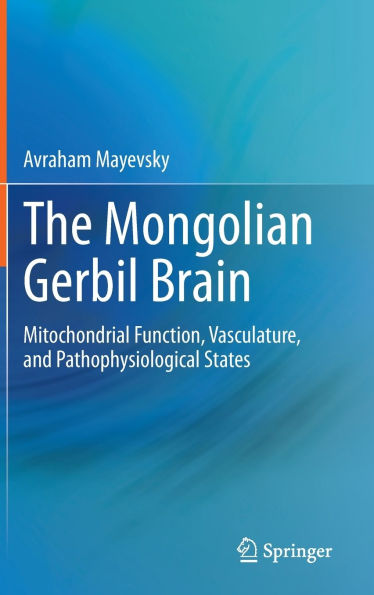
The Mongolian Gerbil Brain: Mitochondrial Function, Vasculature, and Pathophysiological States in Chattanooga, TN
Current price: $179.99
Barnes and Noble
The Mongolian Gerbil Brain: Mitochondrial Function, Vasculature, and Pathophysiological States in Chattanooga, TN
Current price: $179.99
Loading Inventory...
Size: Hardcover
The Mongolian gerbil brain lies in the anatomy of the blood vessels supplying blood to the brain. In all mammals, there is a special mechanism that compensates for the decreased blood flow to the brain in the case of development of stroke. This mechanism is missing in the gerbil and therefore makes the Mongolian gerbil a unique model for stroke. Dr. Mayevsky adopted the gerbil as a model for stroke and his laboratory uniquely studied the mihondria in the gerbil brain under various pathophysiological conditions.
This book describes the history of the Mongolian gerbil in research, the brain energy metabolism and mihondrial function and brain real-time monitoring systems used in gerbils, as well as the brain vasculature of the Mongolian gerbil. Further, the book includes chapters on brain multisite recording under brain perturbations, multiparametric responses to brain activation, and the effect of neuroprotectants on the gerbil brain.
This is an ideal book for research teams researching stroke and epilepsy.
This book describes the history of the Mongolian gerbil in research, the brain energy metabolism and mihondrial function and brain real-time monitoring systems used in gerbils, as well as the brain vasculature of the Mongolian gerbil. Further, the book includes chapters on brain multisite recording under brain perturbations, multiparametric responses to brain activation, and the effect of neuroprotectants on the gerbil brain.
This is an ideal book for research teams researching stroke and epilepsy.
The Mongolian gerbil brain lies in the anatomy of the blood vessels supplying blood to the brain. In all mammals, there is a special mechanism that compensates for the decreased blood flow to the brain in the case of development of stroke. This mechanism is missing in the gerbil and therefore makes the Mongolian gerbil a unique model for stroke. Dr. Mayevsky adopted the gerbil as a model for stroke and his laboratory uniquely studied the mihondria in the gerbil brain under various pathophysiological conditions.
This book describes the history of the Mongolian gerbil in research, the brain energy metabolism and mihondrial function and brain real-time monitoring systems used in gerbils, as well as the brain vasculature of the Mongolian gerbil. Further, the book includes chapters on brain multisite recording under brain perturbations, multiparametric responses to brain activation, and the effect of neuroprotectants on the gerbil brain.
This is an ideal book for research teams researching stroke and epilepsy.
This book describes the history of the Mongolian gerbil in research, the brain energy metabolism and mihondrial function and brain real-time monitoring systems used in gerbils, as well as the brain vasculature of the Mongolian gerbil. Further, the book includes chapters on brain multisite recording under brain perturbations, multiparametric responses to brain activation, and the effect of neuroprotectants on the gerbil brain.
This is an ideal book for research teams researching stroke and epilepsy.
You May Also Like














More About Barnes and Noble at Hamilton Place
Barnes & Noble is the world’s largest retail bookseller and a leading retailer of content, digital media and educational products. Our Nook Digital business offers a lineup of NOOK® tablets and e-Readers and an expansive collection of digital reading content through the NOOK Store®. Barnes & Noble’s mission is to operate the best omni-channel specialty retail business in America, helping both our customers and booksellers reach their aspirations, while being a credit to the communities we serve.
2100 Hamilton Pl Blvd, Chattanooga, TN 37421, United States
Find Barnes and Noble at Hamilton Place in Chattanooga, TN
Visit Barnes and Noble at Hamilton Place in Chattanooga, TN
