
Home
the Mirror of Information Early Modern England: John Wilkins and Universal Character
Barnes and Noble
Loading Inventory...
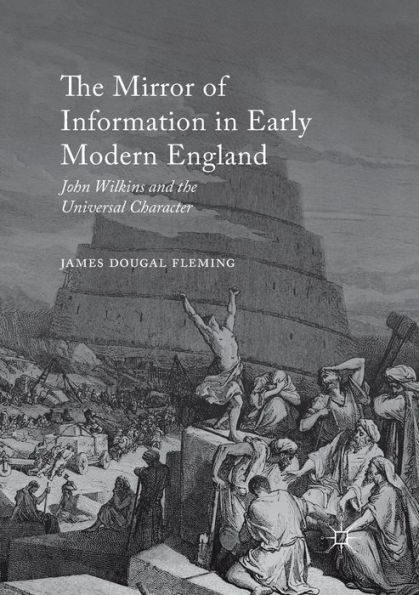
the Mirror of Information Early Modern England: John Wilkins and Universal Character in Chattanooga, TN
Current price: $119.99
Barnes and Noble
the Mirror of Information Early Modern England: John Wilkins and Universal Character in Chattanooga, TN
Current price: $119.99
Loading Inventory...
Size: Hardcover
This book examines the seventeenth-century project for a "real" or "universal" character: a scientific and objective code. Focusing on the
Essay towards a real character, and a philosophical language
(1668) of the polymath John Wilkins, Fleming provides a detailed explanation of how a real character actually was supposed to work. He argues that the period movement should not be understood as a curious episode in the history of language, but as an illuminating avatar of information technology. A non-oral code, supposedly amounting to a script of things, the character was to support scientific discourse through a universal database, in alignment with cosmic truths. In all these ways, J.D. Fleming argues, the world of the character bears phenomenological comparison to the world of modern digital information—what has been called the infosphere.
Essay towards a real character, and a philosophical language
(1668) of the polymath John Wilkins, Fleming provides a detailed explanation of how a real character actually was supposed to work. He argues that the period movement should not be understood as a curious episode in the history of language, but as an illuminating avatar of information technology. A non-oral code, supposedly amounting to a script of things, the character was to support scientific discourse through a universal database, in alignment with cosmic truths. In all these ways, J.D. Fleming argues, the world of the character bears phenomenological comparison to the world of modern digital information—what has been called the infosphere.
This book examines the seventeenth-century project for a "real" or "universal" character: a scientific and objective code. Focusing on the
Essay towards a real character, and a philosophical language
(1668) of the polymath John Wilkins, Fleming provides a detailed explanation of how a real character actually was supposed to work. He argues that the period movement should not be understood as a curious episode in the history of language, but as an illuminating avatar of information technology. A non-oral code, supposedly amounting to a script of things, the character was to support scientific discourse through a universal database, in alignment with cosmic truths. In all these ways, J.D. Fleming argues, the world of the character bears phenomenological comparison to the world of modern digital information—what has been called the infosphere.
Essay towards a real character, and a philosophical language
(1668) of the polymath John Wilkins, Fleming provides a detailed explanation of how a real character actually was supposed to work. He argues that the period movement should not be understood as a curious episode in the history of language, but as an illuminating avatar of information technology. A non-oral code, supposedly amounting to a script of things, the character was to support scientific discourse through a universal database, in alignment with cosmic truths. In all these ways, J.D. Fleming argues, the world of the character bears phenomenological comparison to the world of modern digital information—what has been called the infosphere.
You May Also Like










More About Barnes and Noble at Hamilton Place
Barnes & Noble is the world’s largest retail bookseller and a leading retailer of content, digital media and educational products. Our Nook Digital business offers a lineup of NOOK® tablets and e-Readers and an expansive collection of digital reading content through the NOOK Store®. Barnes & Noble’s mission is to operate the best omni-channel specialty retail business in America, helping both our customers and booksellers reach their aspirations, while being a credit to the communities we serve.
2100 Hamilton Pl Blvd, Chattanooga, TN 37421, United States
Find Barnes and Noble at Hamilton Place in Chattanooga, TN
Visit Barnes and Noble at Hamilton Place in Chattanooga, TN
