
Home
the Measure of Woman: Law and Female Identity Crown Aragon
Barnes and Noble
Loading Inventory...
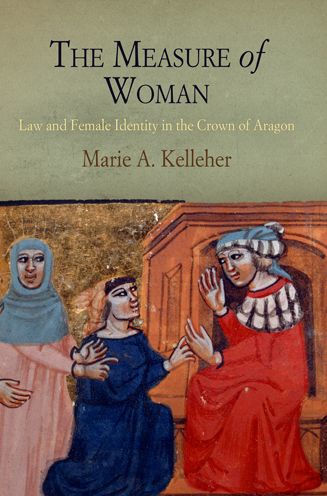
the Measure of Woman: Law and Female Identity Crown Aragon in Chattanooga, TN
Current price: $69.95
Barnes and Noble
the Measure of Woman: Law and Female Identity Crown Aragon in Chattanooga, TN
Current price: $69.95
Loading Inventory...
Size: Hardcover
By the end of the Middle Ages, the ius commune—the combination of canon and Roman law—had formed the basis for all law in continental Europe, along with its patriarchal system of categorizing women. Throughout medieval Europe, women regularly found themselves in court, suing or being sued, defending themselves against criminal accusations, or prosecuting others for crimes committed against them or their families. Yet choosing to litigate entailed accepting the conceptual vocabulary of the learned law, thereby reinforcing the very legal and social notions that often subordinated them.
In
The Measure of Woman
Marie A. Kelleher explores the complex relationship between women and legal culture in Spain's Crown of Aragon during the late medieval period. Aragonese courts measured women according to three factors: their status in relation to men, their relative sexual respectability, and their conformity to ideas about the female sex as a whole. Yet in spite of this situation, Kelleher argues, women were able to play a crucial role in shaping their own legal identities while working within the parameters of the written law.
reveals that women were not passive recipients—or even victims—of the legal system. Rather, medieval women actively used the conceptual vocabulary of the law, engaging with patriarchal legal assumptions as part of their litigation strategies. In the process, they played an important role in the formation of a gendered legal culture that would shape the lives of women throughout Western Europe and beyond for centuries to come.
In
The Measure of Woman
Marie A. Kelleher explores the complex relationship between women and legal culture in Spain's Crown of Aragon during the late medieval period. Aragonese courts measured women according to three factors: their status in relation to men, their relative sexual respectability, and their conformity to ideas about the female sex as a whole. Yet in spite of this situation, Kelleher argues, women were able to play a crucial role in shaping their own legal identities while working within the parameters of the written law.
reveals that women were not passive recipients—or even victims—of the legal system. Rather, medieval women actively used the conceptual vocabulary of the law, engaging with patriarchal legal assumptions as part of their litigation strategies. In the process, they played an important role in the formation of a gendered legal culture that would shape the lives of women throughout Western Europe and beyond for centuries to come.
By the end of the Middle Ages, the ius commune—the combination of canon and Roman law—had formed the basis for all law in continental Europe, along with its patriarchal system of categorizing women. Throughout medieval Europe, women regularly found themselves in court, suing or being sued, defending themselves against criminal accusations, or prosecuting others for crimes committed against them or their families. Yet choosing to litigate entailed accepting the conceptual vocabulary of the learned law, thereby reinforcing the very legal and social notions that often subordinated them.
In
The Measure of Woman
Marie A. Kelleher explores the complex relationship between women and legal culture in Spain's Crown of Aragon during the late medieval period. Aragonese courts measured women according to three factors: their status in relation to men, their relative sexual respectability, and their conformity to ideas about the female sex as a whole. Yet in spite of this situation, Kelleher argues, women were able to play a crucial role in shaping their own legal identities while working within the parameters of the written law.
reveals that women were not passive recipients—or even victims—of the legal system. Rather, medieval women actively used the conceptual vocabulary of the law, engaging with patriarchal legal assumptions as part of their litigation strategies. In the process, they played an important role in the formation of a gendered legal culture that would shape the lives of women throughout Western Europe and beyond for centuries to come.
In
The Measure of Woman
Marie A. Kelleher explores the complex relationship between women and legal culture in Spain's Crown of Aragon during the late medieval period. Aragonese courts measured women according to three factors: their status in relation to men, their relative sexual respectability, and their conformity to ideas about the female sex as a whole. Yet in spite of this situation, Kelleher argues, women were able to play a crucial role in shaping their own legal identities while working within the parameters of the written law.
reveals that women were not passive recipients—or even victims—of the legal system. Rather, medieval women actively used the conceptual vocabulary of the law, engaging with patriarchal legal assumptions as part of their litigation strategies. In the process, they played an important role in the formation of a gendered legal culture that would shape the lives of women throughout Western Europe and beyond for centuries to come.
You May Also Like
















More About Barnes and Noble at Hamilton Place
Barnes & Noble is the world’s largest retail bookseller and a leading retailer of content, digital media and educational products. Our Nook Digital business offers a lineup of NOOK® tablets and e-Readers and an expansive collection of digital reading content through the NOOK Store®. Barnes & Noble’s mission is to operate the best omni-channel specialty retail business in America, helping both our customers and booksellers reach their aspirations, while being a credit to the communities we serve.
2100 Hamilton Pl Blvd, Chattanooga, TN 37421, United States
Find Barnes and Noble at Hamilton Place in Chattanooga, TN
Visit Barnes and Noble at Hamilton Place in Chattanooga, TN