
Home
The Matter of Virtue: Women's Ethical Action from Chaucer to Shakespeare
Barnes and Noble
Loading Inventory...
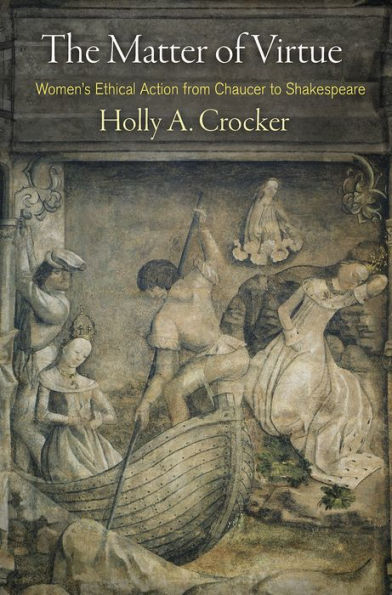
The Matter of Virtue: Women's Ethical Action from Chaucer to Shakespeare in Chattanooga, TN
Current price: $94.95
Barnes and Noble
The Matter of Virtue: Women's Ethical Action from Chaucer to Shakespeare in Chattanooga, TN
Current price: $94.95
Loading Inventory...
Size: Hardcover
If material bodies have inherent, animating powers—or virtues, in the premodern sense—then those bodies typically and most insistently associated in the premodern period with matter—namely, women—cannot be inert and therefore incapable of ethical action, Holly Crocker contends. In
The Matter of Virtue
, Crocker argues that one idea of what it means to be human—a conception of humanity that includes vulnerability, endurance, and openness to others—emerges when we consider virtue in relation to modes of ethical action available to premodern women. While a misogynistic tradition of virtue ethics, from antiquity to the early modern period, largely cast a skeptical or dismissive eye on women, Crocker seeks to explore what happened when poets thought about the material body not as a tool of an empowered agent whose cultural supremacy was guaranteed by prevailing social structures but rather as something fragile and open, subject but also connected to others.
After an introduction that analyzes
Hamlet
to establish a premodern tradition of material virtue, Part I investigates how retellings of the demise of the title female character in Chaucer's
Troilus and Criseyde
, Henryson's
Testament of Cresseid
, and Shakespeare's
Troilus and Cressida
among other texts structure a poetic debate over the potential for women's ethical action in a world dominated by masculine violence. Part II turns to narratives of female sanctity and feminine perfection, including ones by Chaucer, Bokenham, and Capgrave, to investigate grace, beauty, and intelligence as sources of women's ethical action. In Part III, Crocker examines a tension between women's virtues and household structures, paying particular attention to English Griselda- and shrew-literatures, including Shakespeare's
Taming of the Shrew
. She concludes by looking at Chaucer's
Legend of Good Women
to consider alternative forms of virtuous behavior for women as well as men.
The Matter of Virtue
, Crocker argues that one idea of what it means to be human—a conception of humanity that includes vulnerability, endurance, and openness to others—emerges when we consider virtue in relation to modes of ethical action available to premodern women. While a misogynistic tradition of virtue ethics, from antiquity to the early modern period, largely cast a skeptical or dismissive eye on women, Crocker seeks to explore what happened when poets thought about the material body not as a tool of an empowered agent whose cultural supremacy was guaranteed by prevailing social structures but rather as something fragile and open, subject but also connected to others.
After an introduction that analyzes
Hamlet
to establish a premodern tradition of material virtue, Part I investigates how retellings of the demise of the title female character in Chaucer's
Troilus and Criseyde
, Henryson's
Testament of Cresseid
, and Shakespeare's
Troilus and Cressida
among other texts structure a poetic debate over the potential for women's ethical action in a world dominated by masculine violence. Part II turns to narratives of female sanctity and feminine perfection, including ones by Chaucer, Bokenham, and Capgrave, to investigate grace, beauty, and intelligence as sources of women's ethical action. In Part III, Crocker examines a tension between women's virtues and household structures, paying particular attention to English Griselda- and shrew-literatures, including Shakespeare's
Taming of the Shrew
. She concludes by looking at Chaucer's
Legend of Good Women
to consider alternative forms of virtuous behavior for women as well as men.
If material bodies have inherent, animating powers—or virtues, in the premodern sense—then those bodies typically and most insistently associated in the premodern period with matter—namely, women—cannot be inert and therefore incapable of ethical action, Holly Crocker contends. In
The Matter of Virtue
, Crocker argues that one idea of what it means to be human—a conception of humanity that includes vulnerability, endurance, and openness to others—emerges when we consider virtue in relation to modes of ethical action available to premodern women. While a misogynistic tradition of virtue ethics, from antiquity to the early modern period, largely cast a skeptical or dismissive eye on women, Crocker seeks to explore what happened when poets thought about the material body not as a tool of an empowered agent whose cultural supremacy was guaranteed by prevailing social structures but rather as something fragile and open, subject but also connected to others.
After an introduction that analyzes
Hamlet
to establish a premodern tradition of material virtue, Part I investigates how retellings of the demise of the title female character in Chaucer's
Troilus and Criseyde
, Henryson's
Testament of Cresseid
, and Shakespeare's
Troilus and Cressida
among other texts structure a poetic debate over the potential for women's ethical action in a world dominated by masculine violence. Part II turns to narratives of female sanctity and feminine perfection, including ones by Chaucer, Bokenham, and Capgrave, to investigate grace, beauty, and intelligence as sources of women's ethical action. In Part III, Crocker examines a tension between women's virtues and household structures, paying particular attention to English Griselda- and shrew-literatures, including Shakespeare's
Taming of the Shrew
. She concludes by looking at Chaucer's
Legend of Good Women
to consider alternative forms of virtuous behavior for women as well as men.
The Matter of Virtue
, Crocker argues that one idea of what it means to be human—a conception of humanity that includes vulnerability, endurance, and openness to others—emerges when we consider virtue in relation to modes of ethical action available to premodern women. While a misogynistic tradition of virtue ethics, from antiquity to the early modern period, largely cast a skeptical or dismissive eye on women, Crocker seeks to explore what happened when poets thought about the material body not as a tool of an empowered agent whose cultural supremacy was guaranteed by prevailing social structures but rather as something fragile and open, subject but also connected to others.
After an introduction that analyzes
Hamlet
to establish a premodern tradition of material virtue, Part I investigates how retellings of the demise of the title female character in Chaucer's
Troilus and Criseyde
, Henryson's
Testament of Cresseid
, and Shakespeare's
Troilus and Cressida
among other texts structure a poetic debate over the potential for women's ethical action in a world dominated by masculine violence. Part II turns to narratives of female sanctity and feminine perfection, including ones by Chaucer, Bokenham, and Capgrave, to investigate grace, beauty, and intelligence as sources of women's ethical action. In Part III, Crocker examines a tension between women's virtues and household structures, paying particular attention to English Griselda- and shrew-literatures, including Shakespeare's
Taming of the Shrew
. She concludes by looking at Chaucer's
Legend of Good Women
to consider alternative forms of virtuous behavior for women as well as men.
You May Also Like











More About Barnes and Noble at Hamilton Place
Barnes & Noble is the world’s largest retail bookseller and a leading retailer of content, digital media and educational products. Our Nook Digital business offers a lineup of NOOK® tablets and e-Readers and an expansive collection of digital reading content through the NOOK Store®. Barnes & Noble’s mission is to operate the best omni-channel specialty retail business in America, helping both our customers and booksellers reach their aspirations, while being a credit to the communities we serve.
2100 Hamilton Pl Blvd, Chattanooga, TN 37421, United States
Find Barnes and Noble at Hamilton Place in Chattanooga, TN
Visit Barnes and Noble at Hamilton Place in Chattanooga, TN
