
Home
the Masks of Othello: Search for Identity Othello, Iago, and Desdemona by Three Centuries Actors Critics
Barnes and Noble
Loading Inventory...
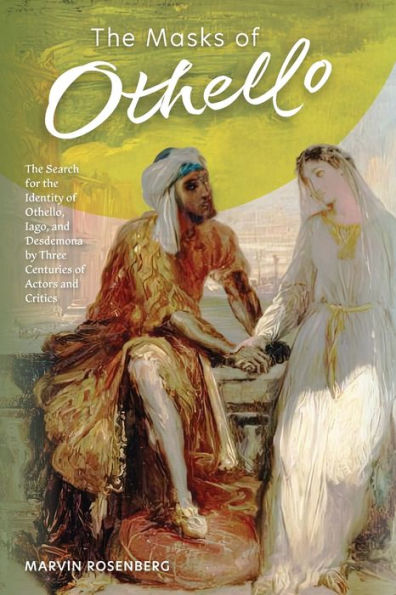
the Masks of Othello: Search for Identity Othello, Iago, and Desdemona by Three Centuries Actors Critics in Chattanooga, TN
Current price: $16.89
Barnes and Noble
the Masks of Othello: Search for Identity Othello, Iago, and Desdemona by Three Centuries Actors Critics in Chattanooga, TN
Current price: $16.89
Loading Inventory...
Size: Paperback
Who are the three primary characters in Shakespeare's
Othello
-and how have their interpretations changed throughout history as social mores affected the audience, critics, and actors who portrayed them? These are the questions that noted Shakespearean Marvin Rosenberg seeks to answer in
The Masks of Othello: The Search for the Identity of Othello, Iago, and Desdemona by Three Centuries of Actors and Critics
.
In this 1961 work, Rosenberg explores some of Shakespeare's most complex characters, and aims to help us understand how three people who are capable of such wrong-especially Iago and Othello-can yet inspire the audience's compassion.
Born in Fresno, California, in 1912 to Russian immigrant parents, Rosenberg was a student of English throughout his life. He earned his B.A. and M.A. in English from the University of California at Berkeley, followed by a stint working for the U.S. State Department during World War II. He then returned to UC Berkeley for his Ph.D. in English. He later joined the college faculty as a journalism professor, but eventually transferred to the Department of Dramatic Art.
During this time, Rosenberg and his students set to documenting the way Shakespeare's works have been staged since they were first performed in the late 16th and early 17th centuries. Rosenberg used this material to trace the way the bard's scenes and characters have been reinterpreted and altered over the ensuing 350 years.
The Masks of Othello
was the first in a series of
Masks
books that would eventually include
The Masks of King Lear
(1972),
The Masks of Macbeth
(1978),
The Masks of Hamlet
(1992), and the posthumous
The Masks of Anthony and Cleopatra
(2006).
In this first work, Rosenberg explores the complexity and differing interpretations of noble yet jealous Othello, naïve Desdemona, and conniving Iago over 357 years of productions. Rosenberg writes, "Since a staged play is a public event, performed before a willing audience, the actors' characterizations were partly products of their times, and to understand their differences we must know something of how a changing society influenced them, as it responded to them."
This is particularly true of
, as it is one of Shakespeare's most sexually charged works-a "problem" to be solved in restrictive 18th century society. Many productions chose to "eliminate verbal and visual imagery that was erotic or in 'bad taste'..." including references to nudity and men and women lying together-odd omissions from a story about infidelity and jealousy.
Another frequent issue was virtuous Desdemona's violent death, which caused an uproar at more than one performance. A production in France even changed the ending when Parisian society ladies had to be carried out of the theater in a swoon following the grisly scene. The new ending allowed Desdemona's (still living) father to rush in and save her from Othello at the last moment. The change only lasted for a few performances before the director decided he couldn't bear the false conclusion, and restored the original ending.
The play has seen subtle updates as well, including the ways the actors have chosen to portray the characters over the centuries. Othellos have been intellectual and thoughtful, violent and brooding, troubled and unsure. Iagos have been domineering, sneering, spiteful, and a "gay light-hearted monster." Desdemonas have been yielding and tender, strong and determined, and even coarse in some of her banter (often cut from 18th and 19th century productions).
is a fascinating exploration of the play and the way each performance is a reflection of its own time. It's a must-read for every scholar of Shakespeare.
Othello
-and how have their interpretations changed throughout history as social mores affected the audience, critics, and actors who portrayed them? These are the questions that noted Shakespearean Marvin Rosenberg seeks to answer in
The Masks of Othello: The Search for the Identity of Othello, Iago, and Desdemona by Three Centuries of Actors and Critics
.
In this 1961 work, Rosenberg explores some of Shakespeare's most complex characters, and aims to help us understand how three people who are capable of such wrong-especially Iago and Othello-can yet inspire the audience's compassion.
Born in Fresno, California, in 1912 to Russian immigrant parents, Rosenberg was a student of English throughout his life. He earned his B.A. and M.A. in English from the University of California at Berkeley, followed by a stint working for the U.S. State Department during World War II. He then returned to UC Berkeley for his Ph.D. in English. He later joined the college faculty as a journalism professor, but eventually transferred to the Department of Dramatic Art.
During this time, Rosenberg and his students set to documenting the way Shakespeare's works have been staged since they were first performed in the late 16th and early 17th centuries. Rosenberg used this material to trace the way the bard's scenes and characters have been reinterpreted and altered over the ensuing 350 years.
The Masks of Othello
was the first in a series of
Masks
books that would eventually include
The Masks of King Lear
(1972),
The Masks of Macbeth
(1978),
The Masks of Hamlet
(1992), and the posthumous
The Masks of Anthony and Cleopatra
(2006).
In this first work, Rosenberg explores the complexity and differing interpretations of noble yet jealous Othello, naïve Desdemona, and conniving Iago over 357 years of productions. Rosenberg writes, "Since a staged play is a public event, performed before a willing audience, the actors' characterizations were partly products of their times, and to understand their differences we must know something of how a changing society influenced them, as it responded to them."
This is particularly true of
, as it is one of Shakespeare's most sexually charged works-a "problem" to be solved in restrictive 18th century society. Many productions chose to "eliminate verbal and visual imagery that was erotic or in 'bad taste'..." including references to nudity and men and women lying together-odd omissions from a story about infidelity and jealousy.
Another frequent issue was virtuous Desdemona's violent death, which caused an uproar at more than one performance. A production in France even changed the ending when Parisian society ladies had to be carried out of the theater in a swoon following the grisly scene. The new ending allowed Desdemona's (still living) father to rush in and save her from Othello at the last moment. The change only lasted for a few performances before the director decided he couldn't bear the false conclusion, and restored the original ending.
The play has seen subtle updates as well, including the ways the actors have chosen to portray the characters over the centuries. Othellos have been intellectual and thoughtful, violent and brooding, troubled and unsure. Iagos have been domineering, sneering, spiteful, and a "gay light-hearted monster." Desdemonas have been yielding and tender, strong and determined, and even coarse in some of her banter (often cut from 18th and 19th century productions).
is a fascinating exploration of the play and the way each performance is a reflection of its own time. It's a must-read for every scholar of Shakespeare.
Who are the three primary characters in Shakespeare's
Othello
-and how have their interpretations changed throughout history as social mores affected the audience, critics, and actors who portrayed them? These are the questions that noted Shakespearean Marvin Rosenberg seeks to answer in
The Masks of Othello: The Search for the Identity of Othello, Iago, and Desdemona by Three Centuries of Actors and Critics
.
In this 1961 work, Rosenberg explores some of Shakespeare's most complex characters, and aims to help us understand how three people who are capable of such wrong-especially Iago and Othello-can yet inspire the audience's compassion.
Born in Fresno, California, in 1912 to Russian immigrant parents, Rosenberg was a student of English throughout his life. He earned his B.A. and M.A. in English from the University of California at Berkeley, followed by a stint working for the U.S. State Department during World War II. He then returned to UC Berkeley for his Ph.D. in English. He later joined the college faculty as a journalism professor, but eventually transferred to the Department of Dramatic Art.
During this time, Rosenberg and his students set to documenting the way Shakespeare's works have been staged since they were first performed in the late 16th and early 17th centuries. Rosenberg used this material to trace the way the bard's scenes and characters have been reinterpreted and altered over the ensuing 350 years.
The Masks of Othello
was the first in a series of
Masks
books that would eventually include
The Masks of King Lear
(1972),
The Masks of Macbeth
(1978),
The Masks of Hamlet
(1992), and the posthumous
The Masks of Anthony and Cleopatra
(2006).
In this first work, Rosenberg explores the complexity and differing interpretations of noble yet jealous Othello, naïve Desdemona, and conniving Iago over 357 years of productions. Rosenberg writes, "Since a staged play is a public event, performed before a willing audience, the actors' characterizations were partly products of their times, and to understand their differences we must know something of how a changing society influenced them, as it responded to them."
This is particularly true of
, as it is one of Shakespeare's most sexually charged works-a "problem" to be solved in restrictive 18th century society. Many productions chose to "eliminate verbal and visual imagery that was erotic or in 'bad taste'..." including references to nudity and men and women lying together-odd omissions from a story about infidelity and jealousy.
Another frequent issue was virtuous Desdemona's violent death, which caused an uproar at more than one performance. A production in France even changed the ending when Parisian society ladies had to be carried out of the theater in a swoon following the grisly scene. The new ending allowed Desdemona's (still living) father to rush in and save her from Othello at the last moment. The change only lasted for a few performances before the director decided he couldn't bear the false conclusion, and restored the original ending.
The play has seen subtle updates as well, including the ways the actors have chosen to portray the characters over the centuries. Othellos have been intellectual and thoughtful, violent and brooding, troubled and unsure. Iagos have been domineering, sneering, spiteful, and a "gay light-hearted monster." Desdemonas have been yielding and tender, strong and determined, and even coarse in some of her banter (often cut from 18th and 19th century productions).
is a fascinating exploration of the play and the way each performance is a reflection of its own time. It's a must-read for every scholar of Shakespeare.
Othello
-and how have their interpretations changed throughout history as social mores affected the audience, critics, and actors who portrayed them? These are the questions that noted Shakespearean Marvin Rosenberg seeks to answer in
The Masks of Othello: The Search for the Identity of Othello, Iago, and Desdemona by Three Centuries of Actors and Critics
.
In this 1961 work, Rosenberg explores some of Shakespeare's most complex characters, and aims to help us understand how three people who are capable of such wrong-especially Iago and Othello-can yet inspire the audience's compassion.
Born in Fresno, California, in 1912 to Russian immigrant parents, Rosenberg was a student of English throughout his life. He earned his B.A. and M.A. in English from the University of California at Berkeley, followed by a stint working for the U.S. State Department during World War II. He then returned to UC Berkeley for his Ph.D. in English. He later joined the college faculty as a journalism professor, but eventually transferred to the Department of Dramatic Art.
During this time, Rosenberg and his students set to documenting the way Shakespeare's works have been staged since they were first performed in the late 16th and early 17th centuries. Rosenberg used this material to trace the way the bard's scenes and characters have been reinterpreted and altered over the ensuing 350 years.
The Masks of Othello
was the first in a series of
Masks
books that would eventually include
The Masks of King Lear
(1972),
The Masks of Macbeth
(1978),
The Masks of Hamlet
(1992), and the posthumous
The Masks of Anthony and Cleopatra
(2006).
In this first work, Rosenberg explores the complexity and differing interpretations of noble yet jealous Othello, naïve Desdemona, and conniving Iago over 357 years of productions. Rosenberg writes, "Since a staged play is a public event, performed before a willing audience, the actors' characterizations were partly products of their times, and to understand their differences we must know something of how a changing society influenced them, as it responded to them."
This is particularly true of
, as it is one of Shakespeare's most sexually charged works-a "problem" to be solved in restrictive 18th century society. Many productions chose to "eliminate verbal and visual imagery that was erotic or in 'bad taste'..." including references to nudity and men and women lying together-odd omissions from a story about infidelity and jealousy.
Another frequent issue was virtuous Desdemona's violent death, which caused an uproar at more than one performance. A production in France even changed the ending when Parisian society ladies had to be carried out of the theater in a swoon following the grisly scene. The new ending allowed Desdemona's (still living) father to rush in and save her from Othello at the last moment. The change only lasted for a few performances before the director decided he couldn't bear the false conclusion, and restored the original ending.
The play has seen subtle updates as well, including the ways the actors have chosen to portray the characters over the centuries. Othellos have been intellectual and thoughtful, violent and brooding, troubled and unsure. Iagos have been domineering, sneering, spiteful, and a "gay light-hearted monster." Desdemonas have been yielding and tender, strong and determined, and even coarse in some of her banter (often cut from 18th and 19th century productions).
is a fascinating exploration of the play and the way each performance is a reflection of its own time. It's a must-read for every scholar of Shakespeare.
You May Also Like











More About Barnes and Noble at Hamilton Place
Barnes & Noble is the world’s largest retail bookseller and a leading retailer of content, digital media and educational products. Our Nook Digital business offers a lineup of NOOK® tablets and e-Readers and an expansive collection of digital reading content through the NOOK Store®. Barnes & Noble’s mission is to operate the best omni-channel specialty retail business in America, helping both our customers and booksellers reach their aspirations, while being a credit to the communities we serve.
2100 Hamilton Pl Blvd, Chattanooga, TN 37421, United States
Find Barnes and Noble at Hamilton Place in Chattanooga, TN
Visit Barnes and Noble at Hamilton Place in Chattanooga, TN