
Home
The Market as an Economic Process
Barnes and Noble
Loading Inventory...
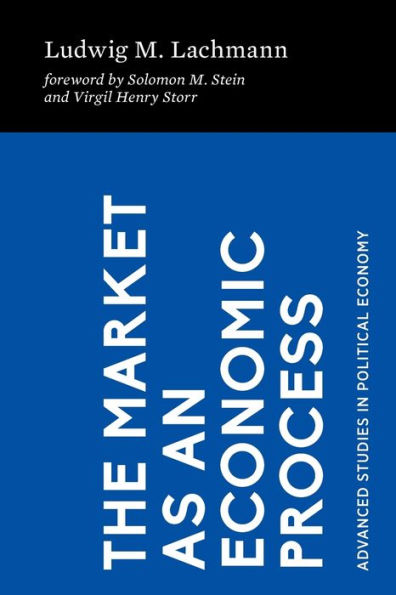
The Market as an Economic Process in Chattanooga, TN
Current price: $14.95
Barnes and Noble
The Market as an Economic Process in Chattanooga, TN
Current price: $14.95
Loading Inventory...
Size: OS
It is widely acknowledged among economists today that their discipline is in a state of some disarray. Behind the controversies particular to the times lies a fundamental crisis of thought, rooted in the increasingly apparent inadequacy of the neoclassical approach that has been dominant for some fifty years. The failure to impose such a formalistic framework has fostered the return from the wilderness of the subjectivist Austrian School of economics and renewed debate on the nature of markets and the predictability of economic phenomena. Until recently subjectivist economics has been largely ignored by mainstream economists. But as the dominant neoclassical, Keynesian, and monetarist approaches have each been championed in turn only to be found wanting at the end of the day, the Austrian approach has come to seem increasingly promising.
In this book, first published in 1986 and now reprinted with a new foreword from Solomon M. Stein and Virgil Henry Storr, Ludwig M. Lachmann presents his case for viewing economic events as elements within an ongoing process dependent on human actions in a world where the future, though not unimaginable, is unknowable. In stark contrast to the mechanistic world view of mainstream orthodoxy, his perspective takes due account of the complex workings of the human mind. His insistence on the variety of ways in which markets may function warns against elevating any "process" theory to the levels of abstraction characteristic of neoclassical equilibrium theory. Drawing easily on the classics as well as the most recent theoretical developments, Lachmann sheds new light on each of the areas he discusses.
Ludwig M. Lachmann
(1906-1990) witnessed and participated in numerous controversies for over fifty years as a leading member of the Austrian School, while remaining receptive to ideas from a diversity of disciplines and schools of thought. He studied under F. A. Hayek at the London School of Economics in the 1930s, and was a distinguished member of the Austrian School of economics and has played an active part in its revival over the past ten years. His previous publications include
Capital and its Structure
(1956),
The Legacy of Max Weber
(1970), and
Capital Expectations and the Market Process
(1977).
In this book, first published in 1986 and now reprinted with a new foreword from Solomon M. Stein and Virgil Henry Storr, Ludwig M. Lachmann presents his case for viewing economic events as elements within an ongoing process dependent on human actions in a world where the future, though not unimaginable, is unknowable. In stark contrast to the mechanistic world view of mainstream orthodoxy, his perspective takes due account of the complex workings of the human mind. His insistence on the variety of ways in which markets may function warns against elevating any "process" theory to the levels of abstraction characteristic of neoclassical equilibrium theory. Drawing easily on the classics as well as the most recent theoretical developments, Lachmann sheds new light on each of the areas he discusses.
Ludwig M. Lachmann
(1906-1990) witnessed and participated in numerous controversies for over fifty years as a leading member of the Austrian School, while remaining receptive to ideas from a diversity of disciplines and schools of thought. He studied under F. A. Hayek at the London School of Economics in the 1930s, and was a distinguished member of the Austrian School of economics and has played an active part in its revival over the past ten years. His previous publications include
Capital and its Structure
(1956),
The Legacy of Max Weber
(1970), and
Capital Expectations and the Market Process
(1977).
It is widely acknowledged among economists today that their discipline is in a state of some disarray. Behind the controversies particular to the times lies a fundamental crisis of thought, rooted in the increasingly apparent inadequacy of the neoclassical approach that has been dominant for some fifty years. The failure to impose such a formalistic framework has fostered the return from the wilderness of the subjectivist Austrian School of economics and renewed debate on the nature of markets and the predictability of economic phenomena. Until recently subjectivist economics has been largely ignored by mainstream economists. But as the dominant neoclassical, Keynesian, and monetarist approaches have each been championed in turn only to be found wanting at the end of the day, the Austrian approach has come to seem increasingly promising.
In this book, first published in 1986 and now reprinted with a new foreword from Solomon M. Stein and Virgil Henry Storr, Ludwig M. Lachmann presents his case for viewing economic events as elements within an ongoing process dependent on human actions in a world where the future, though not unimaginable, is unknowable. In stark contrast to the mechanistic world view of mainstream orthodoxy, his perspective takes due account of the complex workings of the human mind. His insistence on the variety of ways in which markets may function warns against elevating any "process" theory to the levels of abstraction characteristic of neoclassical equilibrium theory. Drawing easily on the classics as well as the most recent theoretical developments, Lachmann sheds new light on each of the areas he discusses.
Ludwig M. Lachmann
(1906-1990) witnessed and participated in numerous controversies for over fifty years as a leading member of the Austrian School, while remaining receptive to ideas from a diversity of disciplines and schools of thought. He studied under F. A. Hayek at the London School of Economics in the 1930s, and was a distinguished member of the Austrian School of economics and has played an active part in its revival over the past ten years. His previous publications include
Capital and its Structure
(1956),
The Legacy of Max Weber
(1970), and
Capital Expectations and the Market Process
(1977).
In this book, first published in 1986 and now reprinted with a new foreword from Solomon M. Stein and Virgil Henry Storr, Ludwig M. Lachmann presents his case for viewing economic events as elements within an ongoing process dependent on human actions in a world where the future, though not unimaginable, is unknowable. In stark contrast to the mechanistic world view of mainstream orthodoxy, his perspective takes due account of the complex workings of the human mind. His insistence on the variety of ways in which markets may function warns against elevating any "process" theory to the levels of abstraction characteristic of neoclassical equilibrium theory. Drawing easily on the classics as well as the most recent theoretical developments, Lachmann sheds new light on each of the areas he discusses.
Ludwig M. Lachmann
(1906-1990) witnessed and participated in numerous controversies for over fifty years as a leading member of the Austrian School, while remaining receptive to ideas from a diversity of disciplines and schools of thought. He studied under F. A. Hayek at the London School of Economics in the 1930s, and was a distinguished member of the Austrian School of economics and has played an active part in its revival over the past ten years. His previous publications include
Capital and its Structure
(1956),
The Legacy of Max Weber
(1970), and
Capital Expectations and the Market Process
(1977).
You May Also Like









More About Barnes and Noble at Hamilton Place
Barnes & Noble is the world’s largest retail bookseller and a leading retailer of content, digital media and educational products. Our Nook Digital business offers a lineup of NOOK® tablets and e-Readers and an expansive collection of digital reading content through the NOOK Store®. Barnes & Noble’s mission is to operate the best omni-channel specialty retail business in America, helping both our customers and booksellers reach their aspirations, while being a credit to the communities we serve.
2100 Hamilton Pl Blvd, Chattanooga, TN 37421, United States
Find Barnes and Noble at Hamilton Place in Chattanooga, TN
Visit Barnes and Noble at Hamilton Place in Chattanooga, TN
