
Home
The Last of Africa's Cold War Conflicts: Portuguese Guinea and its Guerilla Insurgency
Barnes and Noble
Loading Inventory...
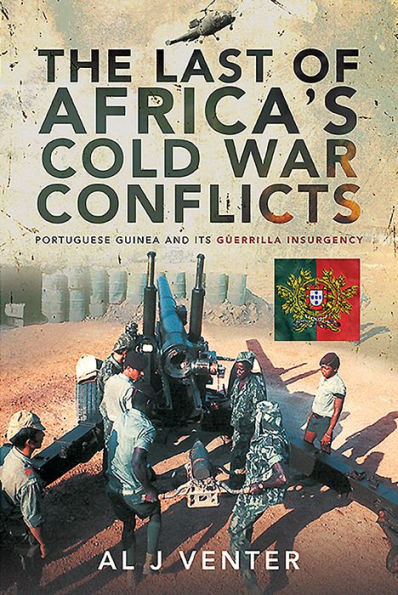
The Last of Africa's Cold War Conflicts: Portuguese Guinea and its Guerilla Insurgency in Chattanooga, TN
Current price: $42.95
Barnes and Noble
The Last of Africa's Cold War Conflicts: Portuguese Guinea and its Guerilla Insurgency in Chattanooga, TN
Current price: $42.95
Loading Inventory...
Size: Hardcover
Set against the backdrop of the Cold War, Al Venter examines the Sovietled guerrilla conflict in Portuguese Guinea which sought to expel the Portuguese colonials over a brutal 10year war.
Portugal was the first European country to colonize Africa. It was also the last to leave, almost five centuries later. During the course of what Lisbon called its “civilizing mission in Africa” the Portuguese weathered numerous insurrections, but none as severe as the guerrilla war first launched in Angola in 1961 and two years later in Portuguese Guinea. While Angola had a solid economic infrastructure, that did not hold for the tiny West African enclave that was to become GuineaBissau. Both Soviets and Cubans believed that because that tiny colony roughly the size of Belgium had no resources and a small population, that Lisbon would soon capitulate. They were wrong, because hostilities lasted more than a decade and the 11year struggle turned into the most intense of Lisbon's three African colonies.
It was a classic African guerrilla campaign that kicked off in January 1963, but nobody noticed because what was taking place in Vietnam grabbed all the headlines. The Sovietled guerrilla campaign in Portuguese Guinea was to go on and set the scene for the wars that followed in Rhodesia and presentday Namibia.
Portugal was the first European country to colonize Africa. It was also the last to leave, almost five centuries later. During the course of what Lisbon called its “civilizing mission in Africa” the Portuguese weathered numerous insurrections, but none as severe as the guerrilla war first launched in Angola in 1961 and two years later in Portuguese Guinea. While Angola had a solid economic infrastructure, that did not hold for the tiny West African enclave that was to become GuineaBissau. Both Soviets and Cubans believed that because that tiny colony roughly the size of Belgium had no resources and a small population, that Lisbon would soon capitulate. They were wrong, because hostilities lasted more than a decade and the 11year struggle turned into the most intense of Lisbon's three African colonies.
It was a classic African guerrilla campaign that kicked off in January 1963, but nobody noticed because what was taking place in Vietnam grabbed all the headlines. The Sovietled guerrilla campaign in Portuguese Guinea was to go on and set the scene for the wars that followed in Rhodesia and presentday Namibia.
Set against the backdrop of the Cold War, Al Venter examines the Sovietled guerrilla conflict in Portuguese Guinea which sought to expel the Portuguese colonials over a brutal 10year war.
Portugal was the first European country to colonize Africa. It was also the last to leave, almost five centuries later. During the course of what Lisbon called its “civilizing mission in Africa” the Portuguese weathered numerous insurrections, but none as severe as the guerrilla war first launched in Angola in 1961 and two years later in Portuguese Guinea. While Angola had a solid economic infrastructure, that did not hold for the tiny West African enclave that was to become GuineaBissau. Both Soviets and Cubans believed that because that tiny colony roughly the size of Belgium had no resources and a small population, that Lisbon would soon capitulate. They were wrong, because hostilities lasted more than a decade and the 11year struggle turned into the most intense of Lisbon's three African colonies.
It was a classic African guerrilla campaign that kicked off in January 1963, but nobody noticed because what was taking place in Vietnam grabbed all the headlines. The Sovietled guerrilla campaign in Portuguese Guinea was to go on and set the scene for the wars that followed in Rhodesia and presentday Namibia.
Portugal was the first European country to colonize Africa. It was also the last to leave, almost five centuries later. During the course of what Lisbon called its “civilizing mission in Africa” the Portuguese weathered numerous insurrections, but none as severe as the guerrilla war first launched in Angola in 1961 and two years later in Portuguese Guinea. While Angola had a solid economic infrastructure, that did not hold for the tiny West African enclave that was to become GuineaBissau. Both Soviets and Cubans believed that because that tiny colony roughly the size of Belgium had no resources and a small population, that Lisbon would soon capitulate. They were wrong, because hostilities lasted more than a decade and the 11year struggle turned into the most intense of Lisbon's three African colonies.
It was a classic African guerrilla campaign that kicked off in January 1963, but nobody noticed because what was taking place in Vietnam grabbed all the headlines. The Sovietled guerrilla campaign in Portuguese Guinea was to go on and set the scene for the wars that followed in Rhodesia and presentday Namibia.
You May Also Like











More About Barnes and Noble at Hamilton Place
Barnes & Noble is the world’s largest retail bookseller and a leading retailer of content, digital media and educational products. Our Nook Digital business offers a lineup of NOOK® tablets and e-Readers and an expansive collection of digital reading content through the NOOK Store®. Barnes & Noble’s mission is to operate the best omni-channel specialty retail business in America, helping both our customers and booksellers reach their aspirations, while being a credit to the communities we serve.
2100 Hamilton Pl Blvd, Chattanooga, TN 37421, United States
Find Barnes and Noble at Hamilton Place in Chattanooga, TN
Visit Barnes and Noble at Hamilton Place in Chattanooga, TN
