
Home
The Last Great Plague of Colonial India
Barnes and Noble
Loading Inventory...
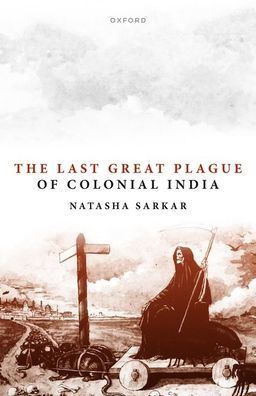
The Last Great Plague of Colonial India in Chattanooga, TN
Current price: $100.00
Barnes and Noble
The Last Great Plague of Colonial India in Chattanooga, TN
Current price: $100.00
Loading Inventory...
Size: Hardcover
Plague has attained pandemic proportions on three occasions in recorded history. It is within the context of the third, modern pandemic that this book unfolds: an outbreak which took over twelve million lives in India alone.
Natasha Sarkar examines for the first time the full social history of this extraordinary medical crisis in India at the end of the nineteenth century, detailing the nature and progress of the disease within a complex colonial environment. Deep-seated colonial anxieties about governing India influenced and are disclosed in responses to the pandemic. Disease carriers were identified and labelled, and scapegoats stigmatized. Western Imperialism and its developments in biomedicine clashed with older indigenous medical systems.
Sarkar also considers attitudes, approaches, and mentalities in indigenous Indian society. She explores what individuals and communities made of the disease, and how social prejudices surrounding it and its sufferers became increasingly heightened in a colonial environment. The plague crisis reveals disparate, heterogeneous voices across communitiesthe contradictions of a multi-religious, multi-lingual, and multi-cultural society. The last great plague of Colonial India is thus portrayed in all its political, social, economic, and demographic dimensions.
Natasha Sarkar examines for the first time the full social history of this extraordinary medical crisis in India at the end of the nineteenth century, detailing the nature and progress of the disease within a complex colonial environment. Deep-seated colonial anxieties about governing India influenced and are disclosed in responses to the pandemic. Disease carriers were identified and labelled, and scapegoats stigmatized. Western Imperialism and its developments in biomedicine clashed with older indigenous medical systems.
Sarkar also considers attitudes, approaches, and mentalities in indigenous Indian society. She explores what individuals and communities made of the disease, and how social prejudices surrounding it and its sufferers became increasingly heightened in a colonial environment. The plague crisis reveals disparate, heterogeneous voices across communitiesthe contradictions of a multi-religious, multi-lingual, and multi-cultural society. The last great plague of Colonial India is thus portrayed in all its political, social, economic, and demographic dimensions.
Plague has attained pandemic proportions on three occasions in recorded history. It is within the context of the third, modern pandemic that this book unfolds: an outbreak which took over twelve million lives in India alone.
Natasha Sarkar examines for the first time the full social history of this extraordinary medical crisis in India at the end of the nineteenth century, detailing the nature and progress of the disease within a complex colonial environment. Deep-seated colonial anxieties about governing India influenced and are disclosed in responses to the pandemic. Disease carriers were identified and labelled, and scapegoats stigmatized. Western Imperialism and its developments in biomedicine clashed with older indigenous medical systems.
Sarkar also considers attitudes, approaches, and mentalities in indigenous Indian society. She explores what individuals and communities made of the disease, and how social prejudices surrounding it and its sufferers became increasingly heightened in a colonial environment. The plague crisis reveals disparate, heterogeneous voices across communitiesthe contradictions of a multi-religious, multi-lingual, and multi-cultural society. The last great plague of Colonial India is thus portrayed in all its political, social, economic, and demographic dimensions.
Natasha Sarkar examines for the first time the full social history of this extraordinary medical crisis in India at the end of the nineteenth century, detailing the nature and progress of the disease within a complex colonial environment. Deep-seated colonial anxieties about governing India influenced and are disclosed in responses to the pandemic. Disease carriers were identified and labelled, and scapegoats stigmatized. Western Imperialism and its developments in biomedicine clashed with older indigenous medical systems.
Sarkar also considers attitudes, approaches, and mentalities in indigenous Indian society. She explores what individuals and communities made of the disease, and how social prejudices surrounding it and its sufferers became increasingly heightened in a colonial environment. The plague crisis reveals disparate, heterogeneous voices across communitiesthe contradictions of a multi-religious, multi-lingual, and multi-cultural society. The last great plague of Colonial India is thus portrayed in all its political, social, economic, and demographic dimensions.
You May Also Like












More About Barnes and Noble at Hamilton Place
Barnes & Noble is the world’s largest retail bookseller and a leading retailer of content, digital media and educational products. Our Nook Digital business offers a lineup of NOOK® tablets and e-Readers and an expansive collection of digital reading content through the NOOK Store®. Barnes & Noble’s mission is to operate the best omni-channel specialty retail business in America, helping both our customers and booksellers reach their aspirations, while being a credit to the communities we serve.
2100 Hamilton Pl Blvd, Chattanooga, TN 37421, United States
Find Barnes and Noble at Hamilton Place in Chattanooga, TN
Visit Barnes and Noble at Hamilton Place in Chattanooga, TN
