
Home
the Last Crusade West: Castile and Conquest of Granada
Barnes and Noble
Loading Inventory...
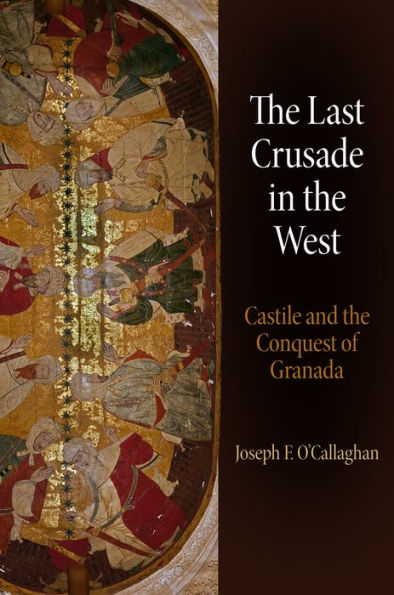
the Last Crusade West: Castile and Conquest of Granada in Chattanooga, TN
Current price: $84.95
Barnes and Noble
the Last Crusade West: Castile and Conquest of Granada in Chattanooga, TN
Current price: $84.95
Loading Inventory...
Size: Hardcover
By the middle of the fourteenth century, Christian control of the Iberian Peninsula extended to the borders of the emirate of Granada, whose Muslim rulers acknowledged Castilian suzerainty. No longer threatened by Moroccan incursions, the kings of Castile were diverted from completing the Reconquest by civil war and conflicts with neighboring Christian kings. Mindful, however, of their traditional goal of recovering lands formerly ruled by the Visigoths, whose heirs they claimed to be, the Castilian monarchs continued intermittently to assault Granada until the late fifteenth century.
Matters changed thereafter, when Fernando and Isabel launched a decade-long effort to subjugate Granada. Utilizing artillery and expending vast sums of money, they methodically conquered each Naṣrid stronghold until the capitulation of the city of Granada itself in 1492. Effective military and naval organization and access to a diversity of financial resources, joined with papal crusading benefits, facilitated the final conquest. Throughout, the Naṣrids had emphasized the urgency of a
jihād
waged against the Christian infidels, while the Castilians affirmed that the expulsion of the "enemies of our Catholic faith" was a necessary, just, and holy cause. The fundamentally religious character of this last stage of conflict cannot be doubted, Joseph F. O'Callaghan argues.
Matters changed thereafter, when Fernando and Isabel launched a decade-long effort to subjugate Granada. Utilizing artillery and expending vast sums of money, they methodically conquered each Naṣrid stronghold until the capitulation of the city of Granada itself in 1492. Effective military and naval organization and access to a diversity of financial resources, joined with papal crusading benefits, facilitated the final conquest. Throughout, the Naṣrids had emphasized the urgency of a
jihād
waged against the Christian infidels, while the Castilians affirmed that the expulsion of the "enemies of our Catholic faith" was a necessary, just, and holy cause. The fundamentally religious character of this last stage of conflict cannot be doubted, Joseph F. O'Callaghan argues.
By the middle of the fourteenth century, Christian control of the Iberian Peninsula extended to the borders of the emirate of Granada, whose Muslim rulers acknowledged Castilian suzerainty. No longer threatened by Moroccan incursions, the kings of Castile were diverted from completing the Reconquest by civil war and conflicts with neighboring Christian kings. Mindful, however, of their traditional goal of recovering lands formerly ruled by the Visigoths, whose heirs they claimed to be, the Castilian monarchs continued intermittently to assault Granada until the late fifteenth century.
Matters changed thereafter, when Fernando and Isabel launched a decade-long effort to subjugate Granada. Utilizing artillery and expending vast sums of money, they methodically conquered each Naṣrid stronghold until the capitulation of the city of Granada itself in 1492. Effective military and naval organization and access to a diversity of financial resources, joined with papal crusading benefits, facilitated the final conquest. Throughout, the Naṣrids had emphasized the urgency of a
jihād
waged against the Christian infidels, while the Castilians affirmed that the expulsion of the "enemies of our Catholic faith" was a necessary, just, and holy cause. The fundamentally religious character of this last stage of conflict cannot be doubted, Joseph F. O'Callaghan argues.
Matters changed thereafter, when Fernando and Isabel launched a decade-long effort to subjugate Granada. Utilizing artillery and expending vast sums of money, they methodically conquered each Naṣrid stronghold until the capitulation of the city of Granada itself in 1492. Effective military and naval organization and access to a diversity of financial resources, joined with papal crusading benefits, facilitated the final conquest. Throughout, the Naṣrids had emphasized the urgency of a
jihād
waged against the Christian infidels, while the Castilians affirmed that the expulsion of the "enemies of our Catholic faith" was a necessary, just, and holy cause. The fundamentally religious character of this last stage of conflict cannot be doubted, Joseph F. O'Callaghan argues.
You May Also Like
![Indiana Jones and the Last Crusade [Original Motion Picture Soundtrack] [2 LP]](https://prodimage.images-bn.com/pimages/0050087550400_p0_v1_s600x595.jpg)







![Last Bell [Barnes & Noble Exclusive]](https://prodimage.images-bn.com/pimages/0198704145698_p0_v1_s600x595.jpg)







More About Barnes and Noble at Hamilton Place
Barnes & Noble is the world’s largest retail bookseller and a leading retailer of content, digital media and educational products. Our Nook Digital business offers a lineup of NOOK® tablets and e-Readers and an expansive collection of digital reading content through the NOOK Store®. Barnes & Noble’s mission is to operate the best omni-channel specialty retail business in America, helping both our customers and booksellers reach their aspirations, while being a credit to the communities we serve.
2100 Hamilton Pl Blvd, Chattanooga, TN 37421, United States
Find Barnes and Noble at Hamilton Place in Chattanooga, TN
Visit Barnes and Noble at Hamilton Place in Chattanooga, TN
