
Home
The Language of Victory: Code Talkers of WWI and WWII
Barnes and Noble
Loading Inventory...
The Language of Victory: Code Talkers of WWI and WWII in Chattanooga, TN
Current price: $14.95
Barnes and Noble
The Language of Victory: Code Talkers of WWI and WWII in Chattanooga, TN
Current price: $14.95
Loading Inventory...
Size: OS
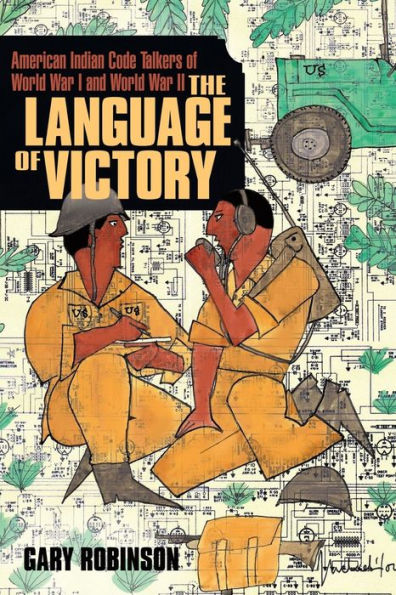
Featuring rare interviews with Comanche, Choctaw and Navajo code talkers, this easy-to-read non-fiction book recounts how American Indian soldiers from twenty different tribes used their native languages to send coded military messages in two world wars that were never deciphered by the enemy and helped win American victories.
Providing useful historical and cultural context,
The Language of Victory
first discusses the evolution of military communications that ultimately led to the 20
th
century use of electronic communications. The author then briefly examines American Indian historical, cultural and linguistic developments prior to WWI. This background is followed by accounts of the history of the Code Talkers in two world wars, including information derived from interviews with code talkers conducted in 1992. Then the book traces the slowly unfolding recognition that finally came to these veterans decades later, culminating in the Code Talker Recognition Act of 2008 that mandated the creation of Congressional medals that were awarded to these men and the tribes posthumously.
In the book's final chapter, the author contrasts the changing federal government policies that transformed American Indian languages from cultural relics worthy only of the trash bin to valued gems demanding preservation, and he reflects on the question of how America's history might have been altered if missionaries and government agencies had been successful in eliminating America's indigenous languages.
The Cover Art
:
The original cover art, based on the Plains Indian ledger style, was created by Michael Horse, an internationally known actor and artist of Yaqui, Apache and Zuni Indian descent originally from Arizona. Samples of his award-winning work can be viewed on his website: www.michaelhorse.com.
About the author: Gary Robinson, a writer and filmmaker of Cherokee and Choctaw descent, has spent more than twenty-five years telling the stories of American Indian people in print and television. His previous non-fiction military history book, From Warriors to Soldiers, examines the history of American Indians in the U.S. military from the Revolutionary War to modern times. He currently lives in the California's Santa Ynez Valley.
Providing useful historical and cultural context,
The Language of Victory
first discusses the evolution of military communications that ultimately led to the 20
th
century use of electronic communications. The author then briefly examines American Indian historical, cultural and linguistic developments prior to WWI. This background is followed by accounts of the history of the Code Talkers in two world wars, including information derived from interviews with code talkers conducted in 1992. Then the book traces the slowly unfolding recognition that finally came to these veterans decades later, culminating in the Code Talker Recognition Act of 2008 that mandated the creation of Congressional medals that were awarded to these men and the tribes posthumously.
In the book's final chapter, the author contrasts the changing federal government policies that transformed American Indian languages from cultural relics worthy only of the trash bin to valued gems demanding preservation, and he reflects on the question of how America's history might have been altered if missionaries and government agencies had been successful in eliminating America's indigenous languages.
The Cover Art
:
The original cover art, based on the Plains Indian ledger style, was created by Michael Horse, an internationally known actor and artist of Yaqui, Apache and Zuni Indian descent originally from Arizona. Samples of his award-winning work can be viewed on his website: www.michaelhorse.com.
About the author: Gary Robinson, a writer and filmmaker of Cherokee and Choctaw descent, has spent more than twenty-five years telling the stories of American Indian people in print and television. His previous non-fiction military history book, From Warriors to Soldiers, examines the history of American Indians in the U.S. military from the Revolutionary War to modern times. He currently lives in the California's Santa Ynez Valley.
Featuring rare interviews with Comanche, Choctaw and Navajo code talkers, this easy-to-read non-fiction book recounts how American Indian soldiers from twenty different tribes used their native languages to send coded military messages in two world wars that were never deciphered by the enemy and helped win American victories.
Providing useful historical and cultural context,
The Language of Victory
first discusses the evolution of military communications that ultimately led to the 20
th
century use of electronic communications. The author then briefly examines American Indian historical, cultural and linguistic developments prior to WWI. This background is followed by accounts of the history of the Code Talkers in two world wars, including information derived from interviews with code talkers conducted in 1992. Then the book traces the slowly unfolding recognition that finally came to these veterans decades later, culminating in the Code Talker Recognition Act of 2008 that mandated the creation of Congressional medals that were awarded to these men and the tribes posthumously.
In the book's final chapter, the author contrasts the changing federal government policies that transformed American Indian languages from cultural relics worthy only of the trash bin to valued gems demanding preservation, and he reflects on the question of how America's history might have been altered if missionaries and government agencies had been successful in eliminating America's indigenous languages.
The Cover Art
:
The original cover art, based on the Plains Indian ledger style, was created by Michael Horse, an internationally known actor and artist of Yaqui, Apache and Zuni Indian descent originally from Arizona. Samples of his award-winning work can be viewed on his website: www.michaelhorse.com.
About the author: Gary Robinson, a writer and filmmaker of Cherokee and Choctaw descent, has spent more than twenty-five years telling the stories of American Indian people in print and television. His previous non-fiction military history book, From Warriors to Soldiers, examines the history of American Indians in the U.S. military from the Revolutionary War to modern times. He currently lives in the California's Santa Ynez Valley.
Providing useful historical and cultural context,
The Language of Victory
first discusses the evolution of military communications that ultimately led to the 20
th
century use of electronic communications. The author then briefly examines American Indian historical, cultural and linguistic developments prior to WWI. This background is followed by accounts of the history of the Code Talkers in two world wars, including information derived from interviews with code talkers conducted in 1992. Then the book traces the slowly unfolding recognition that finally came to these veterans decades later, culminating in the Code Talker Recognition Act of 2008 that mandated the creation of Congressional medals that were awarded to these men and the tribes posthumously.
In the book's final chapter, the author contrasts the changing federal government policies that transformed American Indian languages from cultural relics worthy only of the trash bin to valued gems demanding preservation, and he reflects on the question of how America's history might have been altered if missionaries and government agencies had been successful in eliminating America's indigenous languages.
The Cover Art
:
The original cover art, based on the Plains Indian ledger style, was created by Michael Horse, an internationally known actor and artist of Yaqui, Apache and Zuni Indian descent originally from Arizona. Samples of his award-winning work can be viewed on his website: www.michaelhorse.com.
About the author: Gary Robinson, a writer and filmmaker of Cherokee and Choctaw descent, has spent more than twenty-five years telling the stories of American Indian people in print and television. His previous non-fiction military history book, From Warriors to Soldiers, examines the history of American Indians in the U.S. military from the Revolutionary War to modern times. He currently lives in the California's Santa Ynez Valley.
You May Also Like









More About Barnes and Noble at Hamilton Place
Barnes & Noble is the world’s largest retail bookseller and a leading retailer of content, digital media and educational products. Our Nook Digital business offers a lineup of NOOK® tablets and e-Readers and an expansive collection of digital reading content through the NOOK Store®. Barnes & Noble’s mission is to operate the best omni-channel specialty retail business in America, helping both our customers and booksellers reach their aspirations, while being a credit to the communities we serve.
2100 Hamilton Pl Blvd, Chattanooga, TN 37421, United States
Find Barnes and Noble at Hamilton Place in Chattanooga, TN
Visit Barnes and Noble at Hamilton Place in Chattanooga, TN
