
Home
The History of Russia: Tsars, Soviets, and Rebirth
Barnes and Noble
Loading Inventory...
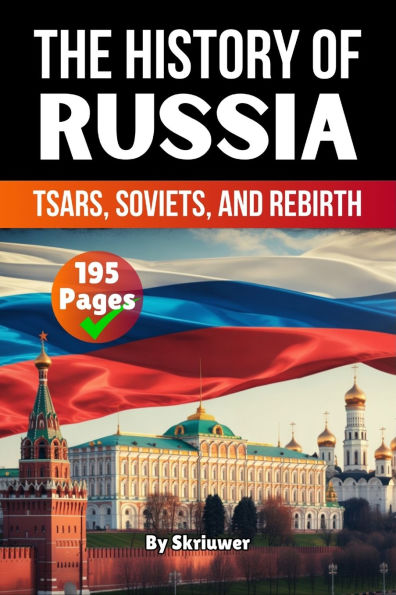
The History of Russia: Tsars, Soviets, and Rebirth in Chattanooga, TN
Current price: $16.99
Barnes and Noble
The History of Russia: Tsars, Soviets, and Rebirth in Chattanooga, TN
Current price: $16.99
Loading Inventory...
Size: OS
Russia's Epic Saga: From Ancient Tribes to Revolutionary Dawn
"The History of Russia" invites readers to journey through a vast land where steppe nomads forged empires, tsars wielded absolute power, and revolutionaries reshaped the world, evoking the fierce resilience of a people enduring invasions, reforms, and upheavals. From Kievan Rus' Christianization to 1917's seismic shifts, this book captures the emotional intensity of a nation's quest for identity amid Orthodox faith, autocratic rule, and cultural brilliance, highlighting the high stakes of unity built across diverse peoples and unforgiving landscapes.
It opens with early tribes and Varangian influences, where fortified towns and trade routes laid foundations for Rus'. Kiev rises as a central power under princes like Vladimir, embracing Christianity and Byzantine ties.
Mongol invasions shatter unity, shifting power to emerging centers like Moscow. Princes gather lands through Orthodox alliances, culminating in Ivan the Terrible's tsardom and Oprichnina terror.
Time of Troubles brings famine and invasions, resolved by Romanov accession stabilizing the realm. Peter the Great westernizes with reforms, building St. Petersburg and expanding through Northern War.
Catherine the Great's Enlightenment ideals drive territorial growth and arts patronage. Napoleonic invasion tests endurance at Borodino, with Moscow's burning marking patriotic triumph.
Alexander II emancipates serfs amid reforms, as industrialization under Witte accelerates. Late 19th-century tensions fuel Marxist movements and Russification.
Golden Age literature with Pushkin and Tolstoy reflects identity debates between Slavophiles and Westernizers. World War I strains the empire, leading to 1917 revolutions toppling Romanovs.
Bolsheviks promise peace and land, navigating civil war and new structures. Reflections tie autocracy, faith, and multi-ethnic empire to enduring legacies.
Comparable to Robert Service's "A History of Modern Russia," which chronicles eras with insightful depth, this volume aligns with 2025 trends in Eurasian histories emphasizing resilience and cultural crossroads. Its broad marketability appeals to students, travelers, and global affairs readers, promising steady sales for bookstores in Russian studies sections. By highlighting emotional stakes like devotion amid tyranny and renewal through revolution, it connects readers to Russia's profound spirit, inspiring reflection on how ancient roots influence today's world.
"The History of Russia" invites readers to journey through a vast land where steppe nomads forged empires, tsars wielded absolute power, and revolutionaries reshaped the world, evoking the fierce resilience of a people enduring invasions, reforms, and upheavals. From Kievan Rus' Christianization to 1917's seismic shifts, this book captures the emotional intensity of a nation's quest for identity amid Orthodox faith, autocratic rule, and cultural brilliance, highlighting the high stakes of unity built across diverse peoples and unforgiving landscapes.
It opens with early tribes and Varangian influences, where fortified towns and trade routes laid foundations for Rus'. Kiev rises as a central power under princes like Vladimir, embracing Christianity and Byzantine ties.
Mongol invasions shatter unity, shifting power to emerging centers like Moscow. Princes gather lands through Orthodox alliances, culminating in Ivan the Terrible's tsardom and Oprichnina terror.
Time of Troubles brings famine and invasions, resolved by Romanov accession stabilizing the realm. Peter the Great westernizes with reforms, building St. Petersburg and expanding through Northern War.
Catherine the Great's Enlightenment ideals drive territorial growth and arts patronage. Napoleonic invasion tests endurance at Borodino, with Moscow's burning marking patriotic triumph.
Alexander II emancipates serfs amid reforms, as industrialization under Witte accelerates. Late 19th-century tensions fuel Marxist movements and Russification.
Golden Age literature with Pushkin and Tolstoy reflects identity debates between Slavophiles and Westernizers. World War I strains the empire, leading to 1917 revolutions toppling Romanovs.
Bolsheviks promise peace and land, navigating civil war and new structures. Reflections tie autocracy, faith, and multi-ethnic empire to enduring legacies.
Comparable to Robert Service's "A History of Modern Russia," which chronicles eras with insightful depth, this volume aligns with 2025 trends in Eurasian histories emphasizing resilience and cultural crossroads. Its broad marketability appeals to students, travelers, and global affairs readers, promising steady sales for bookstores in Russian studies sections. By highlighting emotional stakes like devotion amid tyranny and renewal through revolution, it connects readers to Russia's profound spirit, inspiring reflection on how ancient roots influence today's world.
Russia's Epic Saga: From Ancient Tribes to Revolutionary Dawn
"The History of Russia" invites readers to journey through a vast land where steppe nomads forged empires, tsars wielded absolute power, and revolutionaries reshaped the world, evoking the fierce resilience of a people enduring invasions, reforms, and upheavals. From Kievan Rus' Christianization to 1917's seismic shifts, this book captures the emotional intensity of a nation's quest for identity amid Orthodox faith, autocratic rule, and cultural brilliance, highlighting the high stakes of unity built across diverse peoples and unforgiving landscapes.
It opens with early tribes and Varangian influences, where fortified towns and trade routes laid foundations for Rus'. Kiev rises as a central power under princes like Vladimir, embracing Christianity and Byzantine ties.
Mongol invasions shatter unity, shifting power to emerging centers like Moscow. Princes gather lands through Orthodox alliances, culminating in Ivan the Terrible's tsardom and Oprichnina terror.
Time of Troubles brings famine and invasions, resolved by Romanov accession stabilizing the realm. Peter the Great westernizes with reforms, building St. Petersburg and expanding through Northern War.
Catherine the Great's Enlightenment ideals drive territorial growth and arts patronage. Napoleonic invasion tests endurance at Borodino, with Moscow's burning marking patriotic triumph.
Alexander II emancipates serfs amid reforms, as industrialization under Witte accelerates. Late 19th-century tensions fuel Marxist movements and Russification.
Golden Age literature with Pushkin and Tolstoy reflects identity debates between Slavophiles and Westernizers. World War I strains the empire, leading to 1917 revolutions toppling Romanovs.
Bolsheviks promise peace and land, navigating civil war and new structures. Reflections tie autocracy, faith, and multi-ethnic empire to enduring legacies.
Comparable to Robert Service's "A History of Modern Russia," which chronicles eras with insightful depth, this volume aligns with 2025 trends in Eurasian histories emphasizing resilience and cultural crossroads. Its broad marketability appeals to students, travelers, and global affairs readers, promising steady sales for bookstores in Russian studies sections. By highlighting emotional stakes like devotion amid tyranny and renewal through revolution, it connects readers to Russia's profound spirit, inspiring reflection on how ancient roots influence today's world.
"The History of Russia" invites readers to journey through a vast land where steppe nomads forged empires, tsars wielded absolute power, and revolutionaries reshaped the world, evoking the fierce resilience of a people enduring invasions, reforms, and upheavals. From Kievan Rus' Christianization to 1917's seismic shifts, this book captures the emotional intensity of a nation's quest for identity amid Orthodox faith, autocratic rule, and cultural brilliance, highlighting the high stakes of unity built across diverse peoples and unforgiving landscapes.
It opens with early tribes and Varangian influences, where fortified towns and trade routes laid foundations for Rus'. Kiev rises as a central power under princes like Vladimir, embracing Christianity and Byzantine ties.
Mongol invasions shatter unity, shifting power to emerging centers like Moscow. Princes gather lands through Orthodox alliances, culminating in Ivan the Terrible's tsardom and Oprichnina terror.
Time of Troubles brings famine and invasions, resolved by Romanov accession stabilizing the realm. Peter the Great westernizes with reforms, building St. Petersburg and expanding through Northern War.
Catherine the Great's Enlightenment ideals drive territorial growth and arts patronage. Napoleonic invasion tests endurance at Borodino, with Moscow's burning marking patriotic triumph.
Alexander II emancipates serfs amid reforms, as industrialization under Witte accelerates. Late 19th-century tensions fuel Marxist movements and Russification.
Golden Age literature with Pushkin and Tolstoy reflects identity debates between Slavophiles and Westernizers. World War I strains the empire, leading to 1917 revolutions toppling Romanovs.
Bolsheviks promise peace and land, navigating civil war and new structures. Reflections tie autocracy, faith, and multi-ethnic empire to enduring legacies.
Comparable to Robert Service's "A History of Modern Russia," which chronicles eras with insightful depth, this volume aligns with 2025 trends in Eurasian histories emphasizing resilience and cultural crossroads. Its broad marketability appeals to students, travelers, and global affairs readers, promising steady sales for bookstores in Russian studies sections. By highlighting emotional stakes like devotion amid tyranny and renewal through revolution, it connects readers to Russia's profound spirit, inspiring reflection on how ancient roots influence today's world.
You May Also Like







More About Barnes and Noble at Hamilton Place
Barnes & Noble is the world’s largest retail bookseller and a leading retailer of content, digital media and educational products. Our Nook Digital business offers a lineup of NOOK® tablets and e-Readers and an expansive collection of digital reading content through the NOOK Store®. Barnes & Noble’s mission is to operate the best omni-channel specialty retail business in America, helping both our customers and booksellers reach their aspirations, while being a credit to the communities we serve.
2100 Hamilton Pl Blvd, Chattanooga, TN 37421, United States
Find Barnes and Noble at Hamilton Place in Chattanooga, TN
Visit Barnes and Noble at Hamilton Place in Chattanooga, TN
